
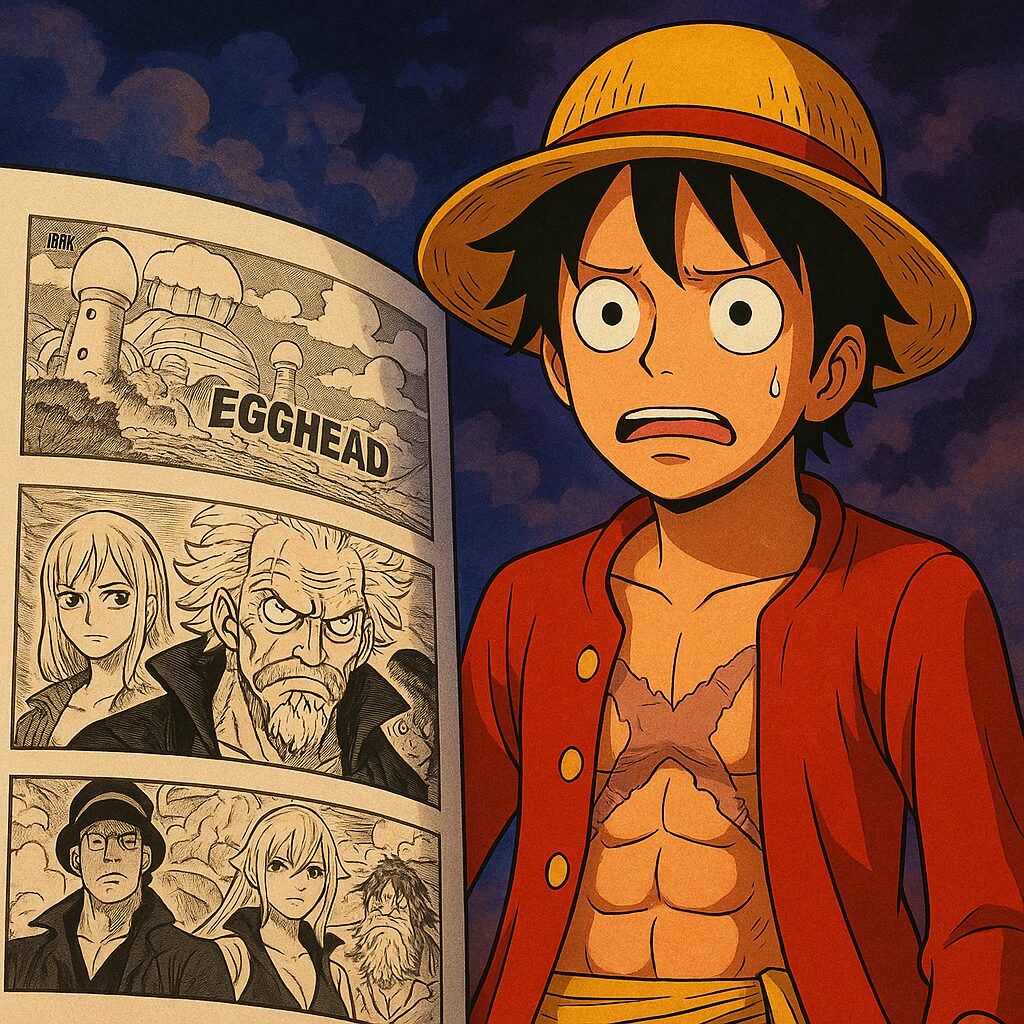
Few stories in the world of entertainment have managed to sustain momentum as long as One Piece. For more than 25 years, Eiichiro Oda’s magnum opus has commanded the loyalty of millions across the globe, weaving an intricate tale of dreams, freedom, and the search for the ultimate treasure. The manga and anime have always operated in a delicate dance: one leading with weekly chapters, the other following with episodes designed to bring Oda’s world to life.
But as the Egghead arc unfolds, a growing concern has emerged in fan circles and production commentary alike: is the anime catching up too fast to the manga? With the adaptation rate hovering at about one chapter per episode, the gap between the two mediums is narrowing to a razor’s edge. And with the manga now firmly within its final saga, every decision about pacing feels like it carries monumental weight.
A History of Pacing in One Piece
To understand the current situation, it helps to revisit the long history of pacing in One Piece. Unlike some series that burn brightly and then fade, One Piece has persisted as a weekly juggernaut. This longevity has forced both the manga and anime teams to continually manage how closely they sit together in the timeline.
The anime has traditionally followed the manga at a distance of 40 to 60 chapters, with occasional stretches of filler or slower pacing to maintain that cushion. Arcs like Long Ring Long Land or post-Enies Lobby provided breathing space, while anime-original content such as G-8 became fan favorites for cleverly filling gaps without derailing canon.
However, the past decade has seen fewer and fewer filler arcs. Instead, Toei Animation has slowed the pacing of canon episodes themselves, stretching out dramatic moments into extended sequences. While this has given animators room to add flair, it has also tested viewer patience—especially during arcs like Dressrosa, where battles often took dozens of episodes to resolve.
Egghead, in contrast, has been refreshingly brisk, adapting about one chapter per episode. This has thrilled fans who prefer a tighter, more energetic experience. But it has also raised a red flag: if the anime keeps moving at this speed, it risks closing the gap with the manga too quickly.
Why the Egghead Arc Is Different
Egghead is not just another island in the Straw Hat journey—it is a turning point. The arc introduces Dr. Vegapunk in full, reveals ties to the Void Century, and positions the Straw Hats at the heart of the World Government’s greatest secrets. It is dense, explosive, and laden with lore.
For anime staff, adapting this faithfully means giving every panel the treatment it deserves. The result has been stunning animation, dynamic layouts, and pacing that matches the manga beat-for-beat. Viewers who suffered through slower stretches in the past are now exhilarated. But therein lies the danger: without strategic slowing, the anime could very well collide with the manga within a year.
The hiatus currently affecting both the anime and manga underscores this tension. With Chapter 1162 delayed and Episode 1146 pushed back, the natural buffer between formats shrinks even further. Fans are asking: what happens if the anime really does catch up?
Lessons from Shonen History
This is not the first time a major shonen franchise has faced the specter of catching up to its source material. In fact, anime history is littered with examples of both success and failure:
- Naruto famously relied on long stretches of filler episodes, sometimes for entire seasons, to avoid surpassing the manga. While some arcs were harmless diversions, others left fans frustrated and eager for the main story to return.
- Bleach employed similar tactics, creating filler arcs like the Bount storyline. While these arcs kept the anime running, they were criticized for disrupting the flow of the main narrative and sometimes contradicting canon elements.
- Fullmetal Alchemist took a different approach in its first adaptation, diverging completely from the manga when it caught up. This led to an original ending that polarized fans, but ultimately laid the groundwork for a faithful remake years later.
- Dragon Ball Z and Dragon Ball Super frequently slowed pacing to a crawl, stretching short manga fights into dozens of episodes with extended animations, commentary, and recap scenes. This preserved the buffer but became a meme in itself.
The lesson is clear: none of these solutions are perfect. Filler arcs risk alienating fans, while extreme pacing slowdowns risk losing narrative momentum. Diverging from the manga is unthinkable for a series like One Piece, where Oda’s vision is paramount.
The Fandom’s Anxiety
Fans feel this issue more acutely than ever for one simple reason: the end is in sight. Oda has confirmed multiple times that the manga has entered its final saga. Each chapter now feels like a precious piece of the conclusion, a puzzle slowly assembling toward the legendary One Piece itself.
When the anime adapts Egghead at a rapid pace, fans cannot help but imagine the scenarios. If the gap closes, will Toei insert new filler arcs? Will episodes drag out every panel? Will we face alternating weeks of recap specials? Or will the anime simply take longer breaks, mirroring the manga’s hiatuses?
Social media is already rife with debates. Some argue that slowing down would harm the anime’s current momentum, which has arguably never been stronger. Others counter that rushing ahead now could sabotage the long-term sustainability of the adaptation. For many, the worry is not just about pacing but about preserving the integrity of Oda’s carefully crafted ending.
The Role of Modern Streaming
The conversation is also different today because of how audiences consume anime. In the early 2000s, filler arcs aired week after week with little competition. Now, streaming platforms like Crunchyroll and Netflix deliver anime to a global audience instantly. Viewers who dislike filler or pacing issues can simply drop the series and return later, or they can switch to fan-edited alternatives like One Pace, which trims episodes down to manga pacing.
This new environment raises the stakes for Toei. Losing viewers due to poorly handled pacing could mean losing market share in an era where attention is fragmented across dozens of competing anime. The production team must balance loyalty to Oda’s story with the demands of a streaming-savvy audience.
Possible Solutions
So how can Toei and Shueisha navigate this looming pacing crisis? Several strategies are possible, each with pros and cons:
- Strategic Breaks
Instead of filler arcs or slowed pacing, the anime could adopt seasonal breaks like many modern shows. Taking a few months off between arcs would allow the manga to stay ahead and would preserve quality. Fans might initially resist, but seasonal models are increasingly common across anime. - Expanded Adaptation
Toei could expand key moments with original content that enriches, rather than distracts from, canon. For example, expanding flashbacks, showing off-screen battles, or delving into worldbuilding details hinted at in the manga. Done well, this could maintain pacing while adding depth. - Parallel Projects
Spin-offs like One Piece: Heroines or films could absorb production energy during breaks. By focusing attention elsewhere, Toei could give the main anime breathing space without losing overall franchise momentum. - Alternate Release Schedules
Instead of weekly releases, the anime could shift to a biweekly or seasonal release model. This would be a massive cultural change for a series like One Piece, but it could extend the adaptation lifespan and preserve quality.
Why the Stakes Feel Higher Than Ever
The stakes of pacing are magnified by the sheer significance of where the story is headed. The Egghead arc is already connecting dots that fans have speculated about for decades: the Void Century, Vegapunk’s knowledge, the role of Joy Boy, and the looming confrontation with the World Government.
To mishandle the pacing now would feel like sabotaging the very heart of One Piece. Fans who have invested years—some their entire lives—into the series are demanding that the final saga receive the treatment it deserves. This isn’t just another arc; it is the culmination of a cultural phenomenon.
A Pause for Reflection
The current hiatus, while frustrating, might actually be a blessing. It forces fans to pause, reflect, and appreciate just how delicate the situation is. It also gives Oda and Toei space to recalibrate their strategies. If the double break helps ensure sustainability, it may serve as the precedent for how the series manages pacing going forward.
For fans, the wait is an opportunity to revisit old arcs, catch details missed the first time, or engage in theory crafting. The downtime becomes part of the experience, building anticipation for what comes next.
Conclusion: Sailing Toward the Horizon
The concern that the anime is catching up to the manga is more than a scheduling issue—it is a symbolic reminder of how close One Piece is to its end. Every episode, every chapter, carries more weight because fans know that the voyage of the Thousand Sunny cannot last forever.
How Toei and Shueisha handle this pacing challenge will shape the legacy of the anime. Will they preserve momentum with brisk adaptations, risking collision with the manga? Or will they slow down and give Oda the space he needs to finish at his own pace?
Whatever happens, one thing is certain: the Straw Hat Pirates have never sailed closer to the final shore. The anxiety fans feel now is not just about pacing—it is about letting go of a story that has been part of their lives for decades. The double break reminds us all that endings are as important as beginnings, and that sometimes, even the greatest adventures require a pause before the final storm.