
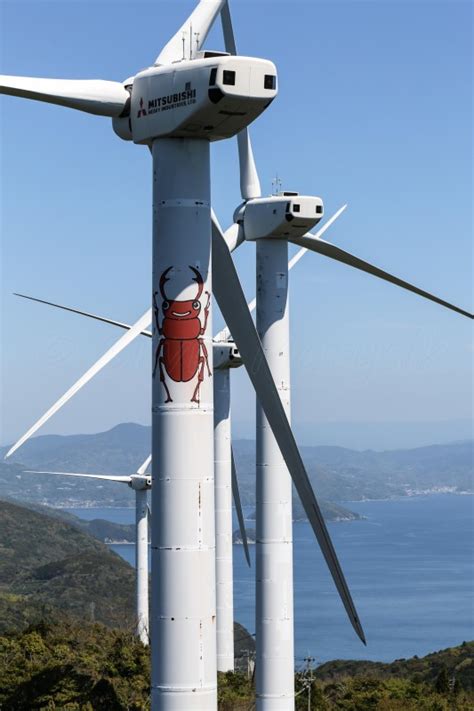
Japan has long been seen as a nation at the cutting edge of technology and industrial power. From bullet trains to robotics to advanced materials, the country built a reputation for blending engineering mastery with social discipline. In the energy sector, however, Japan’s path has been far less assured. Lacking domestic fossil fuel resources, heavily reliant on imports, and scarred by the Fukushima disaster of 2011, Japan’s energy policy has been a story of difficult trade-offs and lingering vulnerabilities.
In recent years, offshore wind had emerged as a potential breakthrough solution—an industry that could provide vast amounts of clean, domestically generated electricity while reducing dependence on nuclear power and imported fossil fuels. The government set bold targets, promising to make offshore wind the backbone of Japan’s green transition and a pillar of its climate commitments. By 2030, the country aimed to install up to 10 gigawatts of offshore wind capacity, with much more to follow by mid-century.
But in October 2025, that vision was dealt a heavy blow. Mitsubishi Corporation, one of Japan’s largest and most powerful trading houses, announced it was pulling out of several landmark offshore wind projects. The company cited spiraling construction costs, economic infeasibility, and uncertainty about long-term returns. Coming from a company as deeply entrenched in Japan’s corporate establishment as Mitsubishi, the withdrawal sent shockwaves through the energy and financial sectors.
The news raised uncomfortable questions: Can Japan still hit its renewable energy targets? Was the offshore wind dream always too ambitious? And if even a titan like Mitsubishi cannot make the numbers work, who will step forward to carry the burden?
The Promise of Offshore Wind
Offshore wind power has attracted global attention because it solves some of the key challenges faced by renewable energy. Unlike solar power, which fluctuates dramatically with daylight and weather conditions, offshore wind provides a more consistent and predictable supply of electricity. Turbines placed far out at sea can harness stronger and steadier winds than those on land, generating large amounts of power with fewer interruptions.
For Japan, with its mountainous terrain and limited land availability, offshore wind seemed like a natural fit. Large expanses of coastal waters could host floating or fixed-bottom turbines, feeding electricity directly into urban demand centers like Tokyo, Osaka, and Nagoya. After the 2011 Fukushima nuclear crisis eroded public trust in nuclear energy, offshore wind also offered a politically palatable alternative that aligned with global climate goals.
Government projections were ambitious: 10 gigawatts of offshore wind capacity by 2030, 30 to 45 gigawatts by 2040, and as much as 140 gigawatts by 2050. If realized, these figures would make offshore wind the single largest contributor to Japan’s power mix by mid-century.
Why Mitsubishi’s Exit Matters
Mitsubishi Corporation is no ordinary company. It is a central pillar of Japan’s corporate landscape, a conglomerate with interests spanning energy, finance, heavy industry, real estate, and consumer goods. When Mitsubishi signals confidence in a sector, it often catalyzes capital, technology, and political support. Conversely, when Mitsubishi withdraws, it undermines both financial and public confidence.
The projects Mitsubishi abandoned were not minor ventures. They included high-profile offshore wind farms that had been touted as test cases for Japan’s green transition. By citing ballooning costs and unfavorable economics, Mitsubishi effectively admitted that the business case for offshore wind in Japan has not yet solidified.
This is significant because the economics of offshore wind have improved dramatically in Europe and China. In the North Sea, massive offshore wind farms now produce electricity at costs competitive with fossil fuels. China has installed more offshore wind capacity than any other nation, driving costs down through scale and industrial policy. In theory, Japan could benefit from similar dynamics.
But Japan faces unique challenges: deep coastal waters that require expensive floating turbines, a shortage of suitable ports and shipyards for large turbine assembly, high construction costs, and a regulatory framework that has often been criticized as slow and cumbersome. Mitsubishi’s exit highlights how these structural disadvantages have prevented Japan from replicating the success seen elsewhere.
The Cost Challenge
At the heart of Mitsubishi’s decision lies the question of cost. Offshore wind projects are capital-intensive, requiring billions of dollars in upfront investment. Developers must finance seabed surveys, environmental impact studies, turbine installation, undersea cabling, and grid connections before a single kilowatt-hour is produced.
In Europe, years of public subsidies, streamlined permitting, and massive scale helped bring costs down. Japan, by contrast, is starting later, with less experience, and in more difficult waters.
The technical challenges of Japan’s geography are particularly acute. Much of the seabed near the Japanese coastline plunges steeply into deep water, meaning that fixed-bottom turbines—cheaper and easier to install in shallow seas—are often not an option. Instead, Japan has had to pursue floating turbines, which are more technologically advanced but also far more expensive.
Add to this the high cost of domestic construction, the lack of large-scale specialized vessels for turbine installation, and the fragmented regulatory approvals needed from local and national authorities, and the economics become precarious.
Mitsubishi’s exit makes clear that even with government support, the returns do not currently justify the risk for Japan’s biggest corporate players.
The Strategic Stakes
The stakes of this setback extend well beyond corporate balance sheets. Offshore wind was supposed to help Japan achieve multiple strategic goals at once:
- Decarbonization: Offshore wind is central to Japan’s plan to cut greenhouse gas emissions and reach carbon neutrality by 2050. Without it, Japan risks missing international climate commitments.
- Energy Security: Japan imports more than 90% of its primary energy needs, making it vulnerable to geopolitical shocks. Offshore wind would provide a domestic, renewable source of power.
- Economic Leadership: By investing in offshore wind, Japan aimed to cultivate a new industrial sector with export potential, similar to how Germany built a global solar industry and Denmark pioneered wind technology.
- Public Trust: Nuclear power remains politically divisive, and fossil fuels are environmentally unsustainable. Offshore wind was the “safe bet” to reassure the public that Japan could modernize its grid without repeating past mistakes.
By withdrawing, Mitsubishi has cast doubt on all four pillars. Investors may question whether Japan can deliver on its climate pledges. Policymakers may have to rethink their timelines. And the Japanese public, once told offshore wind was the future, may see yet another energy plan falter.
Global Comparisons
To understand the scale of the problem, it helps to look abroad.
- Europe: The UK, Denmark, and Germany have all deployed massive offshore wind projects that now supply significant portions of their electricity. The Hornsea Project in the UK is the world’s largest, capable of powering millions of homes. Costs per megawatt-hour have fallen dramatically due to competition, subsidies, and experience.
- China: In just a few years, China surged to the top of global offshore wind rankings, with more than 30 gigawatts installed. State-owned enterprises, streamlined approvals, and industrial policy created scale that lowered costs rapidly.
- United States: Though later to the game, the U.S. is investing heavily in offshore wind, with projects underway off the coasts of New York, Massachusetts, and Virginia. Federal support and state-level procurement targets are driving the sector forward.
Japan, despite its technological prowess and capital reserves, has struggled to keep pace. Its installed offshore wind capacity remains a fraction of global leaders, and Mitsubishi’s withdrawal risks widening the gap further.
Government Response
The Japanese government now faces mounting pressure to act decisively. Options under discussion include:
- Increased Subsidies and Guarantees: To make projects more attractive, Tokyo could expand subsidies, tax breaks, or guaranteed price mechanisms to reduce risk for developers.
- Regulatory Reform: Streamlining the approval process for offshore projects could cut delays and lower costs. Currently, multiple ministries and agencies are involved, creating bureaucratic complexity.
- International Partnerships: Japan may seek deeper collaboration with European or American firms that have more experience in offshore wind deployment. Technology transfer could help bridge gaps.
- Grid Upgrades: Offshore wind requires strong transmission networks to move electricity from sea to land. Japan’s fragmented regional grid system remains a bottleneck.
- Public Engagement: Building public trust and local support will be essential, as many coastal communities have resisted offshore projects due to concerns about fishing rights, tourism, and environmental impacts.
The government has little choice but to pursue some combination of these strategies if it hopes to salvage its 2030 target.
Investor Confidence and Market Signals
Mitsubishi’s withdrawal also raises concerns about investor sentiment. Renewable energy projects require long-term capital from banks, pension funds, and private equity firms. If Japan’s biggest conglomerates signal caution, financiers may hesitate to commit funds.
Japan has historically relied on its “keiretsu” networks—close ties between banks, trading houses, and industrial firms—to mobilize investment. But even within these networks, risk appetite is limited. Without visible leadership from giants like Mitsubishi, other investors may prefer safer, shorter-term opportunities in established industries.
This creates a feedback loop: fewer investors mean higher financing costs, which in turn make projects even less viable. Breaking that cycle will require bold government intervention or new forms of international cooperation.
The Road Ahead
Japan’s offshore wind setback is not the end of the story, but it is a critical inflection point. The next few years will determine whether the country can overcome structural disadvantages and build a viable offshore wind industry, or whether it will remain a laggard in the global energy transition.
Three scenarios stand out:
- Rebound Through Policy Innovation: If the government rapidly reforms regulations, increases subsidies, and brings in foreign expertise, Japan could still hit its 2030 targets, albeit with delays.
- Partial Success, Partial Reliance on Fossil Fuels: Japan may scale back its offshore wind ambitions and lean more heavily on LNG imports, nuclear restarts, and solar power to meet demand. This would weaken climate credibility but maintain energy security.
- Missed Targets and Rising Vulnerability: If costs remain prohibitive and investor confidence continues to erode, Japan could fall far short of its renewable goals, leaving it more dependent on volatile global energy markets.
Conclusion
Mitsubishi’s withdrawal from offshore wind projects is more than a corporate decision; it is a symbol of the challenges facing Japan’s entire energy transition. Offshore wind was supposed to be the backbone of a decarbonized future, offering security, sustainability, and economic opportunity. Instead, it now looks like a fragile bet under pressure from high costs, tough geography, and wavering investor confidence.
Whether Japan can turn this crisis into an opportunity depends on the political will of its leaders, the ingenuity of its engineers, and the willingness of investors to take risks in the name of long-term gain. The next decade will tell whether the Land of the Rising Sun can also become the Land of the Rising Wind—or whether it will watch others lead the way while it struggles to catch up.