
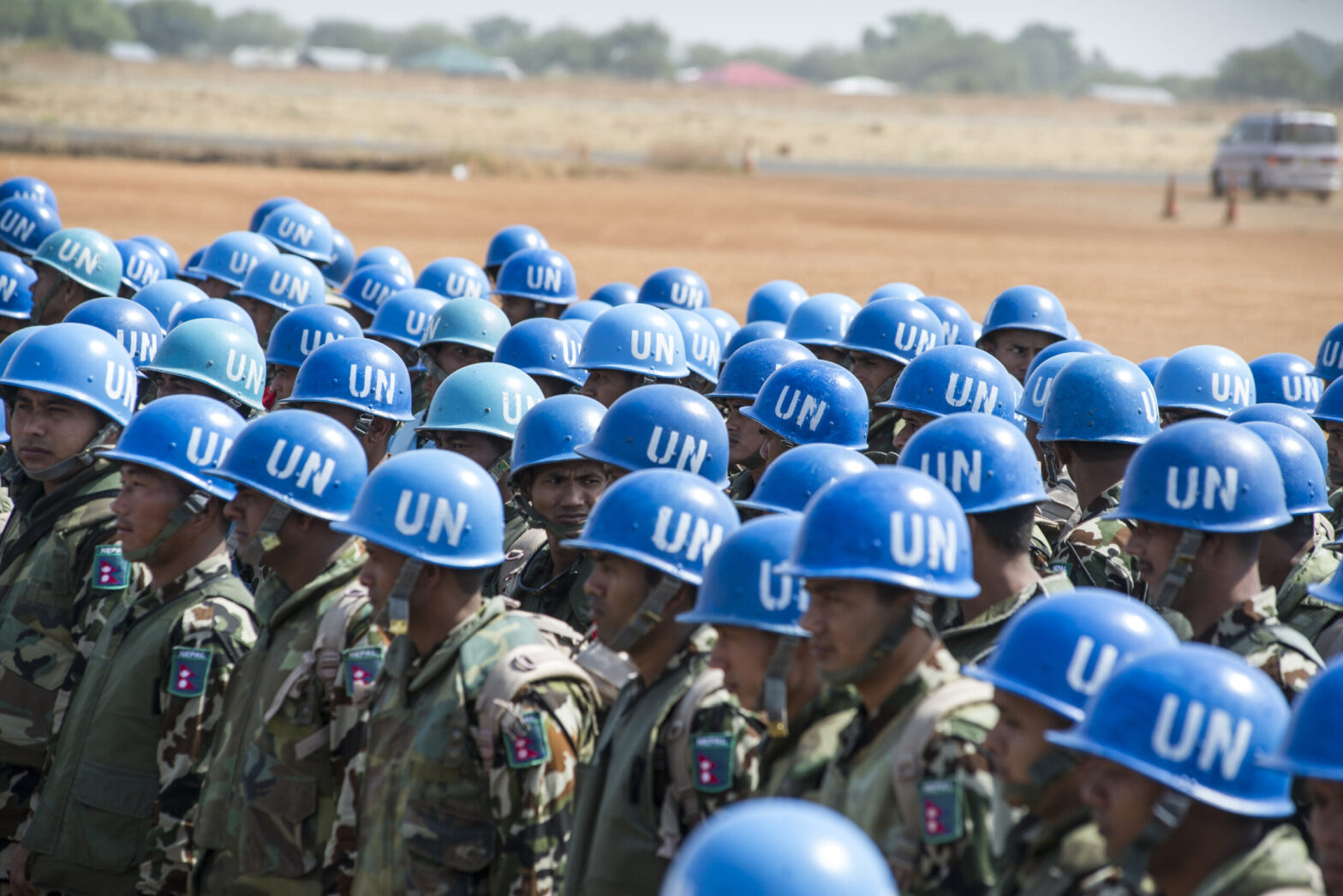
The United Nations — long seen as the world’s moral anchor in chaos — is now being forced to pull back from some of the most dangerous corners of our world. Under mounting financial strain from its largest donor, the U.S., the U.N. is planning to slash its global peacekeeping force by 25 percent, withdrawing an estimated 13,000 to 14,000 troops and police from key missions across Africa, the Middle East, and beyond.
This is not a mere line on a spreadsheet. It is a moment of reckoning for the idea that multiple nations, guided by collective ideals, can stand in the gap between civilians and catastrophe.
The Budget Cuts Behind the Retreat
For decades, the United States has been the cornerstone of U.N. funding. Today, with shifting political priorities, the U.S. is scaling back – drastically. The Trump administration has proposed eliminating peacekeeping funding altogether for fiscal year 2026, challenging long-standing norms of burden sharing in global security. Already, several payments are overdue, and arrears have swelled into the billions.
Faced with a nearly $2.7 billion deficit in peacekeeping contributions, the U.N. has been forced to make tough choices: freeze hiring, cut back logistics, and repatriate personnel. The cuts will also include budget reductions of 15 percent across missions and staff drawdowns in U.N. secretariat offices. Internally, the U.N. is targeting a 20 percent cut in staffing within the secretariat itself — a body that already struggles to balance diplomatic mandates with operational constraints.
Some reforms are overdue. Critics argue that certain peacekeeping missions are overextended, under-resourced, and too reliant on open-ended mandates. But few questioned the removal of forces from hot zones when the consequences are so high-stakes.
Where the Cuts Hit Hardest
The U.N. has confirmed that reductions will affect nine major missions, including operations in South Sudan, the Democratic Republic of Congo (DRC), Lebanon, and Somalia. In particular:
- In South Sudan, the U.N. Mission (UNMISS) has long operated amid ethnic conflict, forced displacements, and new waves of recruitment by warring factions. Already, rival groups are rushing to recruit new fighters, including children — a development that could mark a return to full-blown civil war without peacekeepers’ presence on the ground.
- In DRC, U.N. forces have played a crucial role deterring rebel militias in the eastern provinces, especially amid ongoing violence in regions like Ituri and North Kivu.
- In Somalia, the support office may face major reductions even as security pressures rise and local forces remain stretched thin by al-Shabab insurgency. Interestingly, as the U.N. scales back, the African Union is preparing its own mission — “AUSSOM” — to assume responsibilities, but it faces its own funding and capacity constraints.
- In Lebanon, UNIFIL (the land and maritime peacekeeping force along the Lebanon–Israel border) may also see reductions, potentially destabilizing a region already under economic and political duress.
The ripple effects extend beyond military personnel. Many peacekeepers had secondary roles as medical support, community liaisons, educators, even logistics providers. In remote villages, U.N. outposts were the only remaining presence of any formal order. Remove them, and those communities are left adrift in danger’s wake.
Communities Left in the Lurch
Imagine a village in South Sudan: roads cut by floods, health clinics understaffed, and armed militias circling beyond the horizon. The arrival of U.N. peacekeepers offered a fragile buffer — patrols deter violence, escort convoys, mediate local disputes. At night, their presence patrolled by armored vehicles offered psychological relief: when blue helmets are guarding your neighborhood, your odds of waking to bullets drop.
Now imagine those forces gone.
In many conflict zones, civilians view peacekeepers not as foreign troops but as lifelines. Teachers rely on U.N. supply chains for textbooks; local clinics depend on mission ambulances; displaced families huddle behind U.N. barriers to shield them from gunfire. These are not abstractions — they are daily lines between survival and collapse.
In past withdrawals — for example, when U.N. troops departed Mali — analysts saw how local governance fractured, extremist groups filled the vacuum, and livelihoods crumbled. While the situations differ, the pattern is eerily familiar: when a peacekeeping mission pulls back, instability tends to fill the gap.
Moreover, where mandates had limited scope — e.g., prohibition on offensive operations — local militias now may test boundaries, press for power, and rearm with impunity.
The Geopolitical Undercurrents
The cuts come not just from financial strain but from shifts in how one of the U.N.’s largest sponsors views alliances and foreign policy. The Trump administration positions itself as skeptical of multilateral institutions and selective about global commitments. It has already eliminated or reduced funding for agencies such as UNESCO, WHO, and U.N. human rights programs.
Yet while the U.S. steps back, China has pledged to maintain full payments to peacekeeping efforts. That shift may tilt influence inside the U.N. — not just in budget discussions, but in ideologies behind peacekeeping. Some worry that China’s increasing role could push missions toward priorities aligned with its diplomatic strategies rather than purely humanitarian stabilization.
Beyond power politics, there is a question of legitimacy. A U.N. that cannot afford its missions risks appearing hollow. Already, reputational risks loom: forced cutbacks suggest that the world’s preeminent multilateral institution is vulnerable to domestic politics in its most powerful members.
A Crisis of Credibility
The U.N. has long been criticized for bureaucratic inefficiencies, mission overreach, and being forced into impossible mandates. But today, its credibility is under assault from a more fundamental question: can the U.N. still credibly promise to protect vulnerable communities if it cannot guarantee its own finances?
When the world body warns of atrocities or issues ceasefire appeals, those pleas rest upon the assumption that peacekeepers will act. If those forces are cut, one wonders if words become mere slogans.
Some reformers argue that this moment demands rethinking — downsizing deployments, shifting to regional peace architectures, emphasizing preventive diplomacy, and tightening oversight. But reform alone cannot substitute for boots on the ground in places where violence surrounds hopelessness.
What Happens When Peacekeepers Leave?
The withdrawal of U.N. forces rarely marks an end to conflict — more often, it signals a phase shift. Some likely consequences include:
- Escalation of violence — Rebel groups and militias may test borders of power, intimidate civilians, seize territory.
- Displacement surges — As security breaks down, more families will flee. Already fragile humanitarian systems may collapse under demand.
- Weak governments exposed — Local security forces are rarely ready to absorb full responsibility. In states like South Sudan, where national military capacity is weak, the absence of international buffer dramatically raises risk.
- Regional spillovers — Refugees cross borders, conflict creeps into neighboring areas, and destabilized zones become magnets for transnational crime, arms flows, radical movements.
- Collapse of community services — Clinics, schools, agriculture, water systems that benefit from U.N. logistics will suffer or shut down.
In short: the withdrawal is not end of conflict, but turning a dimmer from low to darkness.
Fighting Back: Possibilities for Redemption
There are no easy answers. But if the U.N. is to survive this moment, it must act smartly and swiftly.
- Prioritize the most vulnerable theaters. The cutbacks must be surgical, not wholesale. Some missions — those preventing genocide, averting mass atrocities — deserve funding even above others.
- Delegate regionally. Regional bodies like the African Union, ECOWAS, or local coalitions should take more active roles. But they will need support, training, and secure funding to succeed.
- Strengthen exit strategies. Deployments must include clear plans for transition to local security and governance oversight; indefinite open-ended missions breed dependency.
- Innovate with cost efficiency. Use technology, drones, remote monitoring, peacebuilding tools, and smarter logistics to stretch fewer resources further.
- Encourage debt-for-peace incentives. Wealthy nations or creditors could tie debt relief to support for peacekeeping in fragile states — creating new fiscal space.
- Reenergize donor commitments. Nations must face that this is not charity — global peacekeeping is a strategic investment. For the U.S., a few billion per year is marginal in defense budgets but transformational in preventing regional collapses.
- Protect human rights architecture. Even in constrained budgets, core institutions — war crimes tribunals, refugee protections, atrocity prevention — must be safeguarded as nonnegotiables.
A Global Moment of Truth
When blue helmets pull back, the consequences are not contained to distant lands. Refugees reach neighboring states. Conflicts feed global arms markets. Ideologies of despair attract recruits in broader regions. Geopolitics shifts.
The U.N. is not infallible, nor has it always succeeded. But it embodies a promise: that nations, when cooperating, can stand for something greater than themselves. Now, that promise hangs in the balance.
In New York’s General Assembly chambers and in a dusty village under threat in South Sudan, the same question echoes: what happens when the world’s peacekeeper can no longer afford peace?
This is not just a budget crisis. It is a test of our will, our commitments, and our belief in shared responsibility. The world watches — and waits.