
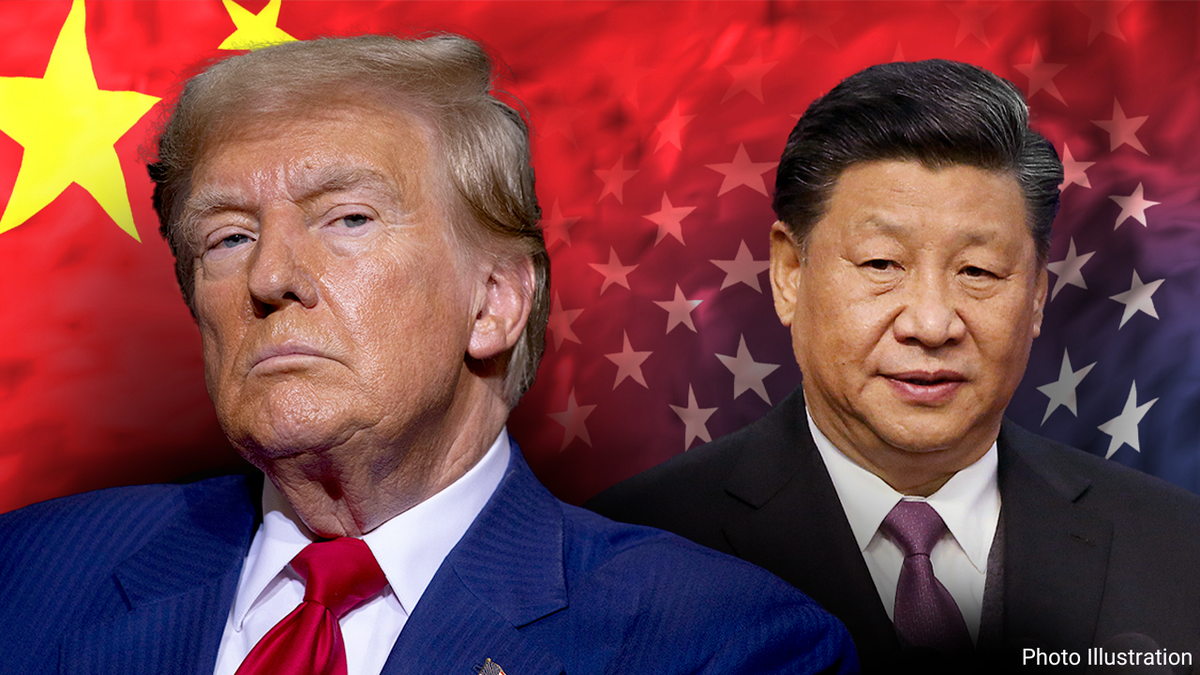
When finance ministers, central bankers, and development leaders converged in Washington for the 2025 annual meetings of the IMF and World Bank, the expectation was clear: the agenda would center on growth, debt relief, climate finance, and global stability. But in the corridors of power and behind closed doors, that agenda was abruptly overtaken by one headline: Trump’s threat of 100 percent tariffs on Chinese goods. What had been a diplomatic platform now transformed into a battleground of competing economic ideologies.
The escalation is far from symbolic. It has rekindled fears of a full-scale trade war, rattled markets across continents, and forced global leaders into rapid repositioning. What’s unfolding is more than just a policy spat between Washington and Beijing — it’s the potential dawn of a new economic Cold War. And in that clash lie profound implications for trade, supply chains, diplomacy, and global governance.
From Truce to Turmoil: How We Got Here
To understand the rupture, we have to look back to the uneasy truce that preceded it. Earlier this year, the United States and China appeared to step back from their trade war brinkmanship. Tariffs were relaxed in some sectors, high-level dialogues resumed, and tentative agreements on sectors like semiconductors and technology access suggested that both sides were jockeying for a more stable footing.
But that calm was always fragile. At its core, the U.S. remained deeply frustrated with China’s control over critical materials — particularly rare earth elements and magnets, which are essential inputs in industries ranging from consumer electronics to defense systems. China, for its part, viewed those resources as strategic levers. When it announced new export controls on select rare earths and magnet materials, citing national security, it triggered the fuse.
President Trump responded with a shock: a 100 percent tariff on all Chinese imports — a dramatic doubling or tripling of many existing tariff rates. In that instant, the delicate balance unraveled. Washington explicitly linked the tariff threat to Beijing’s export restrictions and threatened new export controls on U.S. critical software if China did not reverse course. The message was clear: the truce had expired.
Shockwaves Across Markets and Policy Circles
It didn’t take long for markets to react. On the heels of the announcement, stock indexes from New York to Tokyo tumbled. Tech shares, particularly those reliant on Chinese supply chains, were dragged down hardest. Momentum traders, already on edge in volatile conditions, rushed for the exits. In a matter of hours, what had been a global investor shrug became palpable fear of contagion.
At the same time, bond markets and currency markets began to exhibit stress. Investors, sensing rising geopolitical and policy risk, shifted into safe havens — pushing yields downward on government debt and driving the U.S. dollar higher against many peers. Meanwhile, commodity markets, especially those tied to rare earths and strategic minerals, bounced at the prospect of supply disruptions.
What was happening wasn’t just a tariff shock — it was a stress test of global interdependence. Exporters in Southeast Asia, commodity producers in Africa, manufacturers in Europe — many suddenly realized they were entangled in a conflict not of their making. A nation’s distance from Washington or Beijing afforded no immunity when supply chains cut through dozens of borders.
Washington Becomes the Arena
Against this backdrop, the IMF / World Bank meetings — once a predictable forum for technocrats — became a high-stakes political theater. Delegates arrived expecting to debate macroeconomics, debt relief, climate funding, and development. Instead, trade took over virtually every agenda item.
In speeches, IMF Managing Director Kristalina Georgieva warned that “uncertainty is the new normal,” urging leaders to brace for knock-on effects. Some among the U.S. delegation attempted to soften rhetoric, emphasizing that dialogue with China was ongoing and that the tariff announcement was intended as leverage, not ultimatum. But the tone had already shifted.
In private, finance ministers scrambled to reassess bilateral exposures, contingency plans, and potential alignments. Delegations from developing economies — especially heavily indebted nations — scurried to position themselves as victims of great-power rivalry, hedging their bets and preparing appeals for buffer funding or emergency liquidity support.
Rumors circulated that the U.S. sought concessions in climate or development lending in exchange for tolerance. Meanwhile, emerging markets voiced concern that the U.S. might push the IMF and World Bank to reduce commitments to climate programs and social initiatives, diverting capital toward defense or security. The prospect of politicizing multilateral finance institutions has become a core fear.
China’s Response: Defiance, Delay, and Positioning
China’s initial public posture has been defensive but measured. Beijing defended its export restrictions, arguing they are legitimate and driven by national security needs. The Chinese Commerce Ministry accused the U.S. of hypocrisy, pointing to American export controls and blacklisting actions as contributing factors. At the same time, China has not immediately launched a sweeping counter-tariff barrage, preferring to keep room for negotiation.
Behind closed doors, Beijing is believed to be preparing retaliatory packages targeting U.S. interests in agriculture, technology, and key industrial sectors. Analysts see potential Chinese leverage in limiting supply of processed rare earth products, targeting U.S. firms with investigations or export bans, and manipulating currency flows to offset pricing blows.
China is also likely using diplomatic channels to rally third parties — particularly in Europe, Southeast Asia, Africa, and Latin America — against unilateral U.S. actions. Given its dominance in critical mineral processing and key portions of tech supply chains, China has both structural and geopolitical cards to play.
But the calculus is risky. Overreaction could trigger global cascade effects damaging China’s own export revenue, investor confidence, and ties to major trade partners. Going too soft, however, might be read domestically as weakness. In this balancing act, Beijing’s choices will shape whether this crisis spirals or winds down.
The Global Imperative: Choices, Risks, and Alignments
Because of the scale and stakes, this confrontation forces all nations to make uncomfortable choices.
1. Blocs Over Bipartisanship?
Countries that are closely tied to either the U.S. or China — through trade, technology, investment, or security alliances — will face diplomatic pressure to choose sides. Some may quietly reaffirm alignment with U.S. positions; others, wary of risk, may lean toward China or opt to stay neutral. But neutrality, in a world of entangled supply chains, is increasingly untenable.
2. Supply Chain Reckoning
Most of the world’s modern manufacturing relies on multi-tiered global supply chains, particularly in semiconductors, batteries, rare earths, and critical components. As tariffs and export controls intensify, many producers now face painful decisions: relocate operations, secure alternate inputs, or absorb cascading cost increases. For many, flexibility built over years will now be tested.
3. Debt, Liquidity, and Safety Nets
Lower-income and middle-income nations that rely on external financing face dual strains: rising borrowing costs and uncertain ability to export. Many may look to the IMF or World Bank for emergency support or waiver relief. But the politicization of these institutions risks undermining their credibility just when trust may be needed most.
4. Technological Decoupling and Governance
The trade war is not just about tariffs; it’s about control over the tech architecture of the future. Critical software, advanced semiconductors, AI, and infrastructure components are now becoming battlegrounds for control. Governments may respond with stricter cross-border data rules, export controls, investment screening, and “clean tech alliances” divorced from rivals.
5. Monetary Responses & Inflation Dynamics
Harsh trade disruptions often translate into input cost inflation. Central banks, already navigating post-pandemic pressures, must now weigh whether to tighten, pause, or pivot. A global inflation spike—especially in energy, food, and critical parts—could challenge growth projections and exacerbate inequality.
What Could Happen Next: Scenarios
In the coming weeks and months, several trajectories are possible:
1. De-escalation and Negotiated Truce
The most optimistic scenario: behind the bluster, both sides step back. Trump might delay or scale back the 100% tariff, while China lifts some export curbs or offers licensing exemptions. A summit (perhaps between Trump and Xi) could be salvaged. The IMF / World Bank meetings could return to their original agenda amid cautious relief.
2. Tactical Escalation, Partial Freeze
In a moderate outcome, the confrontation would continue in limited areas — applying tariffs and controls only to select sectors (e.g. rare earths, AI components, strategic software) while keeping broader trade lines open. Negotiations continue, and markets respond with volatility but avoid full collapse.
3. Full-Blown Trade War
The worst case: both sides double down, triggering tariffs, countermeasures, sanctions, and broader export controls. Investor panic intensifies, supply chains fracture, and dozens of countries get pulled in via knock-on effects. The global economy, already fragile, could slip into recessionary crosscurrents.
4. Fragmented Alliances and Regional Realignments
Regardless of escalation, the geopolitical fallout is likely to reshape alliances. A coalition of like-minded nations may emerge — those who band with the U.S. to decouple from China in critical tech sectors. Others may gravitate to China or seek regional blocs that limit exposure to both superpowers. Global institutions could be pressured to reconfigure lending, trade norms, and diplomatic protocols to reflect new power structures.
What It Means for Regional and Local Players
Asia & the Indo-Pacific
Countries such as Japan, South Korea, Taiwan, ASEAN members, and India find themselves in the crosshairs. Many rely on Chinese inputs and markets while also linking militarily or strategically to the U.S. They must navigate carefully — too much alignment with one side risks retaliation from the other. Investment and trade routes may shift as regional blocs (e.g., a “tech alliance” among democracies) become more attractive.
Europe
The European Union, already strained by inflation and energy challenges, may push back against unilateral U.S. tariffs while simultaneously seeking cooperative frameworks with China. The EU may also accelerate efforts to secure critical supply chains within its own borders, reducing dependency on both the U.S. and China.
Africa & Latin America
These regions, often resource-rich and commodity-exporting, could find themselves in the role of pivots. China and the U.S. may intensify competition for influence, investments, infrastructure deals, and resource access. Local governments will need to safeguard sovereignty while avoiding economic coercion.
Multilateral Institutions under Fire
The IMF and World Bank, historically seen as neutral institutional safe havens, are now caught in a storm of politicization. As major shareholders (especially the U.S.) push for influence over lending, climate programs, and development priorities, the institutions’ independence may come under stress. Emerging economies fear that institutions will tilt toward donor agendas.
The Human Stakes
Amid all this macro maneuvering, real people will bear the cost. Consumers may face surging prices on electronics, autos, and daily goods. Workers in manufacturing zones may face layoffs or site relocations. Farmers dependent on export markets might see demand collapse or retaliatory barriers. In nations with fragile safety nets, rising food and energy costs could translate into social unrest.
In many countries, especially vulnerable ones, the only buffer will be fiscal and monetary discipline, or emergency aid. But those tools may be insufficient if the economic headwinds intensify.
What to Watch — Key Bellwethers
- Trump–Xi Summit Plans – Whether it happens, is canceled, or gets postponed will signal tactical shifts.
- China’s Countermoves – Watch for retaliatory measures targeting U.S. supply chains, restrictions, or blacklists.
- IMF / World Bank Communiques – How they reference trade, debt relief, and structural reform will hint at alignment.
- Treasury & Finance Officials’ Messaging – Will they walk back rhetoric or double down?
- Commodity & Rare Earth Markets – Sharp price moves or supply crunches will presage deeper disruption.
- Emerging Market Debt Fuel – Which countries ask for relief or liquidity support will show which are at risk.
- Regional Blocks & Partnerships – Alliances like tech pacts, free trade zones, or supply-chain coalitions.
Conclusion: Redrawing the Economic Battle Lines
The 2025 IMF / World Bank meetings were intended as a stage for multilateral cooperation. Instead, they’ve become a flashpoint in a reinvented global order. The 100 percent tariff threat is not merely an escalation in tariff policy — it is a declaration: economic wars have returned.
Whether this moment leads to a new cold war or a negotiated settlement will depend on how the major powers and their allies navigate pressure, leverage, and restraint.
But one thing is certain: the rules that once held global trade together are under strain. In the coming weeks, the boundaries between trade, technology, diplomacy, and security will blur further. Nations large and small will be forced to recalibrate their strategies. In this moment of disruption, innovation, resilience, and clarity of purpose will determine who survives — and who gets left behind.
This trade war is not just about tariffs. It’s about the architecture of global power in the 21st century — and it’s being contested at the IMF / World Bank stage.