


Introduction
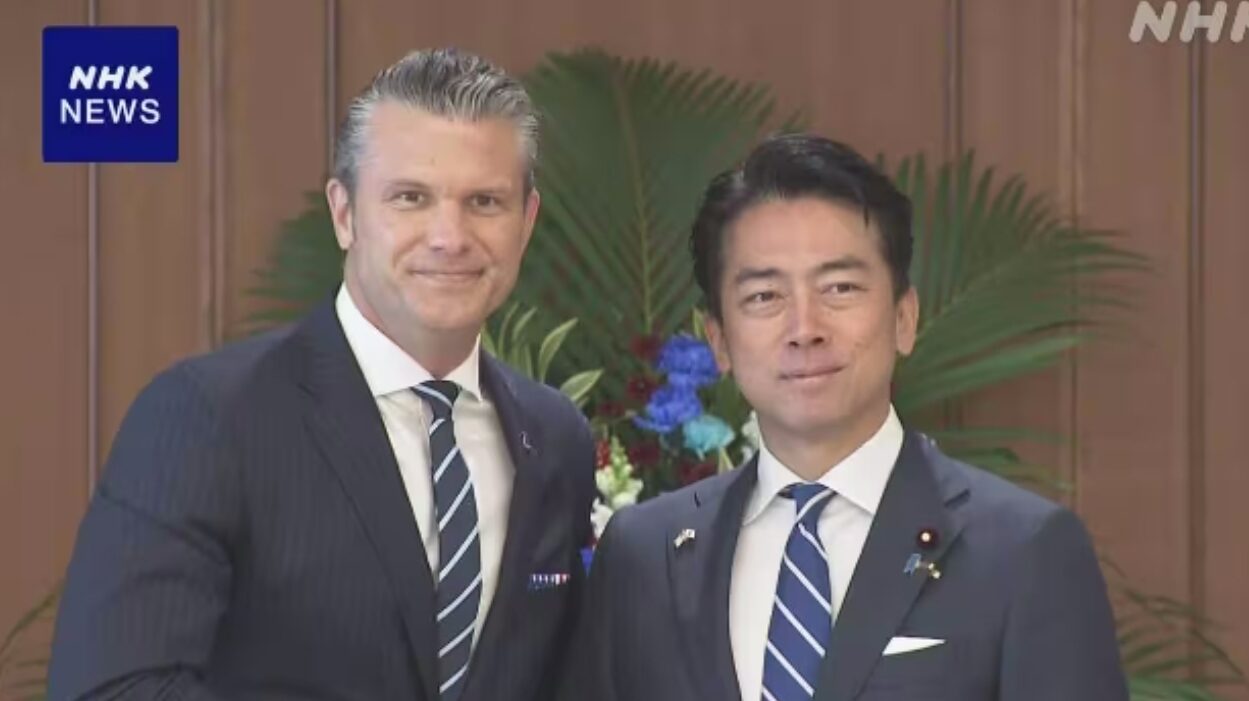
In a marked departure from decades of measured defense posture, Japan is actively deepening its military alignment with United States — a transformation that reflects not only rising regional tensions but also Tokyo’s evolving strategic self-understanding. The forthcoming meeting in Tokyo between Pete Hegseth — U.S. Secretary of Defense — and Japan’s newly appointed Defense Minister Shinjirō Koizumi signals this shift. Tokyo has also formally committed to raising its defense spending to 2 % of GDP by March 2026 — thereby accelerating a long-planned militarisation in response to China’s military expansion and North Korea’s continuing weapons programmes.
This article examines the dimensions of this change: Tokyo’s budgetary commitment, the structural reform in the U.S.–Japan alliance, the strategic rationale underpinning the shift, and the broader implications for the Indo-Pacific security order. By looking at the facts and situating them in historical and geopolitical context, we seek a clear view of what this new alignment means — for Japan, for the United States, and for the region.
Historical Context of the U.S.–Japan Security Relationship
The U.S.–Japan alliance has its roots in the post-World War II era: formally embodied in the Treaty of Mutual Cooperation and Security between the United States and Japan (1960). Over time, Tokyo’s constitutional pacifism, embodied in Article 9, restricted Japan’s military role to self-defence; yet the alliance allowed the United States to maintain bases on Japanese soil and afforded Tokyo U.S. extended deterrence.
In recent years Tokyo has incrementally recalibrated its defence policy — for example, revising its national security strategy, loosening restrictions on arms exports, and acquiring increased “counter-strike” capability. In parallel, Washington has re-imagined its Asia strategy, moving from a hub-and-spoke model to a more networked approach of alliances aimed at deterring coercion by rising powers.
This evolving alliance sets the stage for the latest developments.
The Meeting: Hegseth Meets Koizumi
On Wednesday in Tokyo, Secretary of Defense Pete Hegseth will meet with Japan’s Defense Minister Shinjirō Koizumi for the first time. The agenda is clear: deepen deterrence, refine interoperability, and accelerate Japan’s defence build-up in support of the alliance. It has been reported that during the meeting one of the main items will be Tokyo’s intention to raise its defence spending to 2 % of GDP by the end of the current fiscal year — a full two years ahead of schedule.
This meeting is symbolic for several reasons. First, it underscores Tokyo’s urgency in responding to regional threats, signalling the Japanese leadership’s recognition of a rapidly worsening security environment. Second, it affirms Washington’s expectation that Japan will not simply passively host U.S. forces, but take greater responsibility for its own defence and the alliance’s collective posture. Third, it sends a message to Beijing and Pyongyang alike: this is not business as usual.
Japan’s Move to 2 % of GDP: Budget, Timing, and Substance
Perhaps the most concrete change is Japan’s commitment to raise its defence spending to 2 % of GDP by March 2026. Under the prior plan Japan would have reached this threshold later; the acceleration signals urgency. In making this shift, Japan is departing from its long-held standby posture and entering a phase of more sustained military investment.
What will this money buy? While precise items are still being detailed, areas of likely focus include: advanced missiles and long-range strike capabilities, enhanced radar and surveillance systems, improved command-and-control and cyber/space assets, and deeper integration with U.S. force posture in Japan. The shift also enables Japan’s defence-industrial base — long constrained by export bans and limited domestic procurement — to scale up.
It is worth stressing two further points: first, 2 % of GDP is a symbolic threshold rather than a magic number; but in Japan’s case it marks a meaningful departure from historic restraint. Second, the speed with which Japan is implementing this commitment suggests Tokyo views the security environment as changing faster than anticipated.
Strategic Motives: Threat Perceptions and Regional Dynamics
Why is Japan acting now, and why more assertively? Two principal threats loom. First is the rise of China: its expanding navy, increasingly assertive maritime posture around the East and South China Seas, and its growing power projection capabilities challenge Japan’s territory, supply-lines and strategic depth. Second is North Korea — its missile and nuclear-weapon programmes remain unpredictable and increasingly sophisticated, posing a direct threat to Japan and the wider alliance.
Japan’s leaders increasingly describe the security environment as the gravest since World War II. Against that backdrop, the U.S.–Japan alliance is not simply a bilateral arrangement, but part of a broader Indo-Pacific balance. Tokyo’s move thus reflects both a national strategic awakening and alignment with Washington’s shifting regional architecture.
The defence build-up is also ideological and reputational: Japan has long prided itself on a pacifist identity. But the rapidly worsening environment and the expectation by the United States that Japan “pull its weight” have combined to reshape public and elite perceptions of Japan’s regional role.
Alliance Dynamics: What’s Changing and What’s Staying the Same
The meeting between Hegseth and Koizumi highlights multiple dimensions of change in the alliance.
1. Defence Burden-Sharing and Japan’s Role
Tokyo is signalling a transition from “host nation” to “active security partner.” Increasing its spending and revising doctrine means Japan is embracing higher responsibility: not only for its own defence, but for alliance deterrence more broadly. Washington welcomes this change because it allows a more balanced and sustainable alliance.
2. Interoperability and Joint Planning
Japan and the U.S. are reviewing their key security documents — notably Japan’s National Security Strategy, National Defence Strategy and the Defence Buildup Program. Japan made public that this review has already begun. A more coherent strategic architecture will enable tighter integration of command, intelligence, surveillance, reconnaissance and logistics between the two militaries.
3. Operational Posture
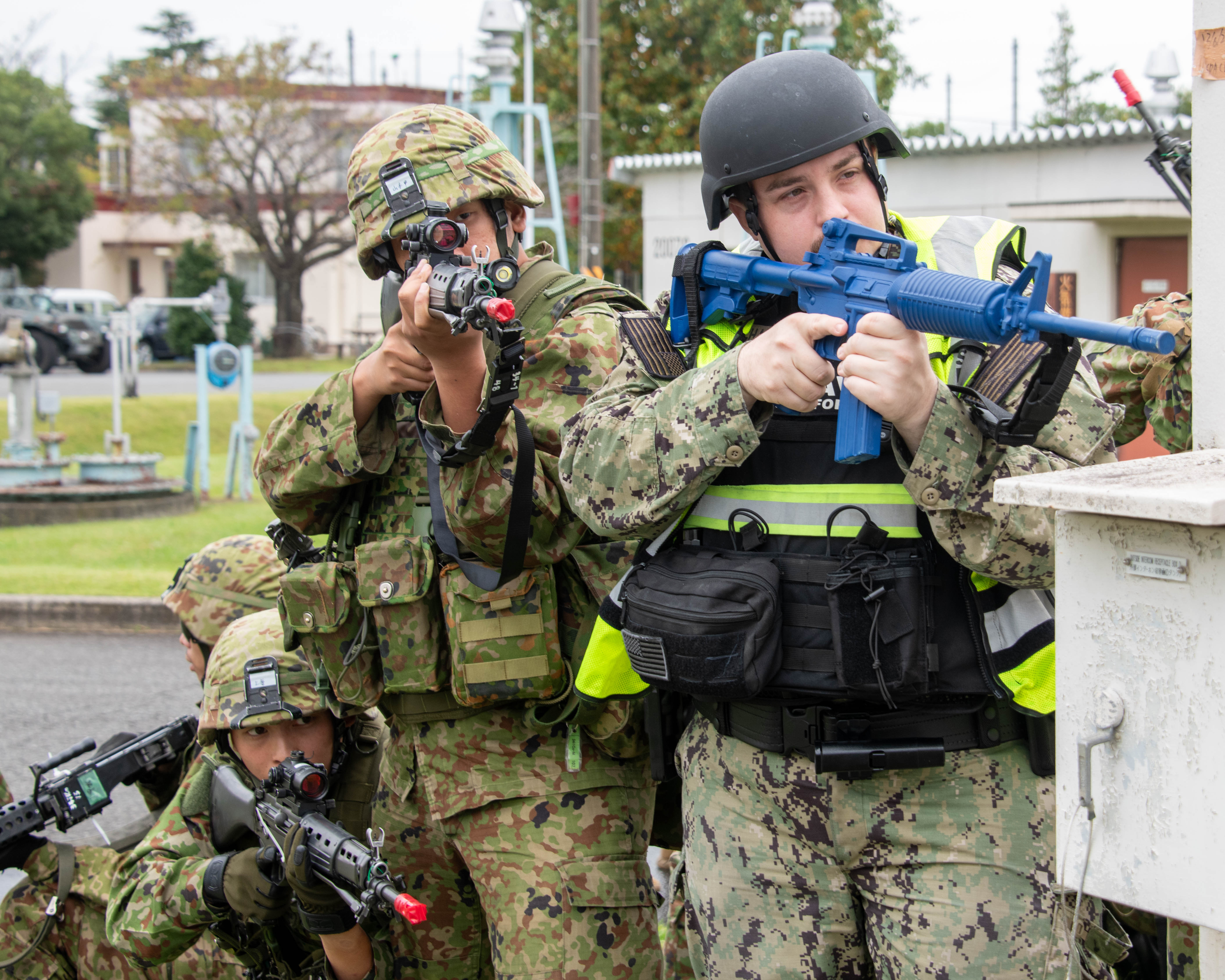
While the U.S. maintains substantial forces in Japan — the largest concentration of U.S. overseas troops — Tokyo’s plans leverage this presence not just for forward basing, but for joint deterrence across the region. Joint exercises, shared command arrangements and co-production of high-end weapons are increasingly part of the agenda.
4. Continuity of Treaty and Commitment
While the shift is considerable, the core of the alliance stays: the U.S. commitment to Japan’s defence and the mutual security treaty remain central. Japan has not abandoned its pacifist constitution outright, nor has it declared an independent nuclear deterrent. What is changing is the scale, timing and seriousness of Japan’s contributions.
Regional and Global Implications
Japan’s defence shift and the enhanced U.S.–Japan alignment have ripple effects across the Indo-Pacific and beyond.
Impact on China
Beijing will inevitably view Japan’s move as a challenge to its own regional ambitions. Japan’s boosted spending and more active posture mean that China must factor in a more muscular and coordinated American-Japanese deterrent. This may increase tension, but may also raise the cost of coercion for Beijing.
Impact on Korea and Other Allies
South Korea and other regional partners are likely to welcome Japan’s deeper engagement — especially where trilateral cooperation is concerned (U.S.–Japan–Korea). Japan’s shift could serve as a catalyst for expanded security cooperation among allies, reinforcing a networked security architecture. That said, historical issues and bilateral mistrust still linger in the region, so Tokyo will need to manage its relations carefully.
Signal to North Korea
For Pyongyang, Japan’s defence build-up sends a clearer signal that its missile and nuclear provocations may now meet stronger allied deterrence. That may reduce North Korea’s freedom of manoeuvre, though whether it alters Pyongyang’s calculus remains uncertain.
Implications for U.S. Posture
From Washington’s perspective, Japan’s ramp-up allows the U.S. to pursue a more distributed posture in the Indo-Pacific, reducing the burden on U.S. forces and enhancing allied resilience. It helps shift U.S. strategy away from reliance solely on American hardware and forces, toward more integrated regional partnerships.
Domestic Japanese Politics and Public Opinion
Domestically, Japan’s defence shift is not without controversy. While public support for strengthening defence is rising, Japan remains cautious about overt militarism and constitutional reform. Tokyo will need to balance its new strategic ambitions with domestic consensus and its identity as a pacifist nation. Historically, strong anti-base sentiment, especially in Okinawa, and wariness of becoming entangled in U.S. conflicts, have constrained Japan’s military moves.
Limitations and Challenges
Even as Japan moves boldly, there are constraints and risks worth noting.
Budgetary and Logistical Limits
Raising defence spending to 2 % of GDP is meaningful, but it does not automatically translate into instant operational capability. Procurement cycles are long, integration with U.S. forces complex, and Japanese industrial base must scale up. There will be a lag between announced spending targets and full capability.
Strategic Ambiguities
Japan continues to define its military posture within the limits of its pacifist constitution. This means that while capabilities may increase, Tokyo will maintain constraints on collective defence operations and offensive missions. This ambiguity may limit the full strategic potential of the alliance.
Geopolitical Risk
As Japan becomes more assertive militarily, it risks provoking counter-moves from China and North Korea. Escalation remains a possibility, especially in flashpoints like the East China Sea, Taiwan Strait or the Korean Peninsula. Tokyo must calibrate its actions carefully.
Domestic Oversight and Consensus
Given Japan’s pacifist tradition, major defence shifts require domestic political support and public legitimacy. Any misstep or scandal could undermine momentum. Transparency, oversight, and careful communication will matter.
Practical Insight: What to Watch
For observers of Asia-Pacific security, several things merit monitoring:
- Budget and procurement timelines. Will Japan hit 2 % of GDP by March 2026? How quickly will it field new missile systems, surveillance assets and joint U.S.–Japan capabilities?
- Revision of key strategy documents. Japan’s review of its National Security Strategy, National Defence Strategy and Defence Buildup Program will set the tone for how its military investment and alliance role evolves.
- Joint exercises and force posture changes. Increased U.S.–Japan joint drills, clearer command arrangements, and potential deployments will indicate deeper operational integration.
- Regional diplomatic responses. How do China, North Korea, South Korea, Australia and other regional players respond to Japan’s shift? Will this trigger arms competition or stronger cooperation?
- Domestic Japanese politics. Are there signs of domestic resistance or major debate about Japan’s defence orientation? How does public opinion evolve?
Conclusion
Japan’s decision to raise its defence spending and accelerate its military alignment with the United States marks a watershed in its post-war security posture. In meeting with the U.S. Secretary of Defense, Japan is not simply reaffirming an alliance — it is reshaping the alliance from within, and redefining its strategic role in a changing Asia-Pacific.
This shift reflects a sober recognition in Tokyo of altered geopolitics: rising Chinese military assertiveness, North Korean unpredictability, and a U.S. foreign policy that expects allies to carry a greater share of the burden. At the same time, Japan’s return to a more proactive defence role signals its willingness to move beyond a passive, host-nation role into that of an active security partner.
Yet this is not a simple story of remilitarisation. Japan remains anchored in its pacifist identity, within constitutional constraints and domestic caution. The challenge lies in translating announced budgets into operational capability, weaving national reform with alliance integration, and doing so without provoking destabilising counter-moves or domestic backlash.
In essence, Japan is turning a corner: from decades of cautious defence evolution to a more assertive, integrated posture. The alliance with the United States is the centrepiece of that turn, but also the means by which Japan seeks to secure its interests and contribute meaningfully to regional stability. What unfolds in the coming years will matter not only for Tokyo and Washington — but for the strategic architecture of the Indo-Pacific.