
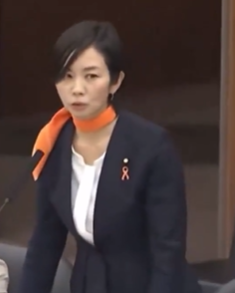
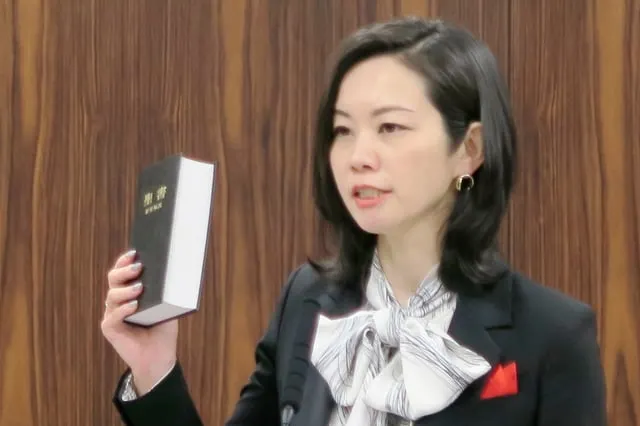
Japan’s political arguments often shift by degrees, almost imperceptibly, until a single comment suddenly exposes the deeper pressures building beneath the surface. That happened in late November 2025, when Upper House member Mizuho Umemura, now aligned with Sanseito, questioned whether Japan should expand burial sites for minority religious communities.
She justified her position by appealing to national customs, public-health concerns, and the idea that cremation is simply “the Japanese way.” But the argument was only the tip of something larger: a career shaped by media instincts and political reinvention, set against a country still deciding how much space it is willing to make for diversity.
Umemura’s own story traces a path very different from the familiar pipeline of policy advisers and party protégés. She was born in Nagoya in 1978 and grew up all over the map: Ehime, Yamaguchi, Shiga, Toyama, before attending Ritsumeikan University. After graduating, she joined JTB and then moved into freelance announcing under the name Sakura Mizuho.
For years, she balanced broadcasting work, raising her children, and teaching communication skills. Nothing about her early life pointed toward the Diet. That changed in 2019, when Nippon Ishin no Kai chose her to run in Osaka’s Upper House race. She was a late choice, but her campaign caught fire. Voters responded to her presence and clarity, and she won decisively.
The following years were less straightforward. What began as a promising political ascent soon met the friction of controversy and shifting allegiances. Ishin, half reform movement, half populist outlet, gave her room, and in 2022 she even put her name forward in the party’s leadership election. The defeat was overwhelming, but not fatal. What truly altered her position was the immigration-committee hearing in 2023, when she speculated that a Sri Lankan detainee who died in custody might have exaggerated her symptoms at the urging of supporters. The remark was immediately condemned. Critics called it baseless and insensitive to a woman who had died under the government’s supervision.
Within days she was removed from her committee assignment and suspended. The reputational damage lingered, and her standing inside Ishin gradually eroded.
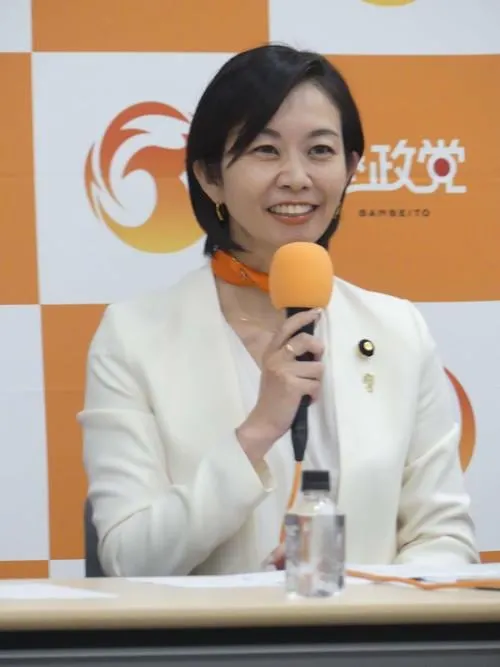
By 2025, the party had moved on. She lost her internal primary for re-election, and soon after she left Ishin altogether, saying the organization had become opaque and internally inconsistent. The party she chose instead, Sanseito, is smaller, more ideologically uniform, and more direct in its messaging. Where Ishin stresses efficiency, decentralization, and tough administrative audits, Sanseito speaks to cultural unease, distrust of global institutions, and a return to what it calls traditional Japanese values.
For a politician looking to reposition herself around cultural themes rather than bureaucratic ones, the shift made strategic sense.
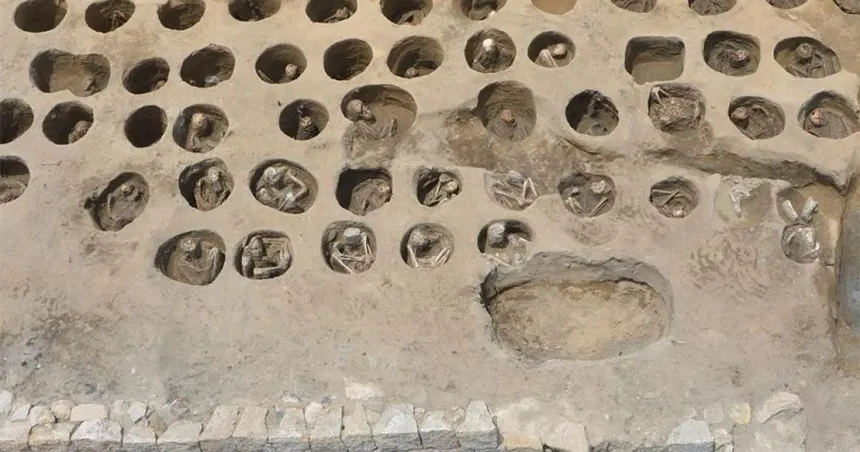
Her remarks in November fit neatly into that new alignment. In the Diet, she highlighted Japan’s cremation rate– virtually 100 percent, and described burial as almost nonexistent, confined mostly to stillbirths. Cremation, she argued, was not just common practice but cultural identity. Introducing new burial sites to meet the needs of Muslim residents, she warned, could create sanitation concerns, especially in a country prone to earthquakes and floods. She added that Japanese funeral services lack widespread embalming expertise, implying that burial could not be safely scaled. The conclusion she offered was stark: those who prefer burial should either accept cremation in Japan or arrange for remains to be repatriated.
The pushback was immediate and strong. Many heard her comments as a dismissal of deeply held religious obligations. The tone suggested that minority customs were an inconvenience, something to be set aside in deference to national norms. Critics noted that disaster-related exposure of graves is a solvable problem with modern cemetery design. Embalming, likewise, is a matter of training and regulation, not cultural destiny. And while cremation is overwhelmingly common in Japan, turning that fact into an absolute boundary raises questions about how the state views the rights of communities who live and work within its borders.
Her comments also landed in a global atmosphere where questions of identity, belonging, and national cohesion are becoming sharper. Japan, long accustomed to thinking of itself as culturally uniform, is quietly becoming more diverse. The foreign-resident population continues to grow as the labor force shrinks. Brazilian Japanese families, Vietnamese trainees, Filipino caregivers, South Asian Muslims, and many others have become part of the country’s fabric. Their presence challenges Japan to articulate not only who counts as part of the community but how far majority norms should extend in shaping the private, intimate practices of others.
Umemura’s stance illustrates the tension between cultural certainty and practical governance. Her supporters argue that she is defending what works: cremation is efficient, clean, and familiar; burial introduces new responsibilities and risks; every nation expects immigrants to adapt to certain basic norms. Opponents counter that she is drawing the circle of belonging too tightly, treating minority customs as outliers rather than elements of a broader social tapestry. The logic of “when in Rome” becomes more fraught when applied to rites of death, matters rooted not in habit but in identity and faith.
Parsing this moment requires looking not only at Umemura herself but at Sanseito’s political project. The party’s rise reflects worries about globalization, public health, education quality, and a perceived drift away from national traditions. It blends populism with a spiritual vocabulary and appeals to citizens who feel unsettled by rapid change. Umemura’s background growing up in a strict religious environment, speaking frequently about personal discipline, and conveying suspicion toward unbounded pluralism aligns naturally with this worldview. She brings rhetorical fluency, a sense of conviction, and a connection with voters who fear that cultural change may erode something essential.
But a politics anchored too firmly in cultural uniformity can harden into a refusal to engage with difference. When norms are portrayed as immovable, the public conversation narrows. Japan’s demographic and economic pressures will only intensify the need to think creatively about living alongside communities whose traditions do not mirror the majority’s. The question is not whether to abandon cremation or upend national customs, but how to balance public-health standards with religious dignity, and how to shape policies that neither ignore the needs of minorities nor undermine shared expectations. Strengthening a society sometimes requires accommodating differences that, at first glance, seem unfamiliar.
Umemura’s comments will not determine the future of burial practices, but they do mark the limits of what some political actors believe Japan should accept. They reveal the anxieties beneath the surface: concerns about cohesion, discomfort with cultural pluralism, and the instinct to protect familiar norms by resisting even modest exceptions. If Japan hopes to navigate these questions with steadiness, it will need leaders capable of holding two truths at once, that cultural inheritance matters, and that minority communities living in Japan deserve dignity in the customs most sacred to them.
The debate sparked by her remarks is more than a reaction to one politician’s misjudged phrasing. It is part of an ongoing conversation about who belongs, how a nation adapts, and what responsibilities emerge when a once-homogeneous society begins to diversify. How Japan answers those questions, in policy and in the tone of its public discourse, will shape whether the country’s diversity becomes a source of resilience or a point of fracture in the decades ahead.