
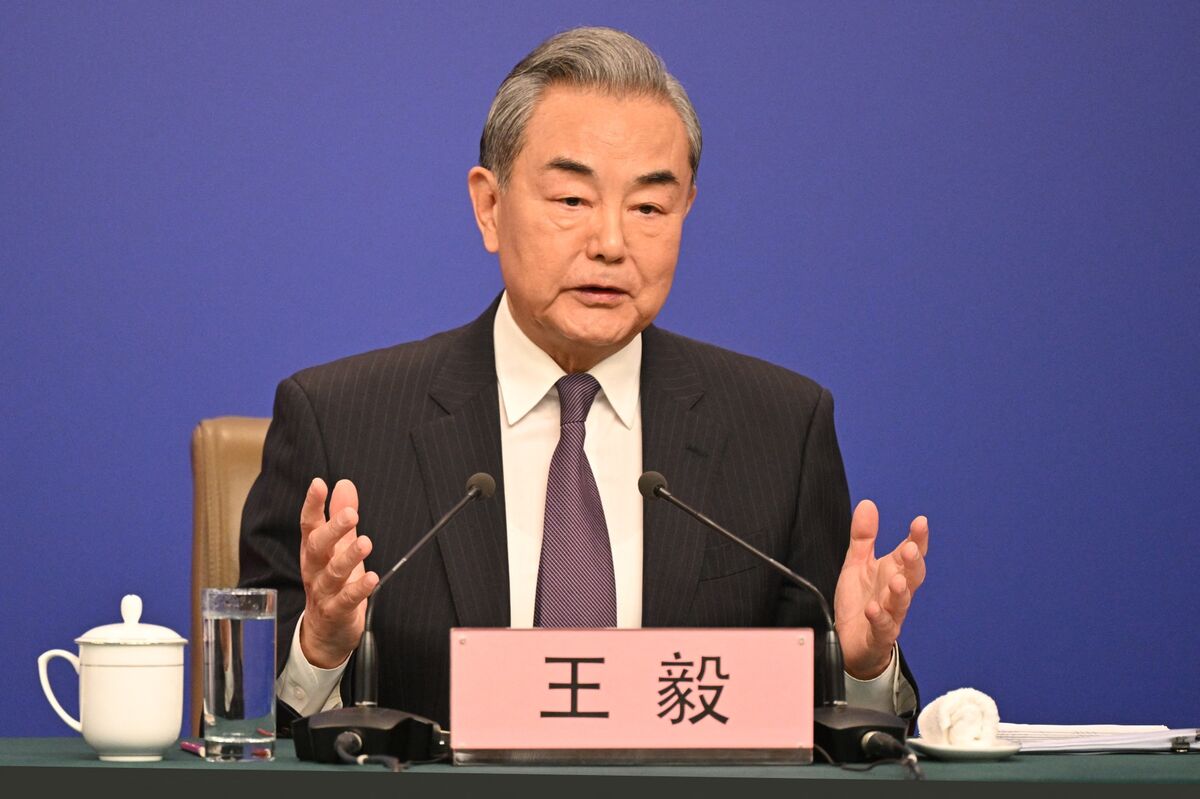
China’s foreign minister, Wang Yi, issued an unusually sharp warning this week, telling his German counterpart that Japan is now “threatening China militarily,” a charge Beijing framed as both dangerous and historically tone-deaf.

The remark came after Japan accused Chinese fighter jets of locking their fire-control radar onto Japanese military aircraft east of the Miyako Strait.
Tokyo denounced the radar illumination as a hazardous act that violates established norms, while Beijing insisted Japan had provoked the encounter by repeatedly flying close to Chinese naval drills that had been publicly announced in advance.
The dispute lands on top of a broader deterioration in relations. Over the past month, Japanese Prime Minister Sanae Takaichi has taken a harder line on regional security, warning that Japan could respond to any Chinese military action against Taiwan if that action also posed a threat to Japan itself. For Tokyo, that position is common sense: Japan’s southwestern islands sit so close to Taiwan that any conflict across the Strait would spill across Japanese airspace within hours. Beijing reads the same statement very differently, seeing it as evidence that Japan has moved from ambiguity to open interference.
Against this backdrop, Wang’s comments in Beijing carried more than diplomatic irritation. Speaking beside German Foreign Minister Johann Wadephul, he invoked this year’s 80th anniversary of the end of World War Two and argued that Japan, “as a defeated nation,” should exercise greater restraint. He added that Tokyo’s leader was exploiting the Taiwan issue, territory Japan once ruled as a colony, to “provoke trouble and threaten China militarily,” language that evokes Beijing’s long-standing resentment and its belief that Japan’s security posture is tied to U.S.-led containment.
China’s argument relies heavily on historical narrative: that Taiwan’s status as Chinese territory is “unequivocally affirmed” by legal and historical precedent. Beijing insists that the People’s Republic of China naturally inherited sovereignty from the Republic of China in 1949 and therefore retains rightful authority over Taiwan. Taiwan’s democratically elected government rejects this completely, noting that the PRC did not exist in 1945 and has never ruled the island. Taipei’s foreign ministry responded on Tuesday by reiterating that only Taiwan’s elected government represents its 23 million people, and that Beijing’s increasingly aggressive framing distorts both history and law.
Japan, for its part, is trying to prevent this dispute from becoming normalized. Chief Cabinet Secretary Minoru Kihara repeated Tokyo’s position that the radar incident cannot be justified, calling the intermittent illumination of radar beams “a dangerous act that goes beyond what is safe and necessary.”
Japanese officials also declined to confirm reports that China refused to answer Japan’s calls on the bilateral defense hotline during the encounter, a system that was established in 2018 precisely to prevent such incidents from escalating.
China believes its expanded naval drills, air patrols, and pressure around Taiwan reflect its rightful status as a resurgent power reclaiming lost ground. Japan views those same actions as part of an increasingly coercive approach that threatens the stability of the first island chain and undermines the rules that have governed the region for decades.
Each side believes its position is defensive, or at the very least claims to, and each sees the other’s moves, new basing, new exercises, new legal claims, not as adjustments but as warnings.

Japan sees the radar incident as another sign that China is erasing the guardrails that once kept the region stable, and they are increasingly convinced that Taiwan’s fate and Japan’s security can no longer be separated. In the U.S., the episode is read as yet another data point in a pattern of PLA escalation meant to normalize risky behavior, compress reaction time, and test allied resolve; U.S. officials worry that the gap between dangerous maneuver and unintended conflict is narrowing fast. Meanwhile, the broader international community hears something unsettling in Wang Yi’s rhetoric: a willingness to weaponize historical grievance at a moment when China is expanding its military reach.