
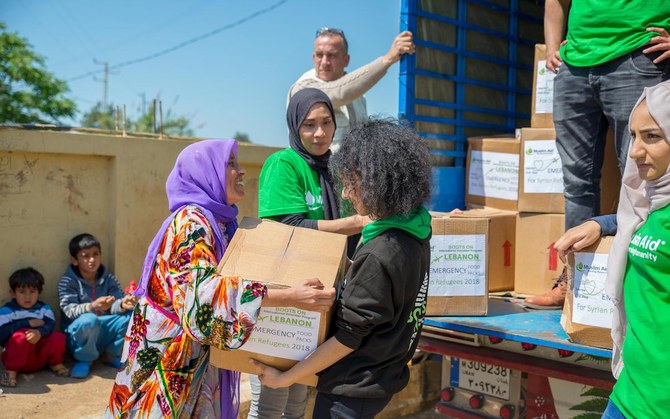
The world’s most powerful donor has turned off the tap. The United States, long the largest single provider of foreign aid, has slashed programs that millions depend on for healthcare, food, education, and emergency relief. Humanitarian chiefs at the United Nations are sounding the alarm, urging other wealthy nations to fill the gap before the damage becomes irreversible.
The message is stark: when America pulls back, the consequences are not confined to distant lands. They ripple outward, reshaping global stability, geopolitics, and even the domestic interests of the very countries debating whether to step in.
This is more than a budget line in Washington. It is a test of whether the international community can adapt to a new reality—one in which the U.S. no longer wants, or is no longer able, to carry the bulk of the world’s humanitarian burden.
The Scope of the Cuts
To understand the gravity of this moment, it helps to recall the scale of U.S. aid. For decades, the U.S. has been the single largest donor of humanitarian and development assistance. Programs funded by Washington supported everything from HIV treatment in sub-Saharan Africa to refugee camps in the Middle East, food programs in South Asia, and disaster recovery efforts from the Caribbean to the Pacific.
Now, much of that support is gone. Funding reductions have already forced clinics to shut their doors, halted shipments of food staples, and left teachers in fragile states without salaries. International NGOs report delays and cancellations in dozens of countries. The World Food Programme has had to cut rations. UNICEF has reduced vaccination drives. In refugee settlements, the lights are literally going out.
The shock is not just financial. It is psychological. Communities that relied on the consistency of American aid now face the uncertainty of whether lifelines will return—or if they must look elsewhere for survival.
A Fragile Network Under Strain
The global humanitarian system has always been fragile, stitched together by overlapping contributions from governments, multilateral institutions, and private donors. The U.S., by virtue of its size, served as the anchor. When crises erupted—whether an earthquake in Haiti, a famine in Somalia, or a typhoon in the Philippines—Washington’s checkbook helped stabilize the response.
Without that anchor, the system teeters. Agencies scramble to reprogram funds, cut services, or beg other donors to step in. But even the European Union, Japan, and wealthy Gulf states cannot easily match the sheer volume of American assistance.
This fragility has been exposed before. During the Trump administration, threats to slash aid rattled agencies. But even then, Congress restored much of the funding. What is different now is that the cuts have been executed and locked in. They are not temporary threats but lived reality.
The Human Cost
Behind every budget figure is a life. And when aid is withdrawn, the impact is immediate.
In parts of East Africa, food distributions have been halved. Families that once relied on monthly rations now face the grim arithmetic of deciding who eats and who goes hungry. Malnutrition among children is rising. Doctors warn that stunted growth could leave a generation permanently scarred.
In South Asia, clinics that once provided maternal healthcare have closed. Pregnant women must travel miles for care, often without transport or funds. The risk of maternal and infant deaths is climbing.
In refugee camps in the Middle East, education programs have been suspended. Teenagers, already displaced from their homes, now face the prospect of being shut out of classrooms. For many, the alternative is child labor or worse.
The cruelty of aid cuts is that they fall hardest on those least able to adapt. The wealthy have safety nets. Fragile communities do not.
The Political Shockwaves
Humanitarian leaders warn of more than human suffering. They see political instability brewing.
History shows that when aid disappears, vacuums are quickly filled—not always by benevolent actors. In parts of Africa, extremist groups have exploited food insecurity to recruit followers. In the Middle East, political factions gain loyalty by providing services where governments and aid agencies cannot.
The withdrawal of U.S. assistance therefore risks becoming not just a humanitarian crisis but a security one. Countries already battling instability could slide further into conflict. Migration flows could increase as desperate families flee unlivable conditions. Neighboring states could face pressure they are ill-prepared to handle.
And geopolitically, the retreat of U.S. aid creates openings for others—particularly China and Russia. Both have sought to expand their influence through infrastructure investment, arms sales, and selective humanitarian support. Communities abandoned by Washington may turn to Beijing or Moscow, deepening their dependence and shifting political loyalties.
The UN’s Plea
Faced with this crisis, the United Nations and its agencies have taken an unusually public stance. Leaders from the World Food Programme, UNICEF, and the UN High Commissioner for Refugees have stood before cameras to deliver blunt warnings. Unless other nations fill the gap, millions could face worsened hunger, preventable disease, and the collapse of community programs that sustain fragile societies.
Their appeal is not only moral but practical. They stress that global stability depends on preventing crises before they spiral. When children go unvaccinated, diseases spread across borders. When hunger deepens, migration accelerates. When states collapse, the costs of intervention—military or humanitarian—are far higher than the cost of prevention.
Yet the UN also knows that appealing to morality is not enough. They frame the issue in terms of enlightened self-interest: it is cheaper and safer for wealthy nations to contribute now than to deal with chaos later.
Can Other Nations Step Up?
The critical question is whether others will. The European Union has pledged to increase funding, but its own budget is strained by defense spending and domestic priorities. Japan, long a major donor, faces its own fiscal challenges and political uncertainty. Gulf states have resources but often tie aid to political and religious agendas.
Canada, Australia, and South Korea could expand their contributions, but none can match the scale of U.S. funding. Even if all these players stepped up, the hole left by Washington may still be too large.
Private philanthropy is another possibility. Billionaires and foundations have poured billions into global health and education. But private money is often uneven and tied to specific causes. It cannot replace the consistent, large-scale funding that governments provide.
The uncomfortable reality is that there may simply be no substitute for American aid at its former scale. The best hope is a patchwork: incremental increases from multiple donors combined with new efficiencies in how aid is delivered.
Why Did the U.S. Cut Aid?
For many outside Washington, the cuts seem inexplicable. Why would the world’s richest nation turn away from a role that has brought both moral leadership and strategic benefits?
Several factors converge.
First, domestic politics. A growing chorus in the U.S. argues that foreign aid is a luxury America can no longer afford. Populist voices frame it as money wasted abroad while communities at home struggle. In an election cycle defined by inflation, debt concerns, and border politics, foreign aid is an easy target.
Second, strategic recalibration. Some policymakers argue that America’s foreign assistance has not delivered the expected returns in terms of influence or stability. They see aid as a tool that has too often propped up ineffective governments without changing outcomes.
Third, fiscal constraints. With debt levels soaring and entitlement spending rising, every discretionary budget item is under pressure. Aid, lacking a domestic constituency, becomes vulnerable.
The result is a perfect storm: political disinterest, strategic skepticism, and fiscal stress converging to produce sweeping cuts.
The Historical Context
For decades, U.S. foreign aid was as much about geopolitics as generosity. During the Cold War, Washington used aid to build alliances and counter Soviet influence. After 9/11, aid surged as part of counterterrorism strategy, especially in fragile states. Under Presidents George W. Bush and Barack Obama, programs like PEPFAR and Feed the Future transformed global health and food security.
Even when critics complained about waste or corruption, bipartisan support held because aid was seen as advancing both moral and strategic goals. What has changed is not just the budget but the underlying consensus. That bipartisan consensus has fractured, replaced by skepticism on both the left and the right.
The left criticizes aid tied to military interests. The right criticizes aid as wasteful globalism. In the middle, support has thinned.
The Road Ahead
The global humanitarian system now faces a crossroads. If other nations step in, they may succeed in stabilizing programs and preventing the worst outcomes. But even then, the absence of U.S. leadership will leave its mark. Smaller donors cannot match the symbolic power of America’s engagement.
If no one fills the gap, the consequences could be devastating. Millions of children could lose access to schooling. Hunger could spread in fragile states. Refugee camps could collapse. Diseases once thought contained could resurface. Political instability could ignite new conflicts.
The longer the gap persists, the harder it will be to repair. Trust in aid agencies, once lost, is difficult to restore. Communities that feel abandoned may turn to alternative sources of support, deepening global divisions.
A Test of Global Solidarity
Ultimately, the aid cuts test the international system itself. Do wealthy nations see humanitarian support as a shared responsibility, or do they rely on Washington to carry the burden? Can global institutions adapt to a multipolar world where leadership is more diffused?
For humanitarian leaders, the answer must be yes. They argue that solidarity is not optional—it is the price of stability in an interconnected world.
But whether political leaders listen is another matter. Domestic politics often favors short-term gains over long-term vision. Convincing voters that aid abroad protects interests at home is a difficult task, particularly in times of economic strain.
Conclusion: A Fragile Moment
The world has entered a fragile moment. U.S. foreign aid cuts have exposed the vulnerabilities of a system that relied too heavily on one donor. Now, the question is whether others can rise to the challenge.
For the families who have lost food rations, for the mothers seeking healthcare, for the children pulled from classrooms, the debate is not abstract. It is life and death.
The humanitarian chiefs at the UN are right to sound the alarm. The cuts are not just a budgetary adjustment. They are a turning point in global responsibility. If other nations step forward, this could become a moment of renewal, where burden-sharing replaces dependency. If they do not, the consequences will be counted in lives lost and futures stolen.
The world is watching. The question is simple: when America steps back, who will step forward?