
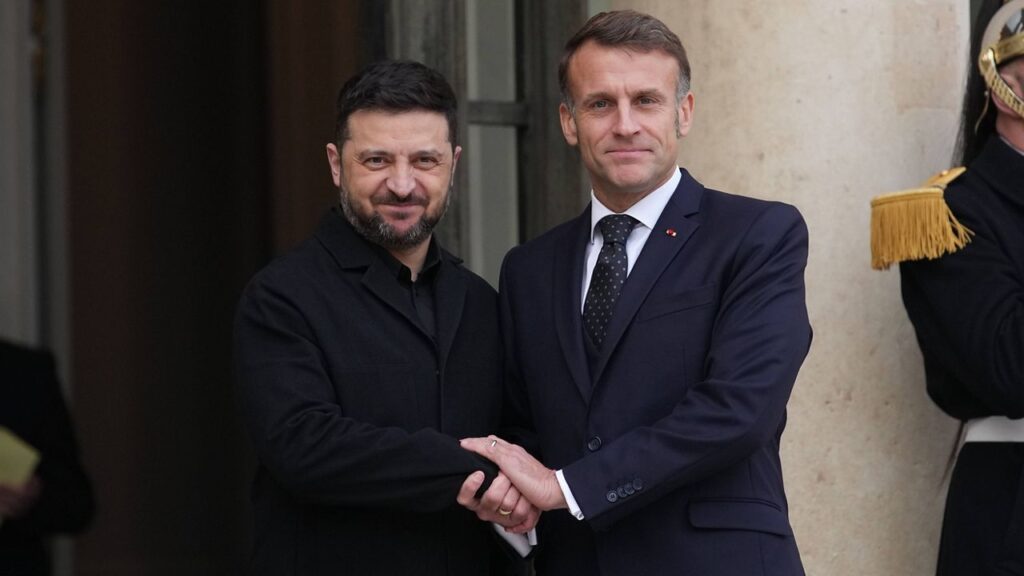
The latest round of diplomacy has pushed Ukraine’s president into a delicate balance of caution and optimism. After meeting Emmanuel Macron in Paris on December 1, Volodymyr Zelenskyy noted that the revised U.S. peace proposal “looks better” than what Kyiv saw only a week earlier.
That small shift is notable, especially after widespread alarm in European capitals over an original 28-point framework that leaned heavily toward Moscow’s demands. Yet Zelenskyy did not blur his red lines. Control of Ukrainian territory, he said, remains the most difficult and sensitive part of the talks, and he repeated that Ukraine will not give up land as the price for ending the war. His broader position has barely moved: the peace plan is improving but nowhere near acceptable; Ukraine cannot be asked to abandon NATO membership; and no settlement will include limits on the country’s long-term military capacity.
These views are firmly rooted in public sentiment at home, where poll after poll shows Ukrainians rejecting the idea of trading land for peace.
Macron, for his part, described the negotiations as still nascent, but he also called this burst of diplomatic motion a moment that could shape the future of European security. He praised U.S. involvement, though carefully, aware of the unease among allies who fear being sidelined. His message was straightforward: a deal cannot be finalized without Europe in the room, and Ukraine will need “rock-solid” security guarantees before accepting any ceasefire. Macron has floated the idea of a European “reassurance force” spanning air, land, and sea, an implicit signal that Europe may have to shoulder more of the burden if Washington hesitates. That suggestion is rooted in a growing anxiety that back-channel discussions between Washington and Moscow might encourage a compromise at Ukraine’s expense.
That anxiety is not confined to Paris. EU foreign policy chief Kaja Kallas spoke bluntly about the danger that the U.S.–Russia dialogue could leave Ukraine facing pressure to concede territory. Her worry, she said, is that “pressure will be put on the victim.” Many European officials share the same concern: that Washington’s desire for a swift diplomatic win could override Ukraine’s sovereignty, and that Moscow might exploit this urgency to lock in gains it could not secure on the battlefield alone.
Moscow, meanwhile, has been trying to shape the negotiations by projecting momentum. On the eve of new talks, the Kremlin announced the capture of Pokrovsk in Donetsk and Vovchansk in Kharkiv, and hinted at further gains around Kupiansk, claims Kyiv disputes. These messages serve a clear function: they strengthen Russia’s posture heading into talks, frame the narrative around Russian initiative, and apply pressure on Ukraine and its allies to accept new territorial realities. Putin underscored that stance by appearing in military fatigues and insisting that Russian forces hold the initiative along the entire front. Ukraine has pushed back forcefully, insisting that battle continues in Pokrovsk and that Kupiansk has been cleared.
The military pressure has been accompanied by diplomatic complaints. Ukrainian strikes on Russia’s oil infrastructure, including a major Caspian Pipeline Consortium terminal and two tankers from Russia’s sanctions-evading “shadow fleet,” hit sensitive economic targets. Moscow called the attacks “outrageous” and highlighted the CPC’s international ownership, a move clearly intended to broaden the political fallout for Ukraine.
The war’s technological churn was also on display. Russia claims to have shot down 32 Ukrainian drones across 11 regions in one night, while Ukraine described a barrage of almost 90 Russian drones, most of which it intercepted. This escalating cycle shows how both sides are relying increasingly on dense, low-cost drone warfare to probe vulnerabilities and erode the other’s resources.
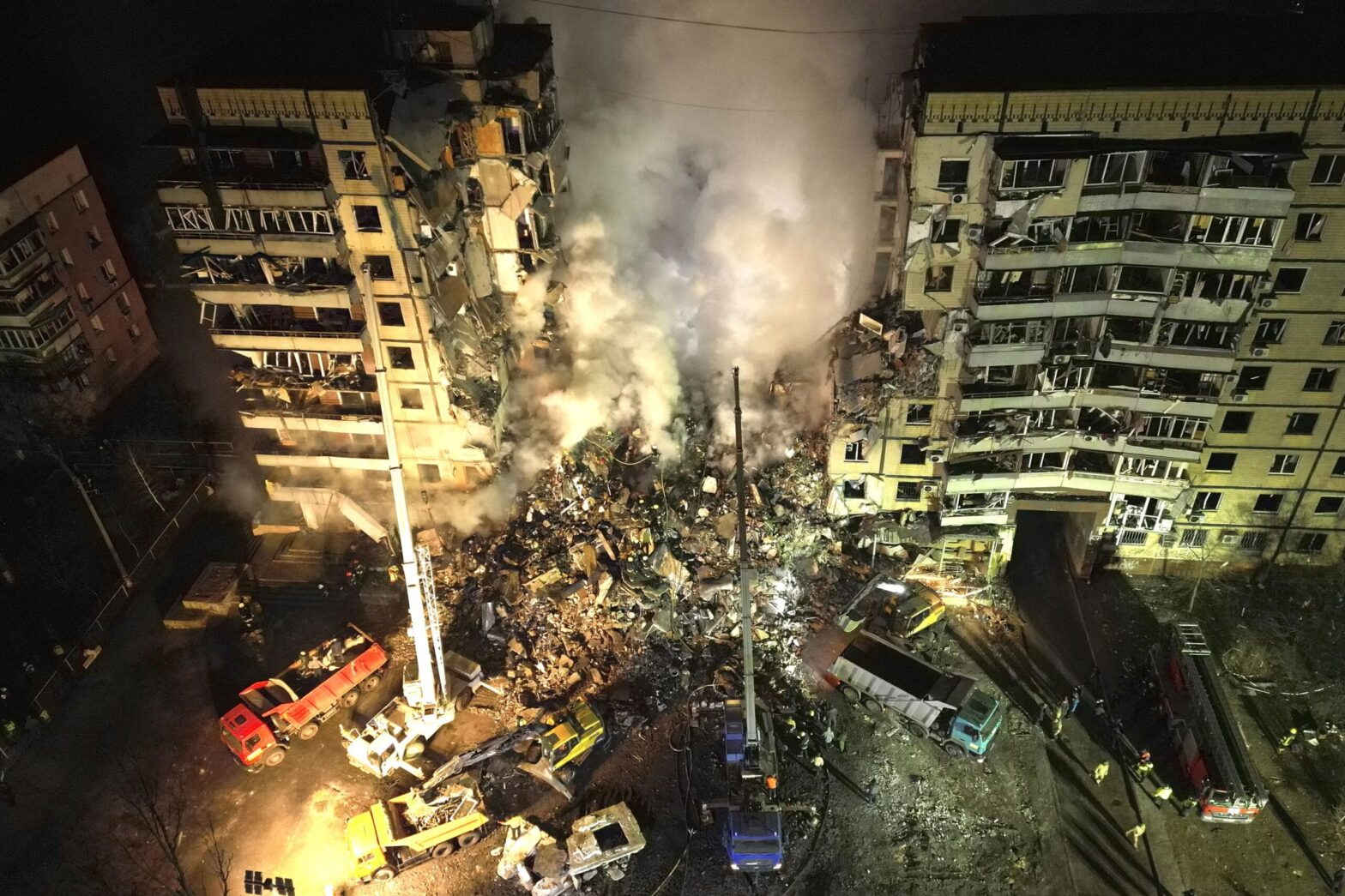
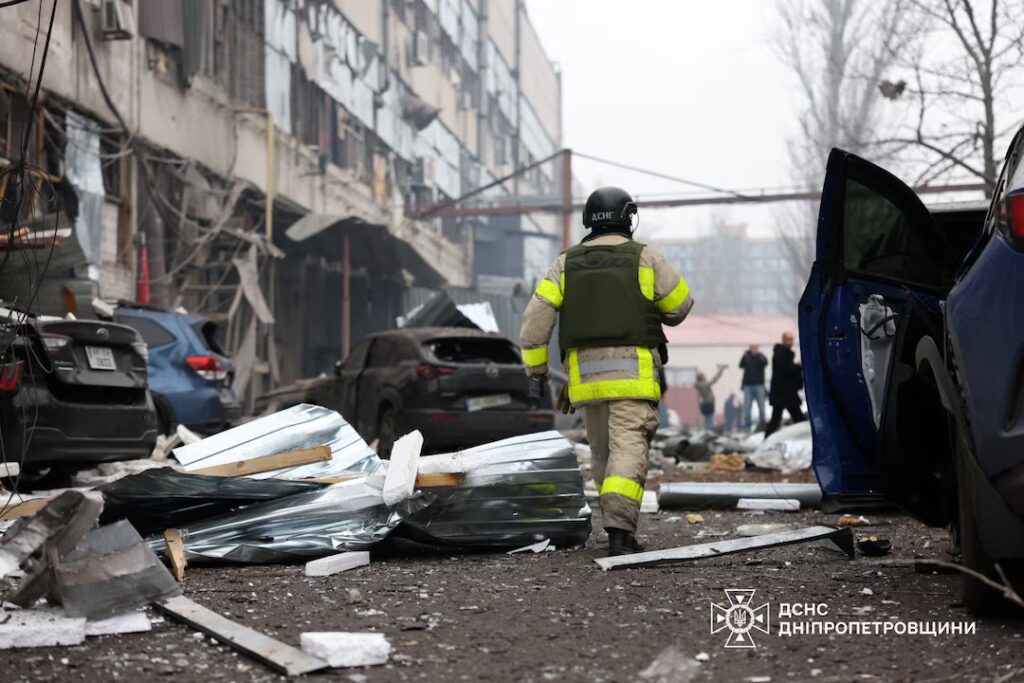
At the same time, civilians continue to pay the price. A midday Russian strike on Dnipro killed four people and injured dozens, damaging apartment blocks, an educational facility, and a humanitarian warehouse. The timing of the attack, occurring as diplomats met in Paris, underscored Russia’s willingness to use pressure on the home front to shape the external political environment.
These developments sit against the backdrop of earlier talks held in Istanbul in May 2025, the first direct negotiations between Russia and Ukraine since March 2022. Those talks were overshadowed from the start. Putin declined to attend and sent a lower-ranked delegation, a gesture Kyiv interpreted as proof Moscow was not serious. Zelenskyy dismissed the Russian team as merely “decorative.” Ukraine responded by elevating its own delegation, placing its defense minister at the head of the table, clearly intent on signaling seriousness. But Washington complicated the picture. Donald Trump said publicly that no breakthrough would occur without a direct meeting between himself and Putin, effectively tying progress to bilateral dynamics rather than the Istanbul format. Secretary of State Marco Rubio lowered expectations further, describing U.S. hopes for the talks as modest while still stressing that Ukraine and Europe must be included in any genuine peace agreement.
All of these strands point toward a deeper tension shaping the moment: the U.S.–Russia backchannel is driving much of the process, and that worries Kyiv and Europe. Special envoy Steve Witkoff, who reportedly advised Putin’s team on how to frame proposals for Trump, has become a symbol of that unease. The original U.S. draft of the peace plan echoed several key Russian preferences, including territorial concessions and long-term limits on Ukraine’s military and NATO trajectory. Europe’s fear is not abstract. Leaders like Macron and Kallas worry that unilateral U.S. diplomacy could produce a settlement that rewards aggression, undermines Ukraine’s security, and fractures Europe’s broader security architecture. Russia, sensing this tension, has every incentive to exploit it: by highlighting battlefield gains and engaging Washington directly, Moscow hopes to secure concessions it cannot win outright.
For now, a genuine breakthrough looks unlikely. Ukraine will not cede territory; Russia insists a territorial surrender is the starting point for peace. Europe refuses to be sidelined. The U.S. plan is being refined, but only because its initial version was politically impossible for Kyiv to accept. The military situation remains fluid enough that both sides believe they still have leverage to gain. And Putin continues to avoid meeting Zelenskyy altogether, a refusal that speaks volumes about how Moscow imagines the hierarchy of any negotiation.
Diplomacy may be accelerating, but the fundamental terms remain unchanged. With neither side willing to cross their core red lines, the path to an actual peace agreement is still more theoretical than real.