
Across Africa, a complex and interwoven set of crises is unfolding. In the vast tracts of dry land and conflict-ridden states, in the election halls and the youth-filled streets, three countries stand out as emblematic of the converging pressures of humanitarian emergency, political exclusion, and generational impatience. In the northeastern reaches of Sudan, famine looms; in Guinea, political participation faces economic barriers; and in Ivory Coast, young citizens are demanding jobs, dignity, and stability ahead of an uncertain national vote.
What binds these stories is the collision of hunger, frustration, and hope — and the urgent question: can stability and change coexist?
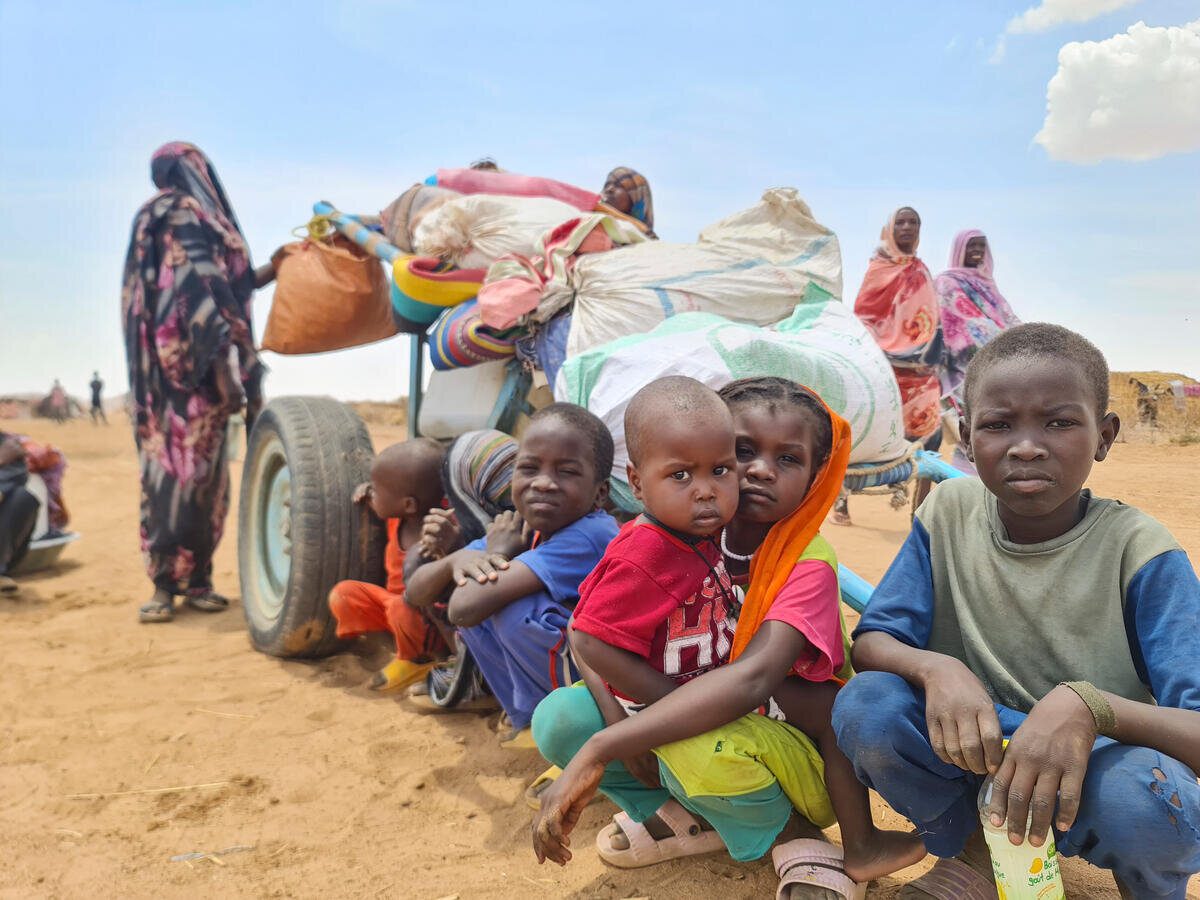
Sudan: Famine, Displacement, and Forgotten Children
When one speaks of humanitarian crises today, the image most often conjured is of refugee camps, extreme hunger, and shattered infrastructure. But in Sudan, those images only scratch the surface. Here, the emergency is shaped by war, climate, and logistics — and above all by the vulnerability of children.
Since 2023, Sudan has been locked in a brutal internal conflict between the national army and the paramilitary Rapid Support Forces. The confrontation has spiraled into the world’s largest displacement crisis, forcing millions to flee their homes. Fields have been destroyed, planting seasons interrupted, and food supply chains severed. The World Food Programme estimates that more than one-third of children in some regions face acute malnutrition — levels that exceed the threshold for famine.
Compounding the violence is drought and climate stress. Failed harvests and lost grazing land have left pastoralists destitute. Sudan now ranks among the countries with the highest number of people facing extreme food shortages. In places like North Darfur’s capital, El Fasher, hundreds of thousands are trapped by fighting, cut off from humanitarian aid, and surrounded by hunger. For children there, the crisis is not abstract — it is a matter of survival measured in days.
Yet the world’s attention remains elsewhere. Aid convoys sit immobilized for months, relief operations are underfunded, and the conflict’s siege tactics have effectively weaponized hunger. Even where food is available, inflation and transport breakdowns make it unreachable for ordinary families. The suffering is magnified by silence: a crisis too complex for headlines and too remote for global outrage.
In Sudan, hunger has become not a consequence of nature but an instrument of war. The tragedy is that much of this catastrophe is preventable. What is needed is not merely food, but access, protection, and political courage. Without them, the nation risks losing not just lives, but a generation.
Guinea: Democracy Behind a Price Tag
Across the continent in West Africa, another kind of crisis is playing out — not of famine, but of democracy itself. Guinea’s transitional government has introduced a new requirement: anyone seeking to run for president must pay a $100,000 fee.
In a nation where the average annual income is a fraction of that amount, the decision has sparked outrage. Critics see it as a paywall on democracy, a system in which participation is reserved for the wealthy or the well-connected. For many Guineans, it is not simply about the number — it is about what the fee represents: the narrowing of political space, the exclusion of ordinary citizens, and the consolidation of elite power.
This policy comes amid broader concerns about the direction of Guinea’s governance. Since the 2021 coup, the country has been under military rule, with repeated delays in returning to civilian government. The introduction of an exorbitant election fee feels to many like a step backward, a signal that political competition will be limited not by merit but by money.
When participation becomes prohibitively expensive, legitimacy begins to erode. A democracy in which only the affluent can run ceases to represent the people it claims to serve. It breeds cynicism, fuels discontent, and weakens institutions that depend on trust.
Guinea’s youth — a majority of its population — are watching closely. They make up the backbone of the country’s economy, yet face high unemployment and limited opportunities. To them, the $100,000 fee is not just a bureaucratic hurdle; it is a reminder that power remains distant, that the system is built to sustain itself rather than to include them.
Democracy cannot thrive on exclusion. When people feel locked out, they eventually stop believing in the process altogether. In Guinea, the danger lies not only in this election but in the long-term corrosion of civic faith. A country rich in minerals and potential risks becoming poor in representation.
Ivory Coast: Youth, Jobs, and the Fragile Promise of Peace
Further south, in Ivory Coast, the tension takes a quieter form. The country’s economy is among the strongest in West Africa, yet beneath the surface of growth lies deep social unease. As a new presidential election approaches, young Ivorians are demanding not just stability, but meaning — a peace that comes with opportunity.
President Alassane Ouattara, now in his eighties, is seeking a fourth term. For many young voters, this has reignited long-standing concerns about political continuity and generational change. They want jobs, not slogans; progress, not nostalgia. Despite economic growth driven by cocoa and exports, youth unemployment remains stubbornly high.
In the bustling neighborhoods of Abidjan, one hears a mix of hope and frustration. Street poets, activists, and small business owners alike speak of the same thing: the feeling of being left out of the prosperity that headlines celebrate. The country’s infrastructure gleams, but its opportunities remain unevenly distributed.
For these young citizens, the coming election is more than a political contest — it is a referendum on their future. Many say their greatest wish is for peace. They remember the violence that scarred previous elections, and they want to believe that stability can coexist with reform. Yet they also fear that peace without inclusion is just calm before the next storm.
Ivory Coast’s challenge is emblematic of a broader African truth: growth without equity breeds disillusionment. For peace to endure, it must be felt in daily life — in the chance to work, to learn, to build something lasting. Without that, even the most impressive economic figures ring hollow.
The hope is that Ivory Coast’s leaders will recognize the depth of this generational demand. The risk, however, is that they will not.
A Continent of Contrasts
Sudan’s famine, Guinea’s democracy fee, Ivory Coast’s youth unrest — three different stories, yet they echo one another. Together, they reveal the diverse but connected struggles shaping the African continent today.
Across these nations, the same questions arise: Who gets to participate? Who gets to eat? Who gets to hope? Whether the barrier is hunger, money, or inequality, the outcome is similar — exclusion.
Africa’s population is young, resilient, and ambitious. But the systems around them often lag behind. Governments that fail to address hunger, that price out democracy, or that neglect youth aspirations are not merely inefficient — they are unsustainable.
The pattern is clear. When children starve in Sudan, the future starves with them. When citizens are priced out of leadership in Guinea, democracy itself grows brittle. When young people in Ivory Coast lose faith in progress, peace becomes temporary.
The Path Forward
The continent’s crises demand not pity but partnership — grounded, practical, sustained engagement.
In Sudan, humanitarian aid must be protected and scaled up, but it must also be accompanied by serious diplomatic effort. Relief alone cannot solve a political war. The international community must insist on access, accountability, and ceasefire guarantees.
In Guinea, the message should be clear: participation is the cornerstone of legitimacy. Election rules that favor wealth over willpower are not just unjust; they are destabilizing. Encouraging political openness and supporting civic education would strengthen Guinea’s long-term stability far more than exclusionary policies ever could.
In Ivory Coast, the priority must be economic inclusion. Youth unemployment is not a temporary inconvenience — it is a structural threat. Investments in education, technology, and entrepreneurship are as vital to peace as any security arrangement.
Above all, each of these crises reminds us that Africa’s challenges are not isolated from the rest of the world. Famine leads to migration; disenfranchisement leads to instability; joblessness leads to disillusionment. The ripples reach far beyond their borders.
Reflection
In Sudan, hunger has become the language of conflict. In Guinea, the ballot is for sale. In Ivory Coast, a generation waits to inherit the peace it was promised.
Together, they form a mirror — reflecting both the fragility and the possibility of modern Africa. The continent is not defined by its suffering but by the constant struggle to overcome it.
What the world must recognize is that Africa’s future is not a story of despair. It is a story in motion — written by children surviving famine, by young people demanding a voice, by voters insisting that peace means more than silence.
Stability is never given; it is built. And if hunger, exclusion, and frustration are the forces pulling Africa apart, then the answer must lie in what binds it together: community, courage, and the unyielding belief that change, even if slow, is still possible.