
At the Shanghai Cooperation Organisation (SCO) summit held in Tianjin from August 31 to September 1, 2025, Chinese President Xi Jinping unveiled an ambitious vision for global governance. His proposal centered on empowering the Global South and offered a direct alternative to frameworks long shaped by U.S. dominance. The message was clear: China intends to lead a shift toward what Xi called “fair multipolarity.”
A Vision Beyond Western Dominance
In his keynote address, Xi urged fellow leaders to reject “hegemonism” and champion genuine multilateralism. The SCO, he argued, should evolve into the nucleus of a new world order, balancing against Western-led institutions such as NATO, the IMF, and the World Bank.
This framing reflects a broader push by Beijing to rally developing nations behind a model of governance where power is distributed more evenly, and where the voices of emerging economies carry greater weight.
New SCO Initiatives Unveiled
China rolled out several initiatives designed to reinforce this agenda. A new development bank was proposed, aimed at strengthening financial independence across member states. Xi also pledged 2 billion yuan in aid and 10 billion yuan in loans, signaling Beijing’s willingness to underwrite the bloc’s economic future.
Beyond finance, China announced the launch of a regional AI cooperation center to drive innovation within the SCO. The proposals were not limited to Earth—Xi invited member nations to take part in China’s lunar research station project, tying space exploration into the bloc’s shared ambitions.
Unity on Display: China, India, and Russia
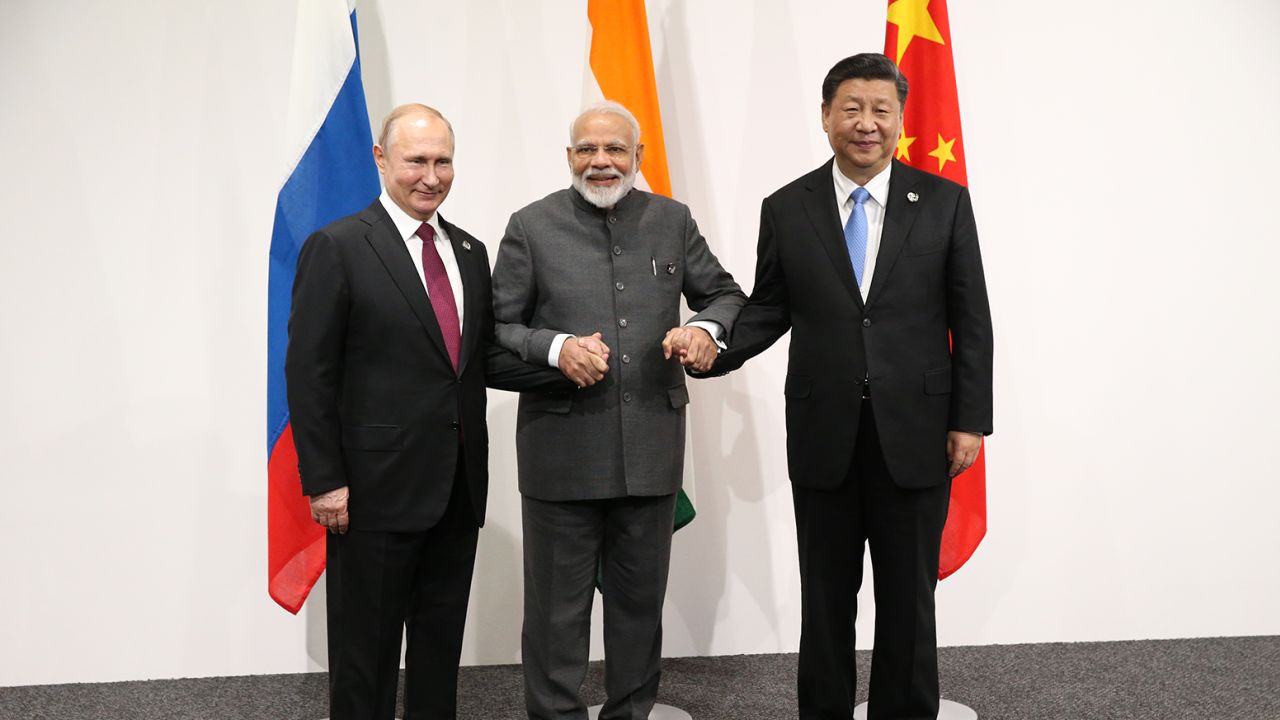
One of the most striking images from the summit was Xi standing alongside Russian President Vladimir Putin and Indian Prime Minister Narendra Modi. Despite lingering border tensions between China and India, the leaders emphasized partnership rather than rivalry.
Putin hailed the SCO as a vehicle for “genuine multilateralism,” while Modi echoed Xi’s call for cooperation. The optics underscored a message of solidarity, one that China hopes will project stability and confidence to other Global South nations considering alignment with Beijing’s vision.
Reframing the Global Narrative
Xi’s address went beyond institutional mechanics. It positioned China as the heir to post–World War II leadership, now claiming the mantle of authority from the West. The speech wove together themes of fairness, equality, and collective advancement, appealing directly to developing nations frustrated with the status quo.
Analysts, however, warn that this bid to reshape the international system could deepen global divides. Some foresee the emergence of rival blocs, with the SCO anchoring one pole of influence while the U.S. and its allies reinforce another.
Strategic Timing and Symbolism
The summit’s timing carried its own weight. It coincided with preparations for a major military parade in Beijing, marking the 80th anniversary of the end of World War II. Leaders such as Putin and North Korea’s Kim Jong Un are expected to attend, lending the celebration both symbolic gravitas and geopolitical edge.
By pairing high-level diplomacy with martial display, China underscored its growing capacity to project influence in both ideological and military domains. The dual showcase highlighted Beijing’s strategy of intertwining economic statecraft with hard power and narrative control.
Key Takeaways at a Glance
| Theme | Takeaway |
|---|---|
| Governance Shift | SCO positioned as a non-Western governance alternative |
| Economic Strategy | Development bank, financial pledges, and AI cooperation center launched |
| Diplomatic Unity | China, Russia, and India emphasized partnership over rivalry |
| Narrative Challenge | Xi framed China as the new leader of a multipolar, Global South–driven order |
| Power Projection | Military parade reinforced ideological messaging with hard power display |
China’s pitch at Tianjin was more than a policy announcement. It was a carefully staged act of storytelling—an attempt to reframe the very architecture of international relations. Whether this vision takes root will depend not only on the SCO’s cohesion but also on how convincingly China can persuade the world that its model offers a true alternative to the Western order.