
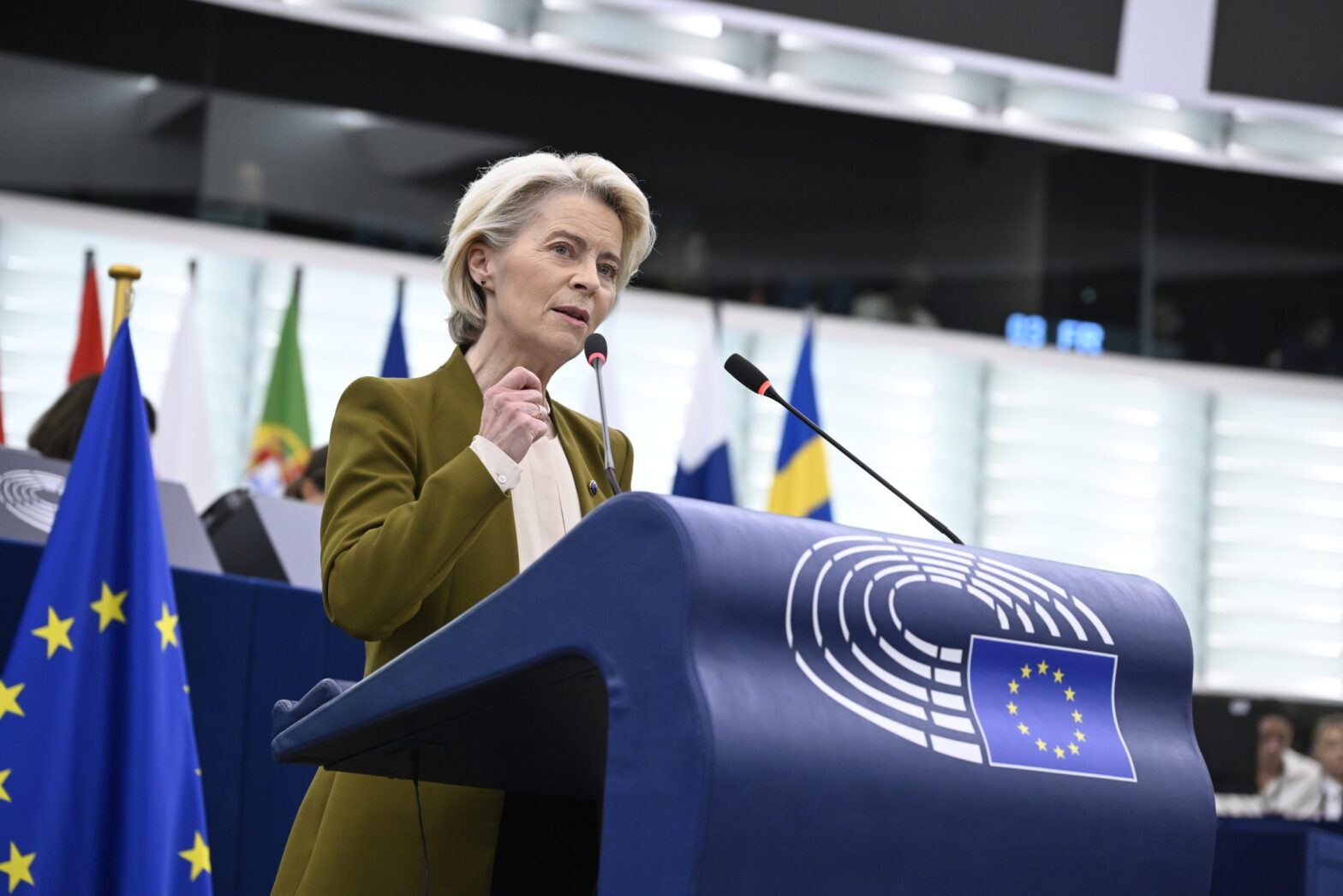
The European Union finds itself balancing on a wire stretched between law and politics, values and interests, public outrage and the slow machinery of consensus. In the days after Israeli airstrikes in Yemen killed dozens of civilians and wounded many more, Ursula von der Leyen stepped to a lectern in Strasbourg and did something that few in Brussels had expected even a month earlier. The President of the European Commission called for sanctions on Israel, a partial suspension of the EU-Israel trade and cooperation agreements, and the freezing of certain bilateral supports. She spoke of red lines, of legal obligations that are not academic, and of a Europe that must act in keeping with its principles or risk losing its moral voice.
The words landed with an unusual thud. For years, the EU has often spoken sternly about Israeli policy while stopping short of truly consequential action. This time feels different. The strike locations were far from Gaza, the casualties included civilians, and the target set reportedly included fuel infrastructure and facilities that serve dual purposes in a fragile humanitarian setting. The political winds inside Europe have also shifted. Public opinion has been inflamed by relentless images of suffering, and national leaders across the bloc are hearing chants in the streets that reverberate in cabinet rooms.
Yet outrage does not automatically become policy. The European project is a harmonization of twenty-seven political systems, twenty-seven domestic debates, and countless veto points. Turning a strongly worded speech into binding measures requires careful footwork through legal frameworks, council votes, and national red lines that do not move easily. The coming weeks will test whether the EU can translate values into decisions, or whether the pressures of geopolitics and internal division scatter resolve into statements and symbolic gestures.
What follows is a guided map of that test. We will walk through what happened and why it matters, the legal levers Europe can pull, the fault lines among member states, the potential consequences across the Middle East and beyond, the scenarios that could unfold, and the specific signposts to watch. This is not a story that will wait politely for diplomats to finish their sentences. It is already reshaping alliances, markets, and public trust in institutions.
What Happened, and Why Europe Reacted
On or around September 10 and 11, Israeli aircraft struck multiple targets inside Yemen, including sites in the capital Sanaa and in Al Jawf. The strikes, according to Israel’s account, were a response to Houthi drone and missile launches aimed toward Israeli territory. The Houthis, supported by Iran, have continued to expand their reach with long-range systems that threaten both Israel and critical shipping lanes through the Red Sea and Gulf of Aden. Israel’s argument, familiar to anyone who follows the region, is that it hit legitimate military targets linked to those threats.
The civilian toll tells another part of the story. Houthi officials reported at least thirty-five dead and more than one hundred and thirty injured. Early images and accounts suggested that blast zones included fuel infrastructure and facilities with mixed civilian and military uses. The ethics of modern airpower are often decided in the gray areas of targeting: the location of munitions within a city, the distance from a hospital, the expected presence of noncombatants, the likely scale of collateral damage compared to the military advantage anticipated. Even where precision munitions are used, the laws of war demand judgments that are as much about restraint as capability.
In Brussels, this episode did not land in a vacuum. It arrived after months of alarm over Gaza, a steady trickle of reports alleging violations of international humanitarian law, and a leaked analysis within the EU system that suggested Israel might be in material breach of Article 2 of the EU-Israel Association Agreement. Article 2 is the heart of the political compact, a clause that makes respect for human rights and democratic principles an essential element of the relationship. If that pillar cracks, the entire edifice of preferential trade and cooperation can be questioned.
Von der Leyen’s response was to pull that legal thread in public. She called for sanctions on specific Israeli ministers viewed as extremist, a partial suspension of the trade chapter of the association agreement, and the freezing of bilateral supports that benefit state institutions, while keeping space for cooperation with civil society, academia, and non-governmental organizations. She also proposed the creation of a Palestine Donor Group to support Gaza’s reconstruction. In essence, the Commission’s head signaled a willingness to separate Israelis from their government in the design of European measures, to punish state actors while preserving ties with people, culture, memory, and research where possible.
The substance matters. So does the symbolism. The EU has seldom moved to sanction Israeli officials, and it has treated the association agreement as a lodestar of engagement. To question trade preferences is to challenge a sacred cow of European foreign policy. That is why the reaction across member states was immediate and divided.
The Law Behind the Politics
Europe does not sanction by slogan. The legal frameworks are elaborate, and, for good reasons, they raise the bar on politicized retaliation. To understand what the Commission proposed, and whether it can deliver, we need to quickly review the architecture.
Article 2 and the Association Agreement
The EU-Israel Association Agreement has governed political, trade, and cooperation relations since 2000. Nestled near the front is Article 2, which states that relations between the parties shall be based on respect for human rights and democratic principles. This is not decorative language. The EU has treated such clauses as operational, with the power to justify suspension, partial suspension, or the imposition of restrictive measures when there is credible evidence of serious and persistent violations.
The threshold is not abstract. European lawyers will look for patterns of conduct, official policies, and verifiable facts that establish a breach. Civilian casualties alone may not be sufficient if the attacking party can demonstrate compliance with the principles of distinction, proportionality, and necessity. Repeated strikes on dual-use infrastructure, the degree of care taken to reduce collateral harm, and any evidence of indiscriminate tactics become critical. The burden is heavy because the consequences are heavy.
Sanctions and Trade Tools
The EU can adopt restrictive measures against individuals and entities, including travel bans and asset freezes. This often requires a proposal by the Commission and External Action Service, and then approval by member states meeting the relevant voting thresholds in the Council. If measures are framed as Common Foreign and Security Policy actions, unanimity among member states is frequently required. If the measures take the form of trade suspensions or the withdrawal of tariff preferences, different legal bases can apply, sometimes allowing qualified majority voting but still demanding difficult coalitions that include both large and small states.
Suspending a trade chapter is a blunt instrument. It disrupts existing supply chains, imposes costs on European importers and exporters, and can trigger any number of countermeasures from the partner state. Hence the Commission’s emphasis on partial suspension. The goal is to send a clear message with targeted pain while avoiding a total rupture that causes broader economic harm.
Precedent and Caution
Europe has a history of using its market power to defend human rights, but it uses that power sparingly against security partners. Funding freezes have been a common middle step. So have programmatic suspensions in specific fields, especially when the beneficiary is a state institution seen as complicit in violations. Full trade suspensions are rare because they cut deeply into commerce that supports jobs, innovation, and political relationships that Europe considers valuable even in moments of tension.
This careful pattern is exactly what makes the Yemen episode significant. A call to suspend part of the trade chapter is not business as usual. It is a choice to confront a partner with real costs.
The Politics Inside the Union
The EU is not a single actor. It is a living argument. On Israel, that argument runs down familiar seams.
Two Views of Responsibility
One camp emphasizes humanitarian law and accountability. This group includes member states that have repeatedly pressed for stronger action regarding civilian harm in Gaza, settlement expansion, and settler violence in the West Bank. Their political leaders speak the language of universal norms, and they argue that Europe’s credibility in defending those norms depends on applying them consistently. They view the Yemen strikes as part of a pattern that cannot be waved away as self-defense, particularly when the theater of conflict widens and when civilian infrastructure is repeatedly hit.
The other camp is more cautious. Leaders in these countries are deeply mindful of Israel’s security environment, including aggressive actors like Hamas and the Houthis, as well as Iran’s regional ambitions. They argue that Israel retains the right to neutralize threats before they reach Israeli cities or shipping lanes. They worry that sweeping punitive measures could drive Israel to harden its posture, undermine channels of intelligence and counterterrorism cooperation, and reduce European leverage where it matters most.
Economics and Innovation
The EU-Israel economic relationship is not trivial. Israeli technology and research partnerships are tightly woven into European innovation ecosystems, from university labs to startups in fields like cybersecurity, medical devices, agritech, and clean energy. Preferential access under the association agreement lowers costs and frictions at each step. A trade suspension touches far more than tariffs. It touches networks of scientists, investors, and entrepreneurs who have spent years building trust across borders.
For some member states, these ties are a powerful reason to keep politics from dismantling a carefully assembled architecture. For others, precisely because the relationship is deep, economic leverage is the surest way to change behavior. The same set of facts leads to opposite conclusions.
The Institutions and the Street
Inside the EU’s institutional triangle, the Commission can propose and prod, Parliament can exert moral pressure and pass resolutions, and the Council, where national governments sit, ultimately decides the sharpest tools. The Council’s votes are shaped by domestic politics, and domestic politics right now are animated by citizens who feel that Europe has looked away from civilian suffering for too long.
Public opinion does not cast votes in the Council, but it does change the calculus in capitals. Ministers who previously would have blocked any mention of trade suspension now find that position harder to defend in front of their own voters. That pressure creates space for compromise packages that would have been unthinkable a year ago.
Law, Morality, and the Geography of Consequence
Sanctions are rarely just domestic theater. They travel. In the Middle East, a European sanctions regime aimed at Israeli officials and parts of the trade agreement would reverberate through the security architecture and diplomatic alignments of the region.
International Law as Compass and Battleground
Europe’s lawyers will ask whether repeated strikes on dual-use or civilian infrastructure violate humanitarian law. Israel’s lawyers will answer that the targets were lawful and that precautions were taken. The evidence will be contested, and the forum may extend beyond Brussels to international bodies and courts. The EU’s justification, if it moves to suspend elements of the association agreement, will rest on a legal narrative that frames Israel’s conduct as inconsistent with obligations that underpin the relationship.
At the same time, European officials have already signaled concern about Israeli operations that reach into third countries. When airstrikes occur on the soil of states not party to a declared conflict, the legal questions sharpen. Territorial integrity and state consent become central, and violations can set precedents that make even Europe’s closest allies uncomfortable.
Security Risks Beyond the Map Pins
Yemen is not only a humanitarian tragedy. It is a strategic hinge between the Arabian Peninsula and the Horn of Africa, a chokepoint for shipping, and a canvas for proxy conflict. Israeli strikes on Houthi infrastructure may reduce immediate threats to Israeli assets, but they also risk provoking retaliation that disrupts trade routes on which Europe depends. Insurance costs spike when missiles fly near cargo lanes. Delays ripple through supply chains. The price of acting, or failing to act, is not only paid in headlines about diplomacy. It is paid in the cost of goods and in the jobs tied to export-import flows that pass through the Red Sea.
The Moral Ledger
Europe’s self-image as a normative power is also at stake. The EU is most persuasive abroad when it treats international law as a compass, not a menu. Many in the Global South watch how Europe responds to civilian deaths in the Middle East and compare it with Europe’s righteous response to Russia’s invasion of Ukraine. The comparison can be uncomfortable. If Europe chooses a softer touch in the Middle East, it invites charges of double standards. If it chooses a harder line, it risks ruptures with partners and with the United States, whose posture will shape the outer bounds of what is possible.
Scenarios on the Table
Anyone who claims certainty about where this is headed is pretending. What we can do is map plausible paths with their tradeoffs.
1) The Moderate Package
Under this scenario, the EU agrees on sanctions for a limited set of Israeli officials judged responsible for extreme rhetoric or policies, freezes a portion of research and development funding that flows to state bodies, and suspends some, but not all, trade preferences under the association agreement. The measures are calibrated to be painful but not irreparable. Civil society programs continue. Cultural and academic ties remain open.
Why it could happen: It is the path of least resistance. It satisfies a demand for action. It gives member states room to say they have acted while preserving channels that matter to them.
Why it might disappoint: Activists and many parliamentarians will see it as too little. The Israeli government may shrug, reframe the measures as proof of bias, and carry on. The deterrent effect could be minimal if the costs are modest.
2) The Trade Chapter Shock
Here, the Council crosses a psychological threshold and suspends a broader chunk of the trade chapter. Tariffs rise on key categories of Israeli exports. Customs procedures become more cumbersome. The signal is unmistakable.
Why it could happen: The civilian toll in Yemen and Gaza, combined with operations beyond Gaza, pushes enough capitals into the yes column. Germany’s position is pivotal. If Berlin moves, the calculus across the Council changes quickly.
Why it is hard: The backlash from sectors that rely on Israeli inputs, from tech to pharmaceuticals, would be loud. Legal challenges would come fast. The risk of Israeli counter-measures would rise, as would anxieties in Washington.
3) The Funding Freeze with Carve-outs
A third option is to target public sector funding and cooperation programs while protecting civil society and non-government beneficiaries. Research projects with state ministries or agencies are paused. Grants to universities and NGOs continue.
Why it could happen: It aligns punishment with responsibility while limiting harm to ordinary Israelis. It is easier to defend in court and at home.
Why it might falter: Critics will say it is symbolic and reversible. If the aim is to shift policy in Jerusalem, a narrow funding freeze may not move the needle.
4) The Maximalist Push
Broad sanctions are imposed, including extensive visa bans, restrictions on arms-related exports, and a sweeping suspension of trade preferences. Calls for labeling or banning settlement products are folded into the package. This is the kind of response that would mark a historical break.
Why it is unlikely right now: Unanimity would be nearly impossible. The economic and diplomatic costs inside the EU would be severe. It would require either a dramatic escalation on the ground or a sudden realignment of political will in Europe.
5) The Stall
The Council fails to reach sufficient consensus. Statements are issued. Modest steps occur at the margins. The news cycle moves on. The association agreement remains intact. The political energy dissipates into drafting rooms.
Why it could happen: Divisions inside the EU are real. National politics are messy. Some governments will not risk relations with Israel or the United States over measures they doubt will work.
Why it would be costly: For Europe’s credibility and for the trust of its own citizens, paralysis would be a wound that does not heal quickly.
Why This Time Feels Different
Europe has had many moments of soul-searching on Israel and Palestine. Why is this inflection point different?
First, the geography of the conflict has widened. Strikes in Yemen and reports of operations in third countries create a sense of spillover that alarms European strategists. The frame has shifted from Gaza alone to a regional pattern that touches waterways, energy flows, and diplomatic stability.
Second, the visibility of civilian suffering is higher than ever. There is almost no lag between an explosion and its imprint on European phones. That immediacy sharpens moral intuitions and hardens political positions. Leaders cannot hide behind process when confronted with real-time images of injured children and smoking craters near fuel depots that serve entire communities.
Third, Europe’s legal groundwork has evolved. Internal analyses about potential breaches of Article 2, once whispered, have been said out loud. That matters. When law is spoken into the political arena, it becomes harder to retreat from it without calling into question the seriousness of the Union’s commitments.
Finally, Europe’s global standing is tethered to the consistency of its values. The EU’s response to Russia’s aggression in Ukraine elevated expectations. Many outside Europe now ask whether international law is a universal language or a dialect spoken only when convenient. The EU’s answer in this moment will echo beyond the Middle East.
What To Watch
If you want to know which way the wind is blowing, keep your eyes on a few weather vanes.
Berlin
Germany’s position is the center of gravity. If Berlin remains cautious, the maximalist options are off the table. If Berlin signals openness to trade suspension, even a partial one, dominoes fall.
Paris, Rome, Madrid, and the Nordics
France and Italy can provide the political heft to turn a proposal into a policy. Spain and several northern European states are often more forward-leaning on human rights questions. The alignment, or misalignment, among these capitals will tell you where the Council is headed.
Voting Math
Qualified majority thresholds are not simple headcounts. Population shares matter. Watch how medium-sized countries choose. A single switch can move the coalition from symbolic censure to concrete sanction.
Legal Documentation
Expect a flurry of reports, both official and from respected non-government experts. The quality of evidence about targeting, proportionality, and precaution will influence cautious capitals. The more granular and credible the findings, the stronger the case for invoking Article 2.
Israel’s Next Moves
If Israel narrows its targeting, reduces civilian harm, or signals a willingness to engage on humanitarian arrangements, support for harsh European measures could soften. If strikes continue in ways that look indiscriminate or expand to other countries, momentum for penalties will grow.
Streets and Screens
Public mobilization inside EU countries is not a side plot. Large demonstrations, sustained media campaigns, and the tone of coverage in influential outlets can pry open political space or close it.
Washington and the Gulf
The United States remains Europe’s closest ally and Israel’s most important partner. Clear American opposition to European sanctions would complicate decision making. Positions in Riyadh, Doha, and Abu Dhabi matter as well, since those capitals influence both regional de-escalation and European energy interests.
The Risks, Counted Straight
Policy is the art of tradeoffs. Any European move here comes with real costs as well as intended benefits.
Retaliation is likely. Israel could curtail security cooperation, restrict access to its technology ecosystem, or respond with measures that hurt European companies. Relationships that took decades to build could cool in a single winter.
Alliances could fray. Some EU countries worry about setting themselves at odds with Washington at a delicate moment in transatlantic politics. Others fear the ripple effects on regional partners whose help is needed on migration, energy, and counterterrorism.
Economies would feel the pinch. Tariff changes and the suspension of cooperation programs would land unevenly across sectors and countries. Small and medium enterprises that rely on Israeli components or know-how could be hit hard.
Escalation is a constant risk. The Houthis could respond by intensifying attacks on shipping. Iran could encourage its partners to exploit perceived divides between Europe and Israel. In the fog of retaliation, civilians suffer first.
Legal battles would follow. Israel might challenge EU actions in European courts and in international forums. The EU would have to defend not only the morality of its choices but the precision of its legal reasoning.
Possible Outcomes, Drawn in Real Lines
Take the scenarios above and paint them into outcomes that feel like the world we live in rather than a decision tree.
Outcome A: A Narrow Sanctions List and Surgical Freezes
The Council agrees on a list of officials whose rhetoric and decisions are linked to the most controversial actions, including operations that resulted in high civilian harm. Travel bans and asset freezes are implemented. A handful of cooperation programs are paused where the beneficiary is a state body. The EU issues a joint statement that ties these measures directly to Article 2 concerns and sets measurable human rights benchmarks for review.
Impact: The message is clear that Europe’s patience has limits. The practical pain is manageable for most actors on both sides. Proponents call it a foot in the door. Critics call it a fig leaf. Both are a little right.
Outcome B: Partial Trade Suspension with Sunset Clauses
After intense negotiation, the Council suspends preferential tariffs on selected product categories tied to state-linked industries, with built-in sunset clauses and explicit humanitarian carve-outs. The decision includes a formal review mechanism every three months, contingent on verifiable changes in targeting practices and humanitarian access.
Impact: Exporters feel it. Lobbyists mobilize. Legal briefs fly. Israel protests loudly and recalibrates some operations. European leaders claim a milestone. Relations cool but do not freeze. Everyone watches the first review date like a court hearing.
Outcome C: Programmatic Pause, Civil Society Shielded
Funding that flows to ministries and official agencies is halted across multiple EU programs. Cultural, academic, and civil society cooperation remains untouched or even expanded. The EU backs its words with new money for humanitarian agencies and for documentation efforts that could support future legal accountability.
Impact: The architecture of engagement is rewired rather than demolished. Trust between governments erodes. People-to-people ties become the ballast that keeps the relationship from capsizing.
Outcome D: Gridlock and Drift
The Council cannot muster the votes. The Commission voices regret and promises to return with a narrower package. Parliament seethes. National leaders issue their own statements to placate domestic audiences. On the ground, little changes.
Impact: Europe’s reputation as a principled actor takes a hit. Member states that pushed for action explore coalitions outside EU frameworks, including joint statements and coordinated national sanctions. The center does not hold.
Outcome E: Escalation Forces a Hard Turn
A new strike with a larger civilian toll occurs, or an attack hits a third country in a way that shocks even cautious capitals. Public demonstrations surge. The Council reconvenes and passes a package closer to the trade chapter shock or even the maximalist push.
Impact: The new policy resets expectations for Europe’s engagement in the conflict. The price is a serious rupture in EU-Israel relations and turbulence in transatlantic coordination. The Middle East becomes an even more complex chessboard.
What This Means for Europe, Israel, and the Region
For Europe
This is an exam in credibility. If the EU follows through with measures that impose real costs for legal breaches and humanitarian harm, it strengthens the idea that Europe is a power that wields law as an instrument of policy. If it blinks, it signals that its moral language is optional and therefore forgettable.
It is also a stress test of strategic maturity. Europe must balance values with interests without treating either as disposable. That means safeguarding maritime trade, working with Gulf partners on energy and stabilization, coordinating with the United States, and still insisting that allies meet standards when they employ military force. Getting that balance right is hard, which is why it matters.
Domestic politics will not be quiet. Governments that resist sanctions will need to explain themselves to voters who now track civilian harm across their social feeds. Governments that push for strong measures will need to insulate their economies and reassure businesses that supply chains will not be snapped without alternatives in sight.
For Israel
Diplomatic isolation is not a policy objective for any democratic state, yet it can become an outcome when friends lose patience. If Europe moves from warnings to penalties, Israel will face the challenge of recalibrating operations in a way that rebuilds trust while preserving security. That is not an easy line to walk.
The economic implications are real. Even partial loss of preferences can stress sectors dependent on European markets, especially where competitors stand ready to fill gaps. Research ecosystems thrive on predictability and partnership. When those are shaken, they do not heal overnight.
Security calculations may harden. A government that feels cornered sometimes doubles down to project resolve. That can lead to a feedback loop in which sanctions intended to moderate behavior instead aggravate it, at least in the short term. Diplomacy will be needed to prevent that loop from locking in.
For the Middle East
Regional actors will read Europe’s choice as a signal about the future of the rules-based order in their neighborhood. If Europe shows that civilian protection is a real line, not a rhetorical flourish, it strengthens the hand of those who argue for restraint across the board. If Europe hesitates, the lesson drawn may be that military advantage sets the rules.
The Houthis and their patrons will also draw conclusions. Sanctions on Israel will not turn them into responsible stakeholders, but they may sense new leverage and test it in dangerous ways on the water and in neighboring states. The risk of escalation by opportunism is not theoretical.
Humanitarian realities could worsen or improve at the margins depending on the choices policymakers make. If trade suspensions are designed with humanitarian carve-outs and if funding shifts toward relief operations, the most vulnerable may be protected from the worst shocks. If measures are blunt and retaliation is indiscriminate, the suffering will spread.
The Narrow Bridge Ahead
It is tempting to see this as a binary choice between principles and pragmatism. That is a false frame. The only sustainable path is principled pragmatism, the kind that can say yes to international law and yes to security at the same time. That requires careful drafting, credible evidence, and a willingness to take some political heat.
If the EU wants to move from outrage to policy, it can do so by embracing a few core commitments.
First, specificity. The more precisely European measures are tied to concrete actions and legal standards, the more defensible they will be in court and in public. Sanction lists should be justified with detailed dossiers. Trade suspensions should target product categories linked to state behavior rather than sweeping across entire economies. Reviews should be scheduled and transparent, with clear benchmarks for lifting measures if conduct improves.
Second, humanitarian insulation. Even as Europe seeks to punish government actions, it should widen channels for aid and for the people-to-people ties that are the foundation of any future reconciliation. Universities, NGOs, and cultural institutions can become the rope bridges that keep societies connected when state relations fray.
Third, diplomatic choreography. European leaders should engage Washington and key regional capitals not to seek permission, but to ensure that measures do not produce unintended escalatory spirals. Quiet coordination can prevent a poorly timed step from becoming a stumble into crisis.
Fourth, honesty at home. Voters can handle complexity when leaders treat them like adults. Explaining the costs, the risks, and the reasons for acting or not acting will make the policy more resilient. Silence and euphemism will not.
A Closing View
Europe now stands in a place where its words must choose their bodies. If the Union proceeds with meaningful measures tied to legal obligations and humanitarian concerns, it will demonstrate that its foundational values are not mere ornaments. If it retreats into process without consequence, it will discover that citizens who once believed in a Europe of law and dignity can become skeptics in a single season.
The stakes are not just diplomatic. They are human. In Sanaa, in Al Jawf, in Gaza, in cities across Europe where families debate the news over dinner, the question is whether power can be bound to principle in practice. The answer will not come from a single vote or a single speech. It will come from a series of decisions that, together, form a pattern that others can see and trust.
In the coming days, watch the capitals, count the votes, read the legal annexes, and listen to the streets. Somewhere in that mix, Europe will reveal itself. Will it be a Union that speaks clearly when civilians die and acts with care to reduce that toll, even when the actor in question is a long-time partner with deep ties? Or will it be a Union that speaks in passive voice and waits for the storm to pass?
The wire on which Europe walks is narrow, but it is not endless. Sooner than many expect, the Union’s foot will come down on one side or the other. And when it does, the ripples will travel from Brussels to Jerusalem, from Sanaa to Berlin, from shipping lanes to shop floors, from treaties to trust. The choice is not easy. It is only necessary.