
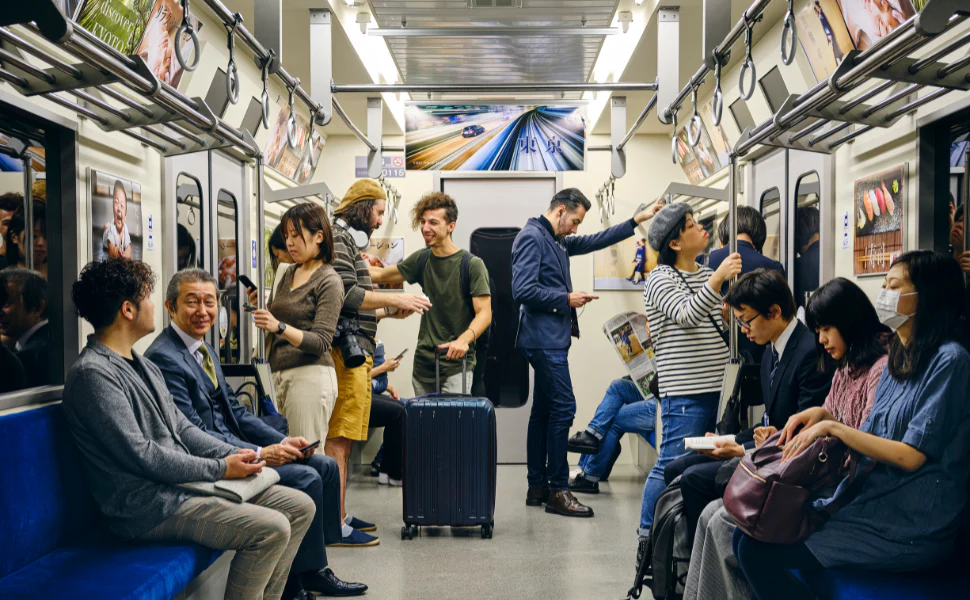
Long-term foreign residents across Japan are moving more cautiously as social and political tensions sharpen.
On crowded Tokyo trains and in quiet rural towns, many say they are deliberately keeping their voices down, their movements restrained, and their presence unobtrusive, conscious that debates over immigration, overtourism, and rising living costs have intensified in a country they consider home.
Several Australians who have lived in Japan for decades describe making subtle but intentional adjustments to signal that they belong.
With government rhetoric hardening and social media amplifying images of badly behaved visitors, they are eager to avoid being mistaken for short-term tourists or newcomers. One long-time Tokyo resident said he now feels a need to distance himself from viral caricatures of disrespectful foreigners, adding that while he had never felt uneasy before, there is now a tangible tension that prompts him to be extra careful and meticulously rule-abiding.
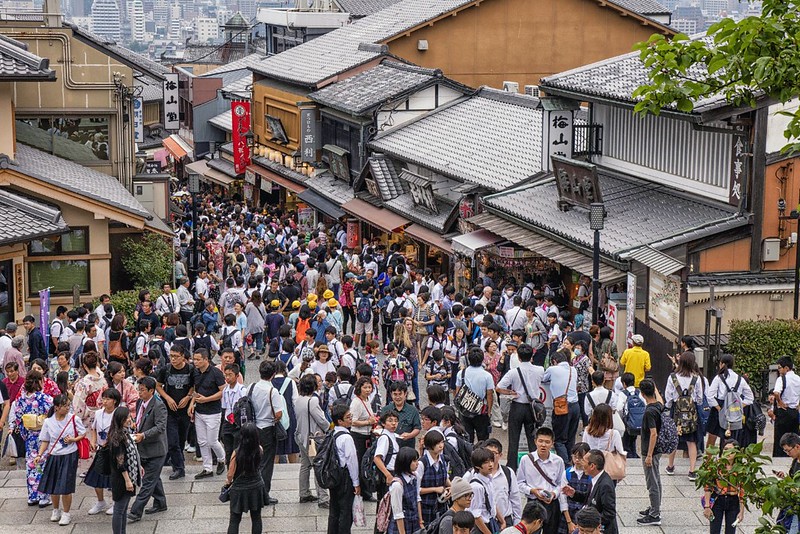
This shift in everyday behavior comes as foreign residents have become a prominent political issue. Japan’s foreign population reached a record 3.9 million this year, roughly three percent of the total population, and all major political parties emphasized stricter immigration controls during recent election campaigns. Under the current administration, policymakers are drafting tougher measures, including higher visa fees, tighter restrictions on foreign property ownership, and stronger enforcement against unpaid taxes and medical bills.
Analysts note that these moves are partly aimed at deflecting pressure from a nationalist party that gained traction on a “Japanese First” platform. Its supporters, increasingly visible at rallies and on city streets, have openly called for so-called delinquent foreigners to leave. Government leaders argue that public anxiety has grown over perceived unfairness and illegal behavior by some non-Japanese residents. Critics counter that focusing on enforcement rather than integration risks deepening unease and reinforcing the idea that foreigners are perpetual outsiders rather than members of society.
That sense of being watched has led some residents to consciously blend in. One executive who has lived in Japan for decades says she now avoids bright clothing, keeps her voice low in public, and follows rules with almost exaggerated care, all to avoid standing out. She worries that frustration over housing prices and overtourism is being misdirected at foreigners as a group, and that broad generalizations can do lasting harm.
She also fears that high-profile violent incidents abroad may reinforce anxieties about diversity, particularly in a society with limited experience of multiculturalism. In her view, such events can heighten a sense of difference at a moment when Japan is already uneasy, risking a retreat into social and political closure.
Underlying much of the unease is a long-standing sensitivity surrounding Chinese residents, who make up the largest foreign community in Japan. Conversations about foreigners often implicitly refer to them, especially as geopolitical tensions rise. Recent remarks by Japan’s leadership about the potential consequences of a Taiwan Strait conflict triggered sharp reactions from Beijing, followed by travel warnings, reductions in group tours, and a significant drop in Japan-bound flights. Major travel agencies were reportedly instructed to sharply cut visa applications, amplifying the sense that international friction is spilling into daily life.
All of this unfolds against Japan’s worsening demographic reality. The population has been shrinking for more than a decade, falling from its 2008 peak, while the fertility rate has dropped to record lows. Projections show that by 2070 the population could fall below 90 million, with only about half of residents of working age. Foreign workers have helped sustain key sectors such as manufacturing, healthcare, and construction, yet they are still largely treated as temporary labor rather than potential long-term citizens.
Some academics warn that suppressing immigration without offering a credible integration pathway risks undermining the functioning of society itself. For now, however, many foreign residents are responding not with protest but with heightened self-awareness. One Australian woman who has lived in Japan for years joked that she is currently the most well-behaved person she knows, determined not to irritate anyone, even wondering whether something as simple as walking a dog helps signal that she truly belongs.