
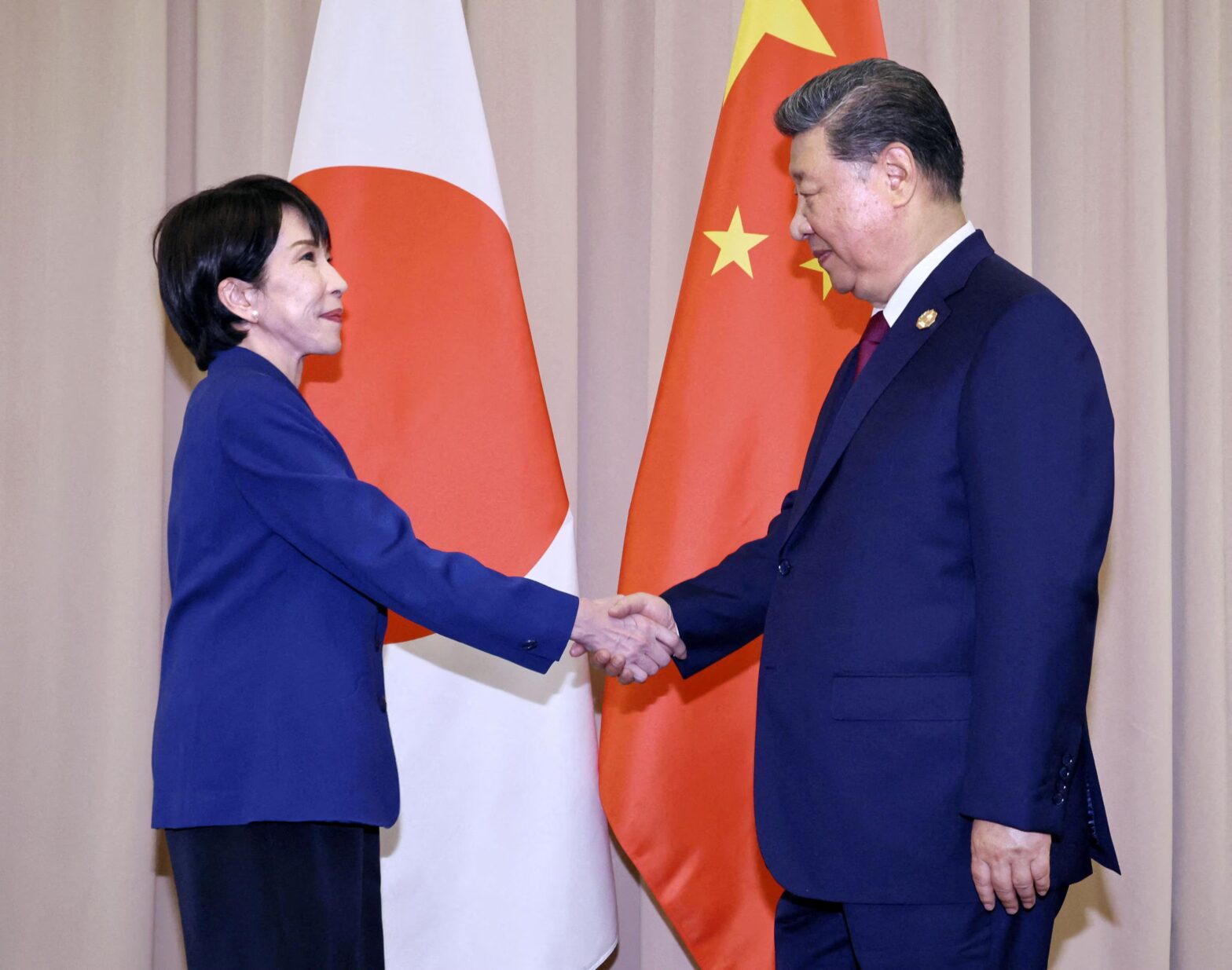
Japan’s decision to quietly press a Chinese diplomat in Osaka to return home reflects how the political weather in Northeast Asia has shifted.
What might once have been handled through back-channel conversations has now become part of a wider contest over Taiwan, one that is drawing Japan and China into increasingly public confrontation.
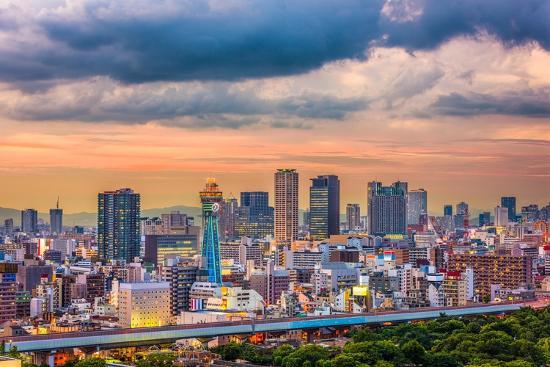
The trouble began with a social media post that never should have been written. Xue Jian, China’s consul general in Osaka, reacted sharply to Prime Minister Sanae Takaichi’s recent statement that any Chinese military move against Taiwan, even a blockade, could constitute a “survival-threatening situation” for Japan. Under Japanese law, that designation would unlock the country’s right to collective self-defense, a sensitive topic in both capitals. Xue’s response, which included a threat to “cut a dirty neck without a moment of hesitation,” quickly drew protests from Tokyo. The post was deleted, but the damage was done.
Japan’s senior diplomat for Asian affairs, Masaaki Kanai, raised the matter directly during talks in Beijing with Vice Foreign Minister Liu Jinsong. Upon returning, he briefed Takaichi, and the government signaled that Xue should head home on his own accord. The implication was clear enough: his position in Osaka had become untenable.
Behind the scenes, Beijing was already unsettled by Takaichi’s remarks, formally demanding that she retract them. That dispute has now bled into trade. China expanded its restrictions on Japanese seafood imports and issued a travel advisory telling its citizens to avoid Japan, a blow that worries Tokyo given how dependent parts of Japan’s economy are on Chinese tourism and consumption. Chief Cabinet Secretary Minoru Kihara tried to steady the situation by saying Japan would keep urging China to normalize its handling of trade, but few in government seem optimistic.
The tension has opened space for responses elsewhere in the region. Taiwan, which finds itself at the center of this diplomatic storm, urged its citizens to visit Japan more often and buy Japanese products as a gesture of support. Even symbolic acts matter in a moment when Taipei sees both economic pressure and military signals directed its way.
Beijing, however, has continued to reach for history to reinforce its position. Foreign Ministry spokeswoman Mao Ning reminded reporters that Taiwan “is China’s Taiwan,” and then cited Japan’s colonial rule over the island, invoking the suffering and losses endured by Taiwanese under occupation. Her message was that Japan, of all countries, should show caution, adhere to the one-China principle, and avoid taking steps that contradict decades of carefully negotiated political documents. The language was familiar, but the timing made it sharper.
The strain has already forced a delay in a planned meeting among the culture ministers of China, Japan, and South Korea. What was meant to be a relatively routine gathering has now become a casualty of the diplomatic climate. Mao described Takaichi’s comments as “extremely erroneous” and insisted they had “hurt the feelings of the Chinese people,” a phrase Beijing often uses to signal that normal exchanges cannot continue without concessions. She also confirmed there would be no meeting between Premier Li Qiang and Takaichi during the upcoming G20 summit in South Africa.
Washington, watching closely, has not stayed silent. US Ambassador to Japan George Glass condemned China’s reaction as “provocative” and called the economic measures “coercive.” After meeting Foreign Minister Toshimitsu Motegi, he emphasized that such moves undermine stability and reiterated that the United States remains committed to Japan’s defense. Given the 50,000 American troops stationed across Japan under their security treaty, the message landed with familiar weight.
Taken together, these episodes point to a broader recalibration in the region. Taiwan is becoming a pressure point where rhetoric carries real consequences, and where missteps, or even a single social media post, can ripple outward, disrupting trade, diplomatic exchange, and routine cooperation. Japan, newly assertive under Takaichi, is discovering that clarifying its position on Taiwan invites both praise from allies and sharp retaliation from Beijing. China, sensitive to challenges to its narrative on sovereignty, appears ready to respond forcefully to even symbolic gestures.
The episode may fade, but the pattern it reveals will not. The region is entering a period in which old assumptions no longer hold, and the choices made in Tokyo and Beijing will increasingly shape the strategic landscape for their neighbors.
Dash Free Editor said:
Analysts in Tokyo and Taipei have noted that the timing of this dispute coincides with a rapid tightening of the strategic map around Taiwan. In recent months, Japan’s Self-Defense Forces have accelerated joint exercises with both the United States and Australia, focusing on scenarios that mirror the kinds of contingencies now openly discussed in Tokyo: blockades, cyberattacks on Japanese infrastructure, and missile launches targeting Okinawa or the Nansei island chain. Japanese defense planners have long treated these scenarios as theoretical, but a series of Chinese naval drills that encircled Taiwan in August and October prompted what one retired Maritime Self-Defense Force admiral described as “the most serious internal reassessment since the Cold War ended.” The Ministry of Defense has quietly expanded its satellite monitoring over the East China Sea, and procurement data shows a surge in orders for radar upgrades and integrated air-defense equipment meant to track rapid strikes originating from the Chinese mainland.
China’s behavior fits a parallel pattern that researchers at the International Institute for Strategic Studies have tracked since 2020. Beijing has shifted from episodic shows of force to sustained pressure, using what Chinese strategists call “gray zone shaping.” Coast guard vessels now enter the waters around the Senkaku/Diaoyu Islands almost daily, often lingering for record durations. Chinese research ships, some equipped with sensors associated with submarine tracking, have made repeated voyages into Japan’s Exclusive Economic Zone. These moves, while non-military on paper, are structured to probe Japan’s response thresholds. Against this backdrop, the Osaka consul general’s threatening language carried a different sort of weight: it signaled not just anger, but an abandonment of the diplomatic discipline Beijing usually maintains when tensions are already running high.
Economists who study coercive trade measures see China’s new restrictions on Japanese seafood as part of a broader strategic toolkit that Beijing has refined over the past decade. The pattern mirrors actions taken against Norway after the Nobel Peace Prize was awarded to dissident Liu Xiaobo, against Australia during their 2020 dispute over COVID-19 origins, and against South Korea over the deployment of the THAAD missile-defense system. What makes the current episode notable is Japan’s relative vulnerability: coastal prefectures such as Hokkaido, Aomori, and Miyagi depend heavily on seafood exports to China, and the government’s own market surveys show that Chinese consumers account for a disproportionate share of sales for certain high-value products like scallops. Tokyo fears that pressure could broaden to automobiles or electronics, industries where Japan’s exposure to the Chinese market is far greater.
Diplomats familiar with China and Japan relations warn that the two countries’ crisis-management architecture is less robust than many assume. Although Tokyo and Beijing established a hotline between their defense ministries last year, experts note that it has never been publicly confirmed as operational during a real incident. High-level political channels have also thinned. Since early 2024, there have been fewer ministerial exchanges, and working-level talks on airspace safety, once seen as a stabilizing mechanism, have stalled. The postponement of the China, Japan, and South Korea cultural ministers’ meeting underscores this worrying trend. Regional scholars point out that trilateral forums have historically been essential for resetting ties after moments of tension. If these routines begin to erode, future crises may become harder to de-escalate.
At the same time, sentiment in Taiwan is shifting in ways that influence the wider political climate. Polling by the Taiwan Public Opinion Foundation shows that support for closer security coordination with Japan has grown steadily over the past three years, and Japanese cultural and economic influence in Taiwan remains high. Taiwanese leaders have become more vocal in encouraging tourism and consumer support for Japan, partly as a counterweight to China’s economic pressure. This soft alignment carries symbolic weight in Beijing’s eyes, making Japan’s every comment on Taiwan more politically charged than it might have been a decade ago.
Security experts caution that both countries are entering a period where diplomatic miscalculations could carry outsized consequences. Domestic politics are part of the equation. In Japan, Takaichi’s political base favors a more assertive stance toward China, and walking back strong language on Taiwan would risk perceptions of weakness. In China, nationalist sentiment remains high, and the leadership is sensitive to anything that suggests foreign interference in what it views as a core sovereignty issue. The result is an environment where neither side wants to concede ground, even symbolically, and where escalation can begin with something as trivial as a social media post.
What emerges from these dynamics is not simply another bilateral quarrel, but a glimpse into how fragile the region’s equilibrium has become. The incident in Osaka may fade from public attention, yet the structural pressures beneath it, including military posturing, economic leverage, cyber vulnerabilities, and increasingly brittle diplomacy, are likely to grow. Specialists warn that without stronger crisis-management channels and more predictable signaling from both capitals, the next spark may not be so easily contained.