

The newest nationwide survey on attitudes toward foreign workers lands with the weight of a quiet turning point. It suggests a country not only debating policy but grappling with the deeper question of who it is becoming.
Nearly six in ten respondents now say Japan should not actively bring in more foreign workers. That’s a dramatic shift from just a year ago, when support was stronger and the public mood seemed to be inching toward acceptance of a more diverse labor force. The reversal looks sudden at first, yet the numbers point to a sentiment shaped by something more complex than simple resistance. Insecurity, economic strain, political disappointment and a louder nationalist undercurrent have all converged to produce this moment.
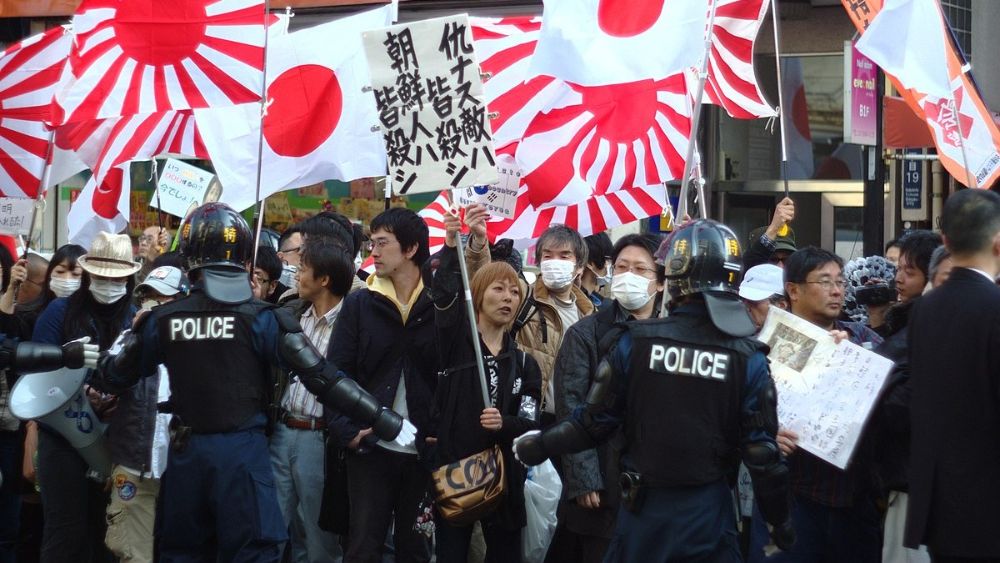
The headline figure only hints at the mood beneath it. When asked why they felt cautious, most respondents pointed first to public safety: 68 percent feared crime or disorder would worsen. Close behind were worries about communication barriers and cultural differences. None of this is entirely new, but the scale is notable. Over the past decade, Japan has slowly diversified. Foreign residents now exceed 3.9 million; foreign workers have surpassed two million. As towns and cities adjust, the pressure points show up in predictable places, including busy tourist districts, hospital waiting rooms, school classrooms and apartment complexes. The surprise is not that people have concerns, but how closely those concerns are tied to a broader sense of understood xenophobia.
And still, the same survey shows another reality that complicates the narrative. Sixty-one percent of respondents acknowledge that foreign workers ease the country’s acute labor shortages. That tension, which blends dependence with discomfort, captures Japan’s present mood more accurately than any single statistic.
Entire sectors rely on foreign labor simply to function. Manufacturing, agriculture, construction, long-term care: without Vietnamese trainees, Filipino caregivers, Nepalese cooks or Chinese assembly-line staff, many operations would grind to a halt.
Local governments see this every day. In some rural areas, foreign residents now make up more than a tenth of the population and help sustain communities that would otherwise continue to hollow out.
The public understands the necessity, yet reacts to it with unease. People find themselves acknowledging a reliance they would rather not have, and that emotional contradiction runs throughout Japan’s demographic landscape. An aging population, a shrinking workforce and a persistently low birthrate have created conditions that economists warn will leave millions of jobs unfilled. Bringing in foreign workers is not a matter of cultural ambition; it is structural triage. But knowing that does not make the adjustment easier, and it does not automatically translate into trust.
One detail of the survey is especially striking: younger Japanese respondents were more likely than older ones to fear that safety would deteriorate if more foreign workers entered the country. It breaks the expected pattern.
Younger generations consume global media, travel more and interact more frequently with foreigners. Yet the data suggests that many grew up in a climate of economic stagnation, rising precariousness and fraying confidence in politics. Their expectations of stability are already low. Pressure can sharpen caution, and concern about job security or social order often lands on the most visible symbol of change. Ironically, the generation that will inherit the heaviest demographic burden feels the least certain that the country can handle the transition.
Understanding this mindset requires also looking at the political atmosphere shaping it. Nationalist sentiment has been on the rise, and the survey shows seven in ten respondents now say Japan’s interests should come before international cooperation. That shift aligns with the broader political currents of the past two years. The ascent of Sanseito, a populist party that blends anti-immigration themes with conspiratorial talk about foreign influence, revealed how receptive a portion of the electorate has become to this kind of messaging. Warnings about sovereignty, crime and cultural erosion, once confined to fringe spaces, now circulate in mainstream political campaigning.
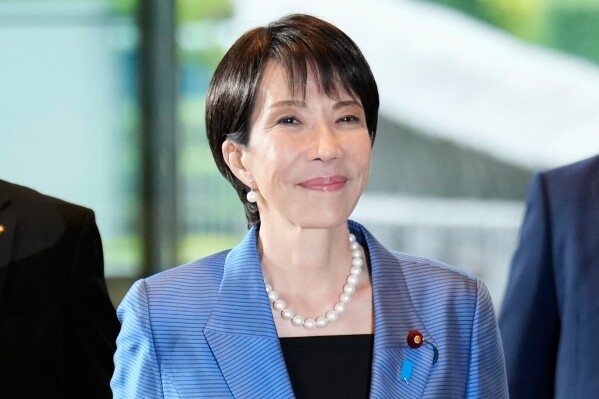
The election of Sanae Takaichi as prime minister accelerated this trend in a more measured form. Her political roots lie firmly in the nationalist camp of the ruling party, and while she avoids Sanseito’s extremes, she often echoes the public’s anxieties. Calls for stricter enforcement, tighter controls and “orderly coexistence” project a government that is not hostile to foreigners but is wary of unmanaged change.
Policy initiatives, including new oversight mechanisms, closer scrutiny of foreign land purchases and tougher stances on visa violations, reinforce the same message. Even when the actions are administrative, the psychological effect is unmistakable: foreign presence is something the state must monitor closely.
That framing shapes how everyday events are interpreted. A handful of unruly tourist videos or several news stories about foreign suspects can overshadow the statistical reality that crime in Japan remains historically low. Social media accelerates this distortion, turning isolated incidents into perceived trends. Layered on top of declining trust in politics, which reached its highest point since 2014, the environment becomes fertile ground for simplistic explanations. Immigrants, in that light, often become shorthand for a wider sense of drift.
But it would be a mistake to flatten Japan’s attitude into hostility alone. On the ground, the picture is far more textured. In many workplaces, Japanese and foreign staff collaborate without notable tension. In schools, children from Brazil, the Philippines, Vietnam and South Asia adapt quickly, often bridging gaps that adults struggle to cross. Municipal governments, especially in industrial or agricultural regions, have developed practical systems to support mixed communities: language assistance, mediation services and multicultural resource centers. These efforts rarely make national news, yet they form the quiet infrastructure of everyday coexistence.
The concerns revealed in the survey seem less about individual foreigners and more about the velocity of change. Demographic shifts are arriving at a moment when Japan is already juggling inflation, geopolitical uncertainty, weakening trust in institutions and economic pressures that weigh heavily on younger generations. In such a climate, even modest disruptions feel amplified. The fear is not that foreigners are inherently destabilizing, but that the country may not adapt smoothly enough to preserve the social coherence people rely on.
Much of this unease reflects a longstanding problem: Japan has never articulated a clear long-term vision for how foreign workers fit into its future. For decades, the technical intern program was framed as humanitarian skill transfer rather than what it functionally was: a labor pipeline. The newer Specified Skilled Worker visa programs are more transparent, yet still framed as temporary stopgaps rather than the foundation of a durable migration strategy. Politicians avoid the vocabulary of immigration even as foreign residents become a permanent part of the country’s demographic profile. Ambiguity creates uncertainty, and uncertainty drives caution.
None of this diminishes the realities Japan must confront. Meaningful integration requires investment in language education, fair labor practices, housing access, community support and predictable legal pathways. Foreign residents need clarity and stability. Japanese communities need reassurance that concerns about order, fairness and local cohesion will be addressed. Mutual trust cannot be improvised; it has to be built with intention.
What the survey ultimately reveals is not a simple rejection of foreign workers but a conflicted acceptance of their necessity. People recognize the economic stakes even as they feel uneasy about the social implications. That combination points to a public that is still open to persuasion, still weighing its options and still searching for a sense of control rather than a retreat into isolation.
Japan now stands at a fork in the road. It can allow rising anxiety to harden into exclusion, risking both economic decline and social brittleness. Or it can take this moment as an opportunity to articulate a clearer, more confident vision of how newcomers can become part of the country’s long-term resilience. Change does not have to threaten identity; it can strengthen it if handled with care. The task ahead is convincing a skeptical public that adaptation is possible without unraveling the social fabric.
If there is a thread running through the survey, including concerns over safety, cultural friction, nationalist sentiment and political distrust, it is the sense that transformation is arriving faster than institutions are adjusting. The challenge for Japan is not to quiet those concerns, but to show that the country can navigate this transition with stability and integrity. Japan has managed profound shifts before. The question now is whether it can recognize foreign workers not as a marker of decline, but as part of the effort to secure its future.

Japan’s sharp rise in unease toward foreign workers comes at a moment when its economy depends on them more than ever, creating ripple effects far beyond its borders. Southeast Asian governments—whose citizens fill much of Japan’s labor shortage—now worry that growing nationalist sentiment under Sanseito and Takaichi could translate into tighter controls and a less predictable environment for migrant workers.
In the United States, analysts see familiar political dynamics but also recognize the strategic risk: a more inward-looking Japan could weaken joint efforts on supply chains, technology and regional stability. Globally, Japan’s dilemma mirrors a wider challenge facing aging democracies that rely on migration yet struggle to convince their publics that openness can coexist with social stability. The survey’s findings ultimately signal less about foreign workers themselves and more about whether institutions can maintain trust during rapid demographic change—a question the world is watching closely.