
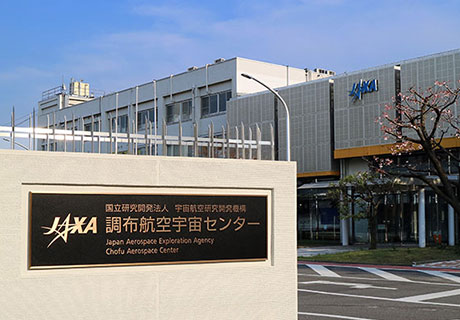
In late October 2025, Japan’s space programme marked a momentous milestone: the first flight of the next-generation unmanned cargo spacecraft HTV‑X (HTV-X1) by JAXA to the International Space Station (ISS). The mission not only delivered essential supplies—food, water, and advanced carbon-dioxide removal equipment—for the astronauts on board, but also served as a watershed moment signalling Japan’s deepening ambition in space. Here is how JAXA arrived at this moment, what the HTV-X mission means, and why it matters for global space research and Japan’s role within it.
1. Origins and institutional evolution
The story of JAXA begins by tracing its roots back to three separate agencies: the Institute of Space and Astronautical Science (ISAS), the National Aerospace Laboratory of Japan (NAL), and the National Space Development Agency of Japan (NASDA). On 1 October 2003, these three entities were merged to form JAXA as an independent administrative institution under Japan’s Ministry of Education, Culture, Sports, Science and Technology (MEXT).
Each predecessor brought something distinct: ISAS (space and planetary science), NAL (aeronautics research), and NASDA (satellite and launch-system development). The consolidation allowed Japan to unify its aerospace ambitions under a single roof.
In the years that followed, JAXA matured from being a collection of programmes into a steady, globally-respected space agency. Its responsibilities span satellite launches, launch-vehicle development, planetary exploration, human-spaceflight cooperation, and advanced research.
Yet the institutional journey has had its share of challenge. Japan entered the space age later than some competitors, and often under the shadow of bigger agencies—NASA, European Space Agency (ESA), and others. But it has steadily built credibility through incremental achievements—often quietly, sometimes behind the scenes—but with consistency.
Key historical milestones
To appreciate the significance of the HTV-X mission, one must review some of JAXA’s landmark undertakings:
Early forays
Japan’s first satellite, Ōsumi, was launched in 1970 by ISAS. Wikipedia+1 Over the decades Japan pursued launch-vehicles (such as the Mu and H-series rockets), Earth-observation satellites (e.g., ALOS), astronomy and planetary missions (e.g., Akari, Kaguya), and human-spaceflight cooperation (e.g., the Japanese Experiment Module, “Kibo” on the ISS).
The HTV era
One of JAXA’s most visible operational roles has been in resupplying the ISS. The vessel H‑II Transfer Vehicle (HTV, often nick-named “Kounotori”) served nine successful missions from 2009 to 2020. Wikipedia+1 These missions built both technical competency (docking, autonomous berthing, cargo handling) and global reputation.
Planetary exploration and ambition
JAXA’s planetary-science portfolio includes the celebrated Hayabusa2 mission to the asteroid Ryugu, successful sample-return from an asteroid, and a precise lunar landing by the mission SLIM in early 2024 that made Japan the fifth nation to achieve a lunar surface touchdown. Axios+1 These milestones underscored Japan’s growing capacity in deep-space travel, precision landing and sample return.
The HTV-X mission: what happened and why it matters
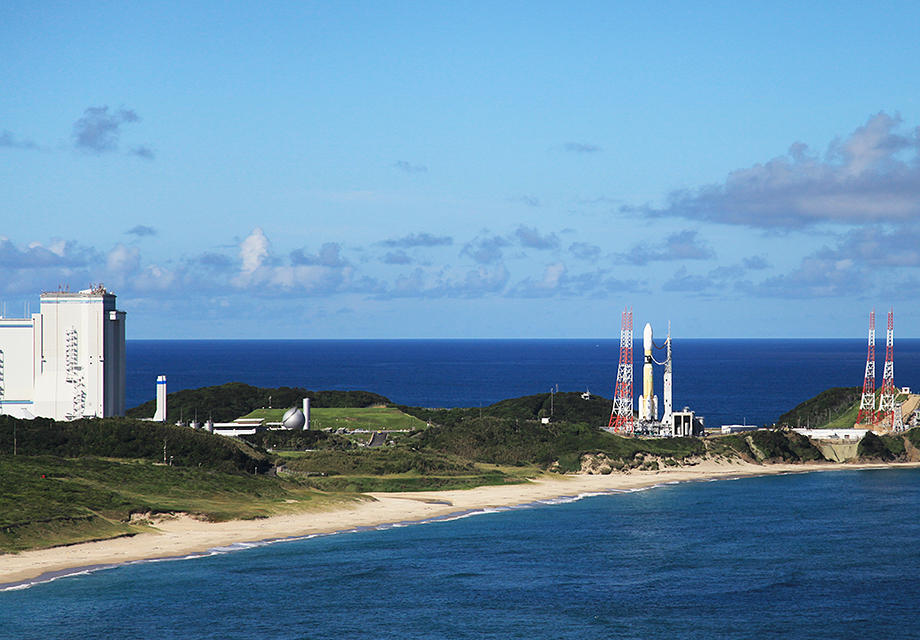
On 26 October 2025, JAXA successfully launched HTV-X1 aboard its new H3 launch vehicle from the Tanegashima Space Center.
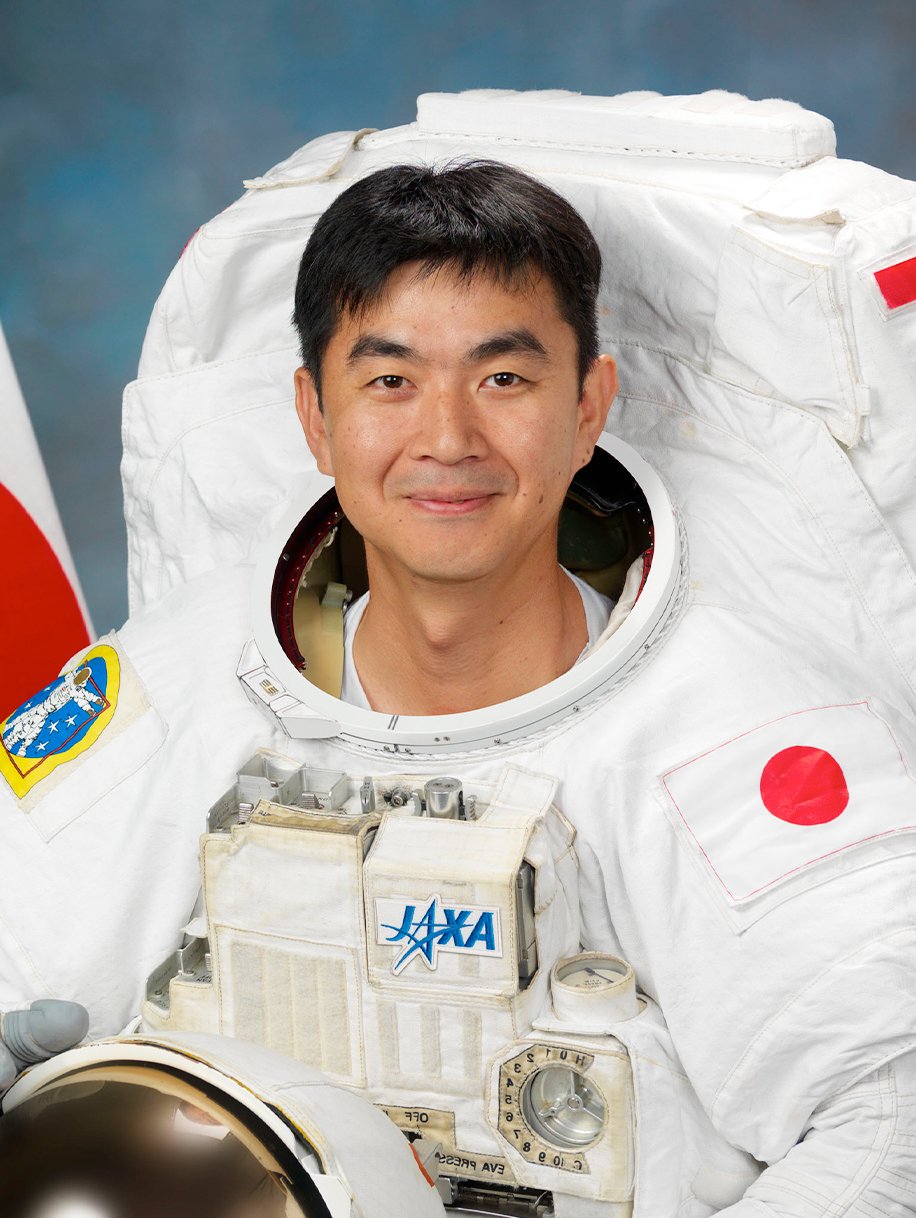
Approximately 14 minutes and four seconds after liftoff, separation of the HTV-X1 was confirmed. global.jaxa.jp On 30 October, the spacecraft berthed to the ISS in a scheduled operation; Japanese astronaut Kimiya Yui assisted with the capture via the station’s Canadarm2 robotic arm.
Cargo and operational capability
Though full payload details have not been publicly specified in granular form, it is clear that the HTV-X1 delivered food, water and advanced carbon-dioxide removal equipment for the ISS crew—elements essential for long-duration human presence in space. The mission also embeds technical demonstration elements: the HTV-X is designed to remain berthed with the ISS for up to six months, after which it will depart and operate for up to 1.5 years in orbit while carrying out technology-demonstration tasks.
Technical enhancements and future readiness
The HTV-X is explicitly positioned as the successor to the original HTV. Its design goals include increased payload capacity, improved operability, cost-reduction, and a broader utility—beyond immediate ISS resupply—to future lunar, deep-space, and international partner missions.
Key upgrades include:
- Larger cargo capacity (both pressurised and unpressurised) compared to HTV.
- The ability to load cargo up to 24 hours before launch, and carry out orbital experiments post-ISS mission.
- Design that anticipates automated docking and servicing roles, making it a flexible platform for future missions to the Moon, Mars, or other deep-space destinations.
Strategic significance
From a strategic perspective, the mission has several layers of significance:
- National capability: By completing this milestone, Japan demonstrates credible launch and cargo-transfer capacity—a core infrastructure for human-spaceflight logistics.
- International partnership: The fact that HTV-X will support ISS logistics and beyond positions Japan as a dependable international partner in human space exploration.
- Future-mission readiness: The technical demonstration aspect—long-duration orbit after separation, ability to host experiments—shows that this is not just a one-off resupply vehicle but a stepping stone toward Japan’s ambitions on the Moon and beyond.
- Cost and competitiveness: As space becomes more commercial and more contested, Japan’s ability to field cost-effective, reliable launch and spacecraft services will matter for both national prestige and industrial opportunity.
JAXA’s global impact on space research and exploration
The significance of JAXA’s work transcends national boundaries. A thoughtful look at its impact in global space research and exploration reveals multiple dimensions.
Collaboration and international trust
JAXA has long been a collaborator in programmes with NASA, ESA and other agencies. The ISS programme is a case in point—Japanese module “Kibo” and HTV/Kounotori missions contributed materially to station operations. By executing HTV-X1 successfully, Japan reinforces its reliability as a partner in human-spaceflight infrastructure.
Moreover, Japan’s contribution to planetary science, such as asteroid sample-return missions and lunar surface missions, enriches the global scientific enterprise. The data, samples and insights produced by JAXA missions are global public goods.
Innovation in technology and science
From advanced launch vehicles like the H-series and now the H3, to precision lunar landing, to robotic arms, materials exposure experiments, solar-sail demonstrators (e.g., IKAROS), JAXA has repeatedly pushed space-technology frontiers. These innovations propagate globally: other agencies and commercial firms often benefit from the engineering lessons, collaboration pathways and standardisation of operations.
Human‐spaceflight logistics and infrastructure
One of the central unsung pieces of human-spaceflight is “getting there, staying there, and returning.” The logistics of sending supplies, removing waste, maintaining life-support and transitioning to deep-space habitats are critical. By developing HTV-X, JAXA contributes directly to this infrastructure layer. That matters not only for the ISS but eventually for lunar bases, Martian habitats and commercial orbital facilities.
Science output and planetary exploration
JAXA’s science missions have delivered high-quality results: for example, the Hayabusa2 mission returned samples that are still being studied; the SLIM lander’s precision landing demonstrated new techniques for planetary surfaces; Earth-observation satellites deliver environmental and climate data. The broader scientific community taps into these outputs.
Commercial and industrial implications
Space is no longer solely a national-agency domain. With the rise of commercial launch, small satellites, hybrid missions and public-private partnerships, JAXA’s advances help anchor Japan’s industrial ecosystem. Companies such as Mitsubishi Heavy Industries, IHI Aerospace, and others participate in manufacturing rockets, spacecraft modules and payloads. This boosts technological capacity, export-potential and innovation spill-over into other sectors (materials, avionics, robotics).
The HTV-X mission in the broader scheme: lunar, Mars and beyond
One of the central messaging points from JAXA’s HTV-X programme is that the spacecraft is more than a resupply vehicle—it is a testbed for future exploration. According to mission documentation, JAXA intends to utilise the HTV-X platform for “future international space exploration and post-ISS human space activities in low Earth orbit.”
Let’s unpack what this means in practical and strategic terms.
Low Earth Orbit (LEO) as proving ground
The next few years will see a transition in human‐spaceflight architecture. The ISS is scheduled for eventual retirement, commercial LEO stations are emerging, and nations are refocusing on the Moon and Mars. In this context, HTV-X offers Japan a foothold: a spacecraft capable of long berth times (up to six months at the station) and extended mission durations post-undocking (up to 1.5 years) for in-orbit experiments and servicing.
This means Japan retains operational relevance in the LEO infrastructure layer even as the frontier shifts outward.
Lunar operations and gateway logistics
One of the major habitats being built for Artemis and other lunar initiatives is the Lunar Gateway—a station orbiting the Moon —and surface bases at the lunar south pole. Logistics to these destinations are much more complex than LEO; long transit times, radiation environment, autonomous docking, reusable/refuelable elements and cargo return become critical. The HTV-X design philosophy explicitly contemplates tasks like boosting in orbit, modular detachments, satellite servicing, external experiments and even space-tug capability.
Thus, HTV-X can be seen as a precursor system for supply-and-servicing architectures beyond LEO.
Mars and deep-space ambition
Though Japan has not publicly committed to a crewed Mars mission in the immediate near term, the architecture implications are clear. A country that can build and operate logistics spacecraft for the Moon gains credibility toward deeper missions. Experiments in long-duration autonomous orbit post-station separation, unpressurised cargo launch and rendezvous operations, and new life-support systems (for example, the carbon-dioxide removal equipment mentioned in the HTV-X1 mission) all contribute to the knowledge base required for Mars transit and habitation.
Commercial and international leadership
By establishing a capable logistics spacecraft, Japan positions itself not just as a partner but potentially as a logistics provider in the global space economy. Other nations and commercial entities may contract Japan (or Japanese industry) for launch and cargo services, building reputational capital. Moreover, such leadership fosters cooperation: for instance, in August 2025 Japan signed agreements with ESA to provide H3 rockets for European missions (e.g., asteroid Apophis mission). Reuters
Challenges and open questions
Even as we celebrate this milestone, a balanced assessment requires acknowledgement of the challenges ahead.
Budgetary and strategic constraints
Space is expensive, and Japan faces the same pressures as other advanced economies: competing national priorities (defence, climate, health, infrastructure), limited budgets and the need to demonstrate value. While HTV-X is a strong technical achievement, maintaining sustainable flights, improving cost-effectiveness and building a robust launch-ecosystem remain ongoing tasks.
Global competition and new entrants
The space domain is increasingly crowded. Commercial launch providers (e.g., SpaceX, Blue Origin), new national agencies (e.g., in India, China, UAE) and ride-share/small-sat architectures are shifting paradigms. For Japan to maintain its edge, JAXA and its industry must continue to innovate, reduce costs, and deliver reliability. The extension of the HTV-X platform to new missions will be a test of adaptability.
Human-spaceflight readiness
While Japan contributes significantly to ISS operations, it has not yet flown an independent crewed spacecraft (the Japanese astronaut flights have relied on U.S. or Russian vehicles). Any future ambition for lunar or Martian crewing will require development of new systems—or partnering on them—with attendant cost and risk. The HTV-X mission helps support the logistics side, but crew transport remains a separate frontier.
Technological complexity and schedule risk
Automation, autonomous docking, long-duration orbit operations, deep-space environmental durability—these are non-trivial. The transition from resupply vehicle to a multi-purpose deep-space logistics platform involves technical leaps. Delays, budget overruns or performance shortfalls can erode the momentum. The HTV-X1 mission is the first step; successive missions must deliver.
Why this matters: reflections on meaning and impact
From the vantage of a thoughtful observer, JAXA’s HTV-X1 mission matters for a deeper reason beyond rockets and docking ports. It signals a shift in how Japan—and by extension the global community—views space: not as an adjunct of big power prestige, but as infrastructure for human presence, cooperation and science.
In an era where existential questions swirl—climate change, global health, geopolitical tensions—space exploration can offer both practical utility and a broader sense of purpose. JAXA’s trajectory reminds us that a medium-sized power can still make big contributions to humanity’s venture into the cosmos, not by grandiose one-off acts but by sustained, incremental capability building.
The HTV-X1 didn’t make headlines for landing humans on Mars or discovering new planets. It delivered food, water and carbon-dioxide filters to the ISS. And yet, in that modest act lies the architecture of tomorrow’s missions. The astronaut onboard receives fresh supplies now; further down the line, a lunar base or Mars habitat might rely on equivalent systems. The carbon-dioxide removal equipment on board the HTV-X1 might feed into life-support loops on other worlds. The automation tested might become the logistics backbone of human outposts.
In that sense, JAXA’s milestone is not just about one country launching one spacecraft—it is about the evolving infrastructure of human space exploration. It is about reliability, logistics, the unseen scaffolding without which grand missions evaporate into ambition. Japan plays a growing role in supplying that scaffolding.
Looking ahead: what to watch
What follows the HTV-X1 mission? A few key indicators will tell us whether this is a momentary success or the start of a sustained paradigm shift:
- Subsequent HTV-X flights: Will HTV-X2 and HTV-X3 deliver with regularity, cost-effectiveness and increasing scope? The HTV-X programme documentation already envisages beyond-ISS usage.
- Integration with lunar and deep-space architecture: How will HTV-X interface with the Artemis programme, lunar gateway logistics, surface supply chains, satellite servicing or in-orbit refuelling?
- Launch-vehicle reliability and commercial competitiveness: Japan’s H3 rocket (which carried HTV-X1) must become cost-competitive and reliable if Japan is to expand its launch services globally.
- International partnerships and leadership roles: Will Japan leverage the HTV-X capability and other assets (e.g., rover development, lunar exploration, satellite constellations) into leadership or niche roles in global missions?
- Industrial and technology spill-over: Will the industrial base in Japan expand, spin off novel technologies, and contribute to global space-economy dynamics?
- Public and political support: Sustained funding, clear strategic goals and public understanding will be necessary for Japan to keep momentum.
Conclusion
The HTV-X1 mission by JAXA is not merely another cargo-craft launch. It is emblematic of how Japan is shifting from reliable partner to more autonomous actor in human space logistics. It blends operational competence (resupply, docking, life-support cargo) with forward-looking architecture (automation, extended orbit duration, service missions). It positions Japan to contribute meaningfully to the next frontier of space exploration—lunar bases, Martian habitats, satellite servicing—and to do so in a changing global dynamic where cost, collaboration and flexibility matter.
For me, as a writer who watches how systems evolve rather than only grand breakthroughs, this moment resonates: the real breakthroughs in space will not only be visible landings or distant planets, but the quiet construction of infrastructure, the logistics of living in space, the regular voyages of machines carrying supplies and experiments, the increment of capability. Japan may not dominate headlines in the way the U.S. or China often do, but it is steadily building a role that matters.
In the end, JAXA’s journey reminds us of a larger philosophical point: exploration is not only about reaching new worlds, but about building the means to stay there, to make living there feasible, sustainable and shared. HTV-X1 is a step in that direction—a small but meaningful step whose ripples will be felt in corridors of future lunar bases, Martian transit ships and orbital platforms. It is, in one sense, the infrastructure of hope.
We should watch what comes next—and not only the grand missions, but the quiet vessels that carry our scientific tools, our life-support systems, our ambition into orbit. For it is in the mundane logistics of space, paradoxically, that the extraordinary becomes possible.