
Japan’s recent fires have pulled an old fear back into the present. Fire shaped the country’s early cities and has always lingered at the edge of collective memory, but the speed and reach of this year’s blazes have unsettled even veteran firefighters.
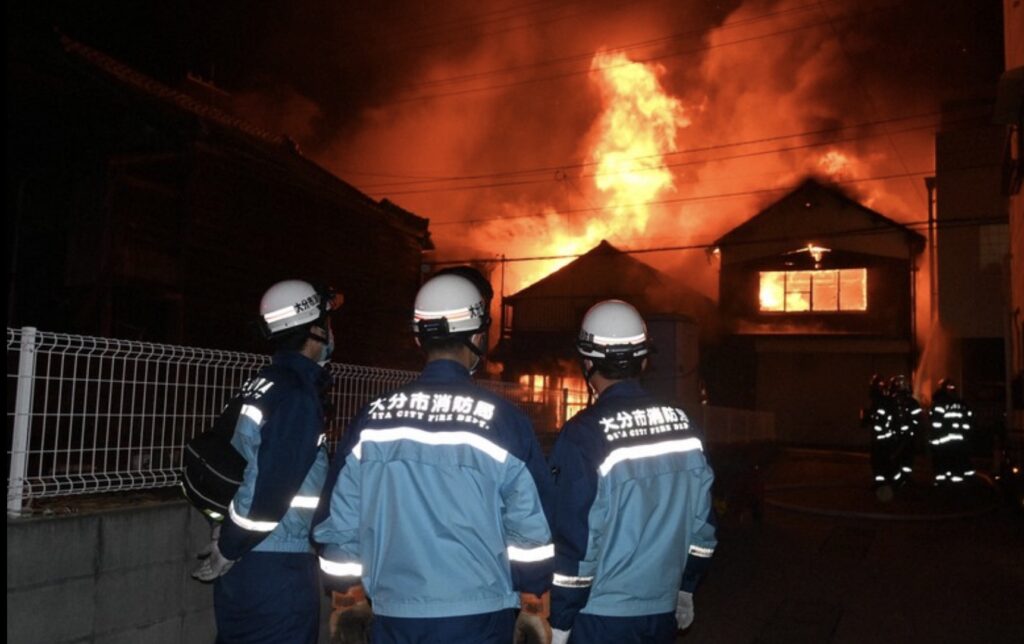
From the compact fishing district of Saganoseki in Oita City to the sprawling forests of Iwate, flames moved with a kind of intent that caught residents off guard. Hills, harbors, and the natural barriers people thought they could rely on turned out to be no match for wind-driven embers.
What unsettles people now is not only the violence of the individual fires, but what these events, taken together, suggest about the country’s evolving vulnerabilities.
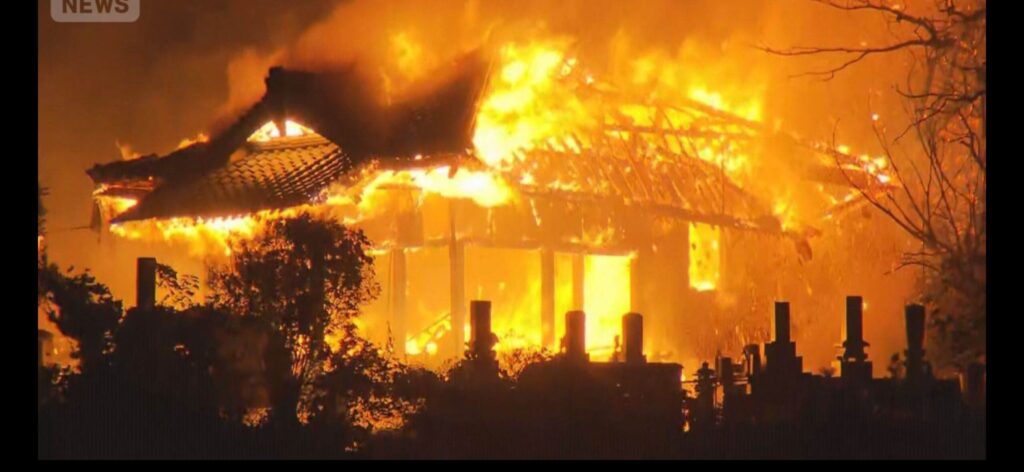
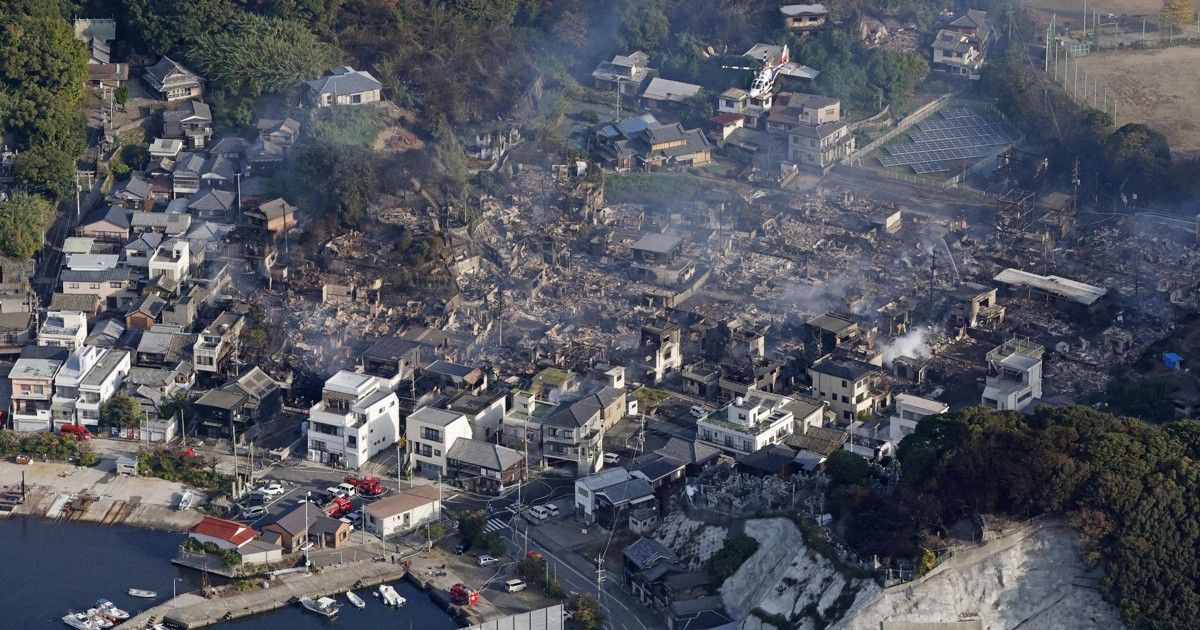
In Oita, it was an ordinary evening, the kind that usually rolls quietly into night. Investigators are still piecing together its cause. Yet the way the fire unfolded felt almost preordained. Saganoseki is a place formed by necessity, not modern planning. Houses press against steep slopes. Narrow alleys bend around decades-old wooden homes. The harbor, famed for its mackerel, leaves only a thin ribbon of habitable land between sea and mountain.
That design made sense when community life revolved around fishing boats and walking distance. It makes far less sense when fire engines need room to maneuver.
Over the years, depopulation also left its mark. Many homes stand empty now, slowly giving in to time and salt air. Vacant structures burn differently from lived-in ones; they ignite faster, collapse suddenly, and feed flames that spread before anyone knows what is happening. So when the first orange glow lit up the hillside, the town behaved less like a cluster of homes and more like tinder waiting for a match.
Residents describe those early minutes with a clarity that comes from shock. An elderly woman, escorted into an evacuation center with only a small bag, learned midway through the walk that her house was already gone. She said she could hardly think at all, her body moved, but her mind lagged behind. Others recall seeing fire hop between rooftops as though chasing a path only it could see. The experience left them feeling as if they were always a few steps behind something faster than they could outrun or understand.
A younger resident who filmed the sky turning red pointed out what many others later echoed: the wind changed everything. Gusts whipped across the bay, lifting sparks high enough to clear entire rows of houses. Later measurements showed wind speeds steady at around ten meters per second. With currents like that, embers leapt uphill and even across the harbor. Slopes behind the town ignited. An uninhabited island a kilometer and a half offshore was smoldering by dawn. The image of a distant island catching fire from a blaze on the mainland unsettled even those accustomed to coastal storms.
When fire crews reached Saganoseki, they faced an unforgiving layout. Some lanes were so narrow that trucks could not pass. Firefighters had to carry hoses by hand through twisting passages, searching for clear angles to fight flames that were already advancing. Vacant houses, long left to their own decay, collapsed before crews could even reach them. Former officials from Tokyo’s fire service later noted that removing a handful of abandoned structures might have opened critical lines for containment. Instead, the town’s shape and its aging homes worked against every effort to slow the fire.
As the wind pushed harder, firefighters were forced into defensive strategies. Helicopters dropped water on the most active fronts, but it was clear from above that the town itself, its density, its orientation, its hillside layout, was feeding the flames. When officials finally surveyed the damage, more than 170 buildings had burned. Around 175 people had been displaced, and one resident, an elderly person who had been missing when the fire began, was confirmed dead.
National leaders responded quickly. The prime minister offered condolences and pledged government support. Still, people in Saganoseki understand that words alone won’t solve the deeper issues. The town’s structure, the condition of its housing stock, the presence of abandoned buildings– those are problems that will outlast the news cycle. Locals had worried for years that one spark might race through their tightly packed streets. They were right.
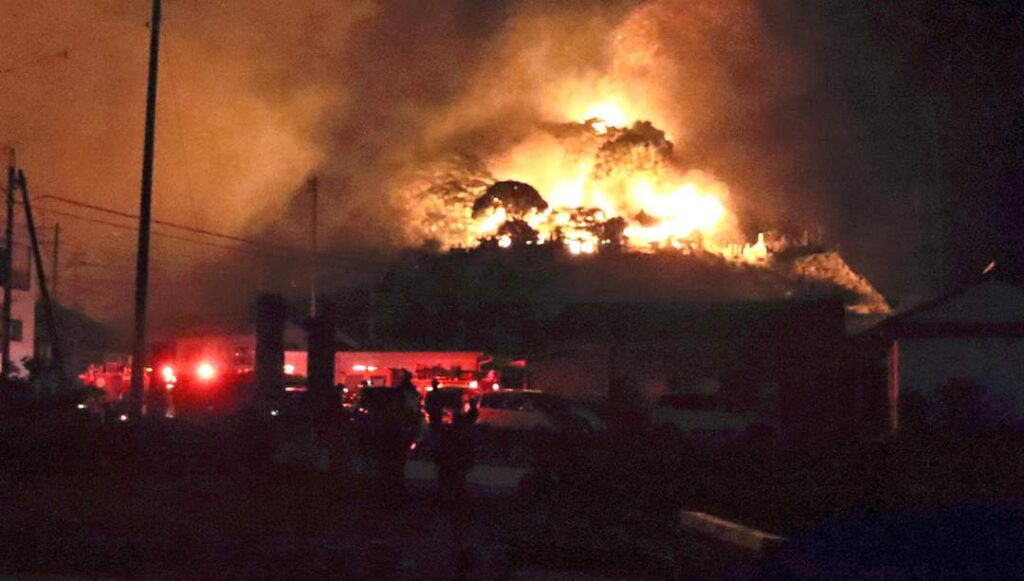
What gave the Oita fire a wider resonance was something happening far to the north. In Iwate Prefecture, outside Ofunato, Japan was facing its largest forest fire in decades. Though unrelated in origin, the similarities in how the two fires grew were hard to ignore. Ofunato sits in a region where trees dominate the landscape and people are few. When the fire started, it met a landscape primed to burn. February had brought just 2.5 millimeters of rain leaving the ground and underbrush unusually dry.
As flames surged through thousands of acres, evacuation orders went out to more than 4,600 people.
Many chose to leave before officials formally instructed them to. Families stayed with relatives. Others filed into shelters where volunteers worked through the night, distributing food, blankets, and information that trickled in slowly. Helicopters from fourteen prefectures flew repeated routes over smoking ridgelines. Images showed entire hillsides turned black, long plumes of gray lifting into the sky, and narrow firebreaks where crews stood shoulder to shoulder trying to hold the line.
The Iwate blaze ultimately dwarfed the Oita fire in size, yet the two shared the same essential ingredients: dry air, strong winds, and environments that had become more combustible over time. The Fire and Disaster Management Agency called the Iwate event the worst forest fire the country had seen in more than thirty years. More than eighty buildings were damaged and one person died. For many across Japan, the parallel disasters served as a harsh reminder that natural beauty often coexists with natural risk.
Officials have been careful not to attribute either fire solely to climate change. They point to local conditions, land-use decisions, and chance. Yet global assessments have repeatedly warned that warmer air brings longer dry spells and more unpredictable winds. Japan recorded its hottest year on record in 2024. That single fact does not explain why these fires broke out when they did, but it does shape the backdrop against which they unfolded. Residents can feel that backdrop shifting.
For older generations, fire evokes memories from a very different era. Cities once built almost entirely of wood were vulnerable to the smallest mistake. Those stories linger, passed down through families. But today’s risks stem from new dynamics: an aging population, rural decline, and forests that are no longer tended the way they once were. In fishing towns such as Saganoseki, the exodus of young families leaves behind houses that slowly degrade. In forest regions, the loss of industries that once managed the woods leaves behind overgrowth that accumulates for years. Under the right conditions, those landscapes become primed for rapid burning.
Seen from that angle, the fires of 2025 look less like outliers and more like symptoms of deeper structural strain.
Every vacant house in Oita represents a thread unraveling from a larger demographic pattern. People leave for jobs or education, and few return. Over time, towns age faster than they can adapt. Homes deteriorate. Local governments, often understaffed, struggle to demolish unsafe buildings or modernize infrastructure. That gap between what a town was built for and what it needs now becomes a quiet hazard: one that stays invisible until a fire exposes it.
The same logic applies in Iwate. Forests once managed by professional crews or community groups now grow unchecked. Without thinning or controlled burns, fuel loads increase year after year. When a dry winter meets a hard wind, the results can exceed what even thousands of firefighters can control quickly. More than two thousand responders worked the Iwate fire, yet officials admitted early on that full containment would take patience more than force.
The human experience of these disasters sits at the core of their weight. In Oita, evacuees spent nights in civic centers converted into shelters. Volunteers cooked simple meals, poured tea, and offered what comfort they could. Many evacuees were elderly, people who had known the town in quieter decades. Under fluorescent lights, they spoke softly about hearing sirens, about watching embers float over the harbor, about the disorientation of losing a home in minutes. One man said watching the fire approach felt “like seeing the end of everything familiar.”
In Iwate, the fear took a different shape. Forest fires can travel silently, carried on wind rather than visible walls of flame. A family living near the edge of the evacuation zone packed their car and left hours before the official warning reached them. They remembered the 2011 tsunami and did not intend to wait. A teacher sheltering with students said the procedures felt like a drill, until suddenly they weren’t. The calm instructions were the same, but the stakes were very different.
For firefighters, both disasters demanded endurance. In Saganoseki, they moved through unstable debris, dousing hidden embers and watching for collapsing beams. In Iwate, they climbed steep slopes, hauling equipment across uneven terrain, only to watch the fire leap ahead when the wind shifted again. Helicopter crews had to contend with smoke so thick it made precise drops nearly impossible. Fighting fire, especially in difficult terrain, often looks less like dramatic battles than long hours of stubborn, unglamorous work.
If these patterns continue, Japan will face sharper questions. What does public safety look like in towns where the population keeps shrinking? How can forests be managed when the industries that once supported them no longer exist? What happens when climate trends turn traditional disaster assumptions upside down?
Yet amid the loss, there were signs of resilience. Neighbors checked on one another. Volunteers gathered supplies without waiting for instructions. Fire departments across prefectures coordinated fluidly. Many residents noted with quiet relief that the death toll, though tragic, could have been far higher.
The rebuilding ahead will require more than replacing what burned. In places like Saganoseki, it may mean rethinking whether clusters of old wooden homes should be rebuilt in their original form, or whether open spaces and fire-access corridors must become part of the landscape. In towns near dense forests, it may require long-term commitments to thinning and vegetation management, even when such efforts offer little economic reward. None of these conversations will be simple. But avoiding them carries its own cost.
Saganoseki and Ofunato now face the long aftermath. Ash still clings to walkways. The air still holds the faint smell of smoke. Hillsides once thick with green now bear long black scars. But the people who live there are already thinking about what comes next. Some hope to rebuild where they stood. Others plan to move. Most agree on one thing: safety has to sit closer to the center of future planning.
For now, firefighters are still checking embers and residents are still counting losses. The country watches closely. Even in a technologically advanced society, some of the oldest forces of nature still command respect.