
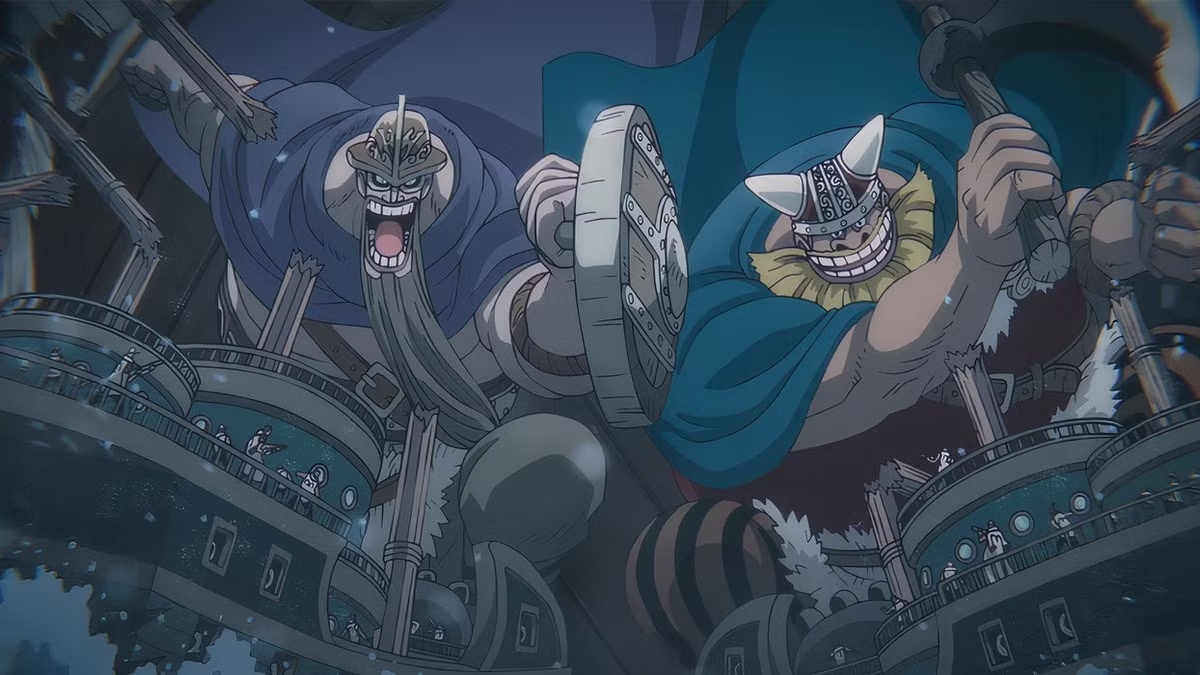
When the title “The Void Century: A Revelation About a Sinking World” was announced, fans instantly knew this wasn’t just another mid-arc skirmish. The air around it felt different, heavier, older. And when Episode 1149 finally aired on November 9, 2025, it didn’t feel like a continuation. It felt like a turning point. The kind of episode that makes even the most casual former viewer send that fateful text: “You might want to start watching again.”
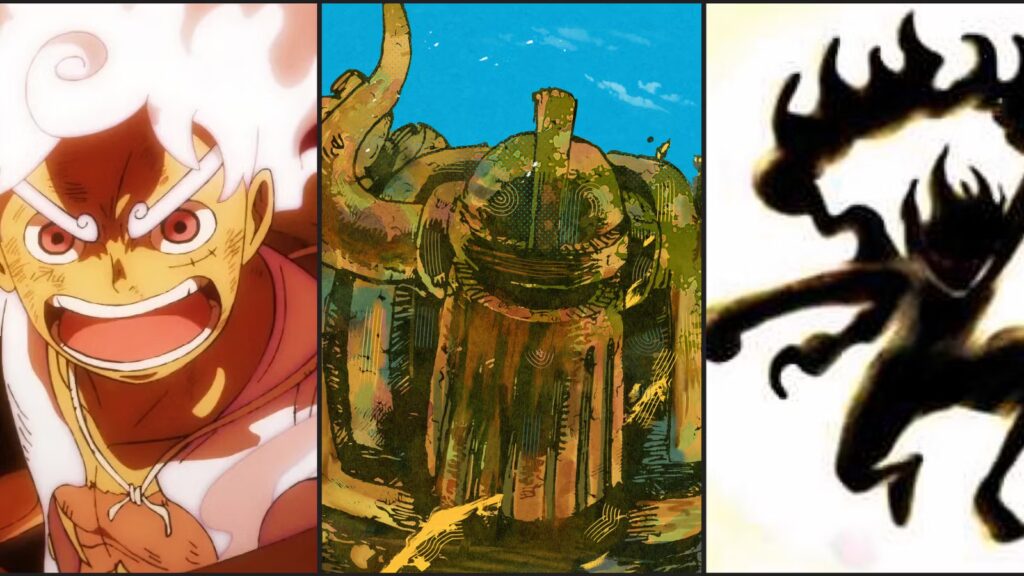
According to Beebom and The Scotsman, the Egghead Arc has entered its home stretch, with only a few episodes left before the anime caps off its most complex and ambitious storyline yet. And now, after nearly three decades of teases and whispers, One Piece is finally staring down the biggest mystery of its mythos, the Void Century, with unflinching resolve.
To understand why Episode 1149 feels monumental, you have to rewind, not a few arcs, but decades, back to 1997, when Eiichiro Oda first drew a map of a fractured world held together by oceans, secrets, and willpower.
From the very start, One Piece was never just a treasure hunt. It was a meditation on history itself: how it’s written, who’s allowed to remember it, and what it costs to uncover it. Every scholar, pirate, or dreamer who’s dared to look too deep has paid for it, often in silence.
This episode breaks that silence wide open.
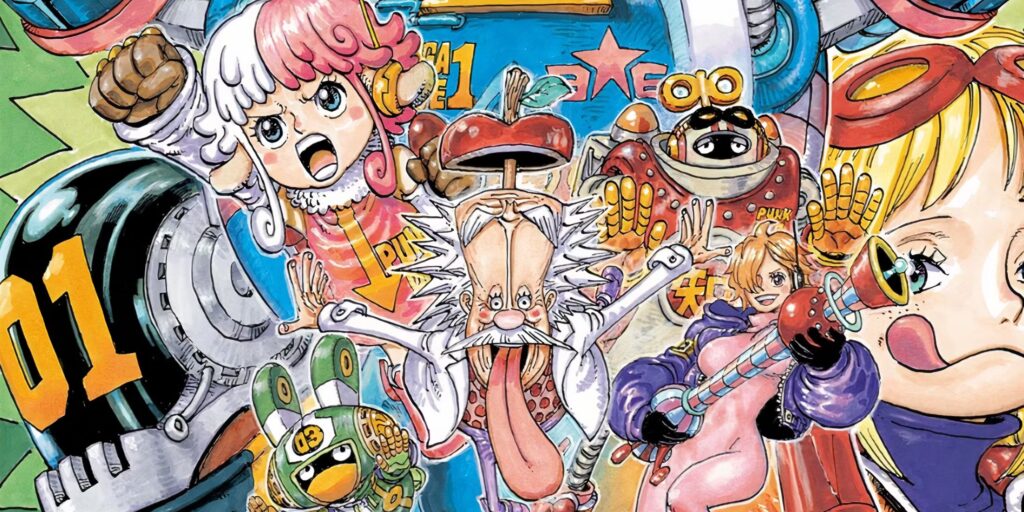
Through Dr. Vegapunk’s broadcast, part revelation and part suicide note, we finally glimpse what the lost century may have been. Oda doesn’t hand over a full explanation (he never does), but the shape of truth is finally visible through the fog. Vegapunk’s trembling voice echoes the ghosts of Ohara’s scholars and the relentless curiosity of Nico Robin: that once upon a time, the world was whole, until humanity, in its hunger for control, sank it.
Visually, Toei Animation went beyond spectacle. The flashback sequences are subdued and dreamlike, with muted blues, rippling reflections, faint echoes of machinery that shouldn’t exist. History feels alive, sentient even. When Vegapunk utters, “The sea remembers what man tried to drown,” it’s it’s a wound reopening. The fandom detonated instantly. Within minutes, threads were full of debates: “He’s quoting Joy Boy!” “This confirms the Red Line theory!” “The world literally sank, didn’t it?”
Theories flooded faster than the seas that supposedly drowned that lost civilization.
Watching the episode unfold feels different from reading it on paper. The moment Vegapunk’s transmission ripples across the world, from the Marines to the Revolutionary Army to ordinary civilians, you feel the scale of the world shake. It’s the first time the anime truly feels global. Every corner of the map reacts to the same truth at once, as if Oda himself were broadcasting directly into the real world. Because that’s what One Piece does best: when history returns, it doesn’t whisper. It erupts.
The Egghead Arc, which began with episode 1086, has been a pressure cooker of philosophy disguised as sci-fi. AI, morality, invention, control and each question building toward the one that defines this arc: what happens when knowledge itself becomes the ultimate weapon? Episode 1149 answers with fire. The bridge between science and history collapses behind us, and we realize there’s no going back to the carefree adventure tone of early One Piece. This is the age of consequences.
Even the score feels self-aware. As Vegapunk’s memories sync across the globe, a new orchestral theme rises, an elegy built from soft strings and electronic pulses. Composer Shiro Hamaguichi somehow makes it sound like grief and enlightenment happening at the same time. You could title it “The Ocean Remembers.”
Here’s the wild part: after more than a thousand episodes, the show has never looked sharper. Toei Animation’s team, clearly carrying the cinematic polish of One Piece Film Red, transforms weekly television into art. Camera angles slide like waves. Gear 5’s cartoonish energy meets the quiet dread of history unfolding. In the episode’s final ten minutes, a crosscut between Vegapunk’s narration and imagery of a world sinking, you can almost forget you’re not watching a theatrical release.
Fans noticed immediately.
On Reddit, the episode thread passed 25,000 upvotes in a day. Top comments read like poetry:
“They animated the feeling of discovery.”
“This isn’t exposition; it’s revelation.”
“The Void Century doesn’t just exist: it breathes now.”
And for once, no one complained about pacing. Every scene lands exactly where it should. Flashbacks breathe. Reaction shots cut cleanly. The episode feels like a director finally conducting with both hands again. You can sense that the production team knows this is history, in more ways than one.
The deeper Oda dives into the Void Century, the more his thesis crystallizes: the true villain of One Piece has never been a single man or monster. It’s erasure is the quiet, institutional kind. The kind that burns books, silences voices, buries light beneath the sea.
Episode 1149 confronts that head-on. Vegapunk’s act isn’t just exposition; it’s rebellion. His decision to broadcast forbidden truth is a scientist’s last stand against obedience. For all the series’ speeches about freedom, this might be the most radical of them all.
We don’t get the whole truth, of course, just shards of it. A glimpse of an ancient weapon. The image of a sunken city. The phrase, whispered through static: “Dawn will come when the sea forgives.” It’s maddeningly cryptic and exactly right. Oda never gives you closure; he gives you momentum. You don’t stop wondering.
The world outside the show responded like the one inside it, with chaos and awe. Hashtag #VoidCenturyReveal trended worldwide within an hour. Japanese fans praised the script’s “moral gravity,” while Western critics compared it to Attack on Titan’s late-stage revelations, another story about history’s brutal revisions.
Even production insiders began to talk. Reports suggest this run of episodes had one of Toei’s highest animation budgets since Wano, with senior directors Tatsuya Nagamine and Ryota Kawasaki helping align pacing and tone with Oda’s manga vision. Every frame feels intentional, no shortcuts, no filler fog.
To keep the deluge of lore digestible, the animators cleverly used visual storytelling: holograms turning into sky projections, data overlapping with ancient ruins. History and technology bleed into one another until you can’t tell which is alive. It’s science fiction turned scripture.
Now comes the calm before the storm.
If the current pace holds, the Egghead Arc will wrap around Episode 1155, closing out 2025. After that comes a pause, and the long-awaited Elbaf Arc.
If Egghead has been the series’ mind, intellectual, experimental, electric, Elbaf will be its heart. The land of giants, legends, and childhood promises. Oda has teased this island since the 1990s, tying it to Usopp’s dreams, Saul’s survival, and the Tree of Knowledge itself. Expect emotion over tech. Myth over science. Roots instead of circuitry.
The Scotsman confirmed a major structural change for 2026: the anime will shift to a seasonal format, 26 episodes per year, higher quality, tighter pacing. It’s a sign of confidence, not retreat. Toei’s essentially saying, “We’d rather give you history in volumes than filler by the pound.” A brief hiatus is expected from January to March 2026, before Elbaf launches in April. If the studio’s smart, Episode 1155 will end with a giant silhouette breaking the clouds.
But Episode 1149 is a mirror in addition to being a lore milestone.
For fans, it’s validation. For years, One Piece defenders have argued that Oda wasn’t meandering; he was building. That all the detours, mysteries, and delays were architectural, not accidental. This episode feels like the blueprint being revealed: See? It was all leading here.
It also hits a little too close to our own time. A story about erased knowledge, media control, and censored truth airing in an era defined by digital misinformation and revisionist politics? You don’t need a Poneglyph to get the message. The parallels are uncomfortable, which is exactly the point.
There’s a quiet sadness in all this, too. Every revelation reminds us that One Piece is ending, slowly, inevitably. Every island has been a farewell; every truth another curtain call. Episode 1149 sharpens that melancholy with the closer we get to understanding the world, the more we realize we’ll soon have to leave it.
A top Reddit comment captured it perfectly:
“We begged for answers, and now I wish we could stay in the mystery a bit longer.”
That’s the paradox of being a One Piece fan. You spend decades chasing meaning, and when you finally catch it, you almost want to let it go again. Oda knows that. It’s why he reveals history like a slow sunrise: beautiful, inevitable, and a little bit cruel.
The phrase “A Sinking World” isn’t just poetic; it’s thematic.
The episode is about collapse: of certainty, morality, hubris. Egghead has always been a parable about progress, that invention without conscience is another kind of destruction. Vegapunk’s tragedy isn’t that he’s wrong; it’s that he’s right too late.
In one of the quietest scenes, as his message fades, Robin whispers, “They tried to bury light beneath the sea.” It’s haunting because it applies everywhere to tyrants, governments, and even us. That’s why One Piece still matters after 1100 episodes: because it treats freedom as something earned, not assumed.
If 2025 was the year One Piece rediscovered its mystery, 2026 might be the year it reclaims its myth. With the new seasonal format, arcs will tighten into mini-epics. Think less filler, more focus. Fans are already predicting the structure: the first half of Elbaf centering on Usopp and Dorry & Broggy’s return; the second half exploring the global fallout of Vegapunk’s broadcast; and somewhere in between, the long shadow of Shanks– maybe even the first glimpse of the endgame itself.
Whatever Oda has planned, Egghead has done its job. It cracked the surface. Now the tide’s pulling us toward the truth.
Here’s something not often admitted: staying loyal to One Piece this long is an act of faith. Faith in Oda’s vision. Faith that this sprawling, absurd, brilliant story will close the circle it drew in 1997. Faith that the treasure isn’t just gold, but meaning.
Episode 1149 rewards that faith. It proves that patience in storytelling can still pay off, that a twenty-year setup can explode in a single, unforgettable episode without losing its soul. In a media world obsessed with instant gratification, One Piece reminds us that wonder still takes time.
So where does that leave us?
Episode 1149 isn’t the biggest fight or the loudest moment, but it might be the most important. It’s the moment One Piece stopped being about adventure and started being about memory: the courage to remember what the powerful tried to erase.
When Vegapunk’s broadcast ends and the sea swallows the last flicker of his words, the silence that follows doesn’t feel empty. It feels sacred, like the space between death and rebirth. The same kind of silence that once came before Roger’s final words, “One Piece,” and changed everything.
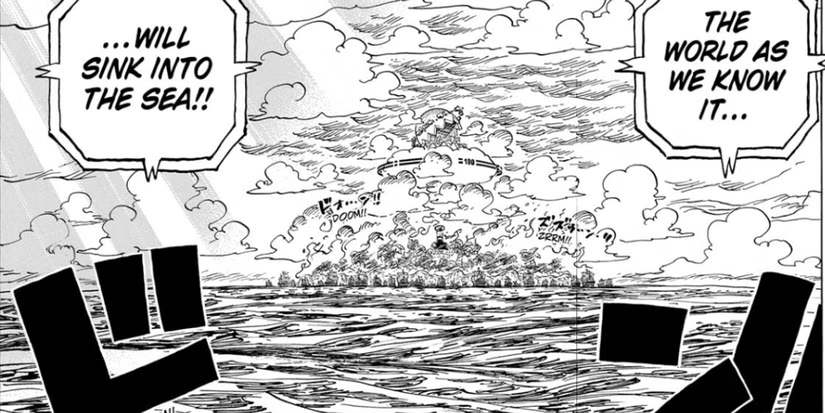
The Egghead Arc is sinking beneath its own history now. But maybe that’s what it needed to do: sink, so the truth could finally rise.
Because maybe the world isn’t ending.
Maybe it’s just learning how to float again.