
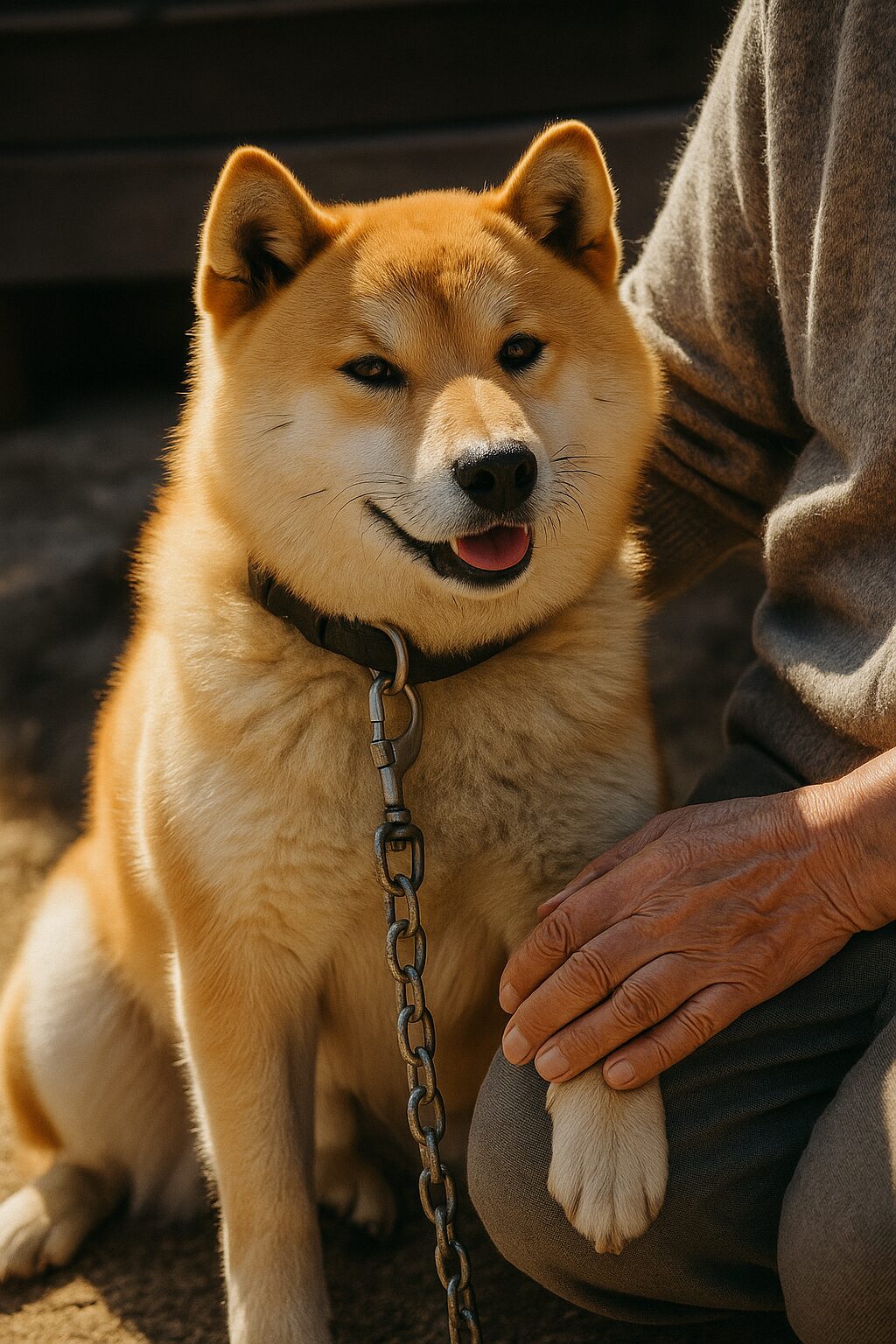
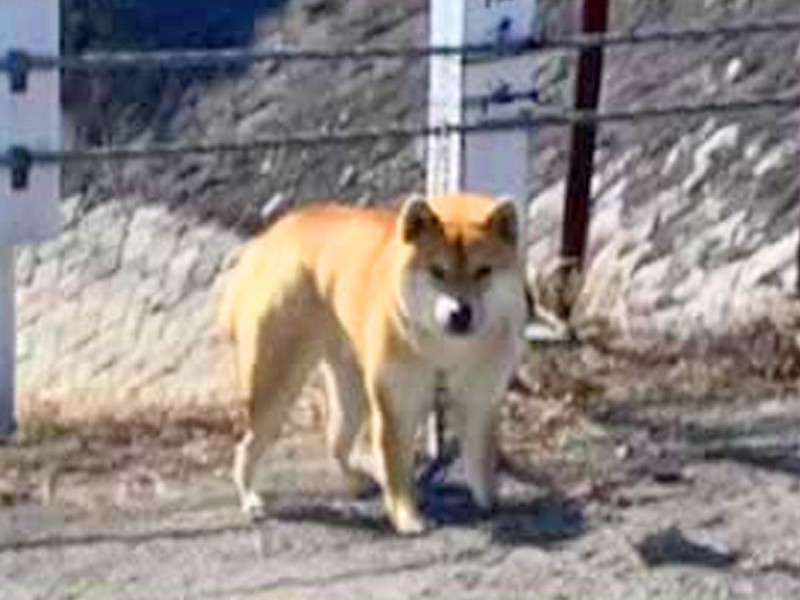
In a small corner of Kagawa Prefecture, a pond lies still beneath the whispering wind. For a long time, few noticed the rust-colored Shiba Inu tethered near its edge, a quiet figure whose eyes held the weary stillness of a pupper who had been waiting too long.
No one could say how many days or nights he spent there. His chain was short; the ground beneath him had turned to hard earth. Sometimes he barked softly at the ripples, other times he simply lowered his head as though the act of hoping had become too heavy. When officials were finally called, the record was brief and cold:
“Abandoned dog, Kagawa. Subject to euthanasia.”
When volunteer rescuer Ayaka Taniguchi received the message, she didn’t pause to think. She had read too many stories like it such as with dogs discarded, mislabeled as “unadoptable,” fading away for lack of one small act of mercy. She drove through the narrow lanes of Takamatsu, her little car filled with blankets, a spare harness, and one packet of chicken jerky.
When she arrived, the dog didn’t bark or growl. He only trembled, unsure whether this new presence meant harm or hope.
“I still remember the sound of that chain,” Ayaka would say later.
Kneeling beside him, she spoke softly, letting her voice find its way into the space between fear and trust. When she held out the jerky, he hesitated, then, with a cautious step, sniffed and took it, so delicately that it made her throat tighten. That small gesture was his first act of courage.
Ayaka unclipped the chain, wrapped him in a blanket, and carried him to her car. As they drove away, the pond receded in the mirror, replaced by blur and motion. Somewhere between the turns, the dog exhaled a quiet, exhausted sigh and fell asleep.
Recovery rarely announces itself. It unfolds quietly, in ordinary rooms filled with patience.
In the first weeks, Ryū-kun barely moved from his corner. Every sound made him flinch; every shadow seemed to hold a memory of fear. He only ate when Ayaka wasn’t watching.
But her home smelled of tatami and soap, with light spilling gently through the shōji. In that calm rhythm of days, meals, walks, soft words, something in him began to shift. He started to follow her from room to room, tail wagging tentatively when she called his name.
Trust, for a dog who has known abandonment, is a kind of rebirth.
Ayaka began taking him out early in the mornings, before the city woke. The leash no longer meant confinement but companionship. Children in the neighborhood waved as he passed yelling out “Ohayō, Ryū-chan!” and for the first time, the dog lifted his head proudly.
“He looked like a different dog,” Ayaka recalled.
When a couple from Kurashiki reached out about adopting him, Ayaka felt that familiar tug between joy and ache. Letting go is always hard, especially when you’ve seen a life learn to trust again.
The couple,Kenji and Mariko Sato, had recently lost their elderly Shiba after fifteen years. Their home was quiet, but their hearts were still open. When they saw Ryū-kun’s picture, their decision was instant.
At their first meeting, Ryū-kun wandered their garden, sniffed the plum blossoms, and then settled beside Mariko’s chair. When she placed a hand on his head, he closed his eyes, as if the world had finally gone still.
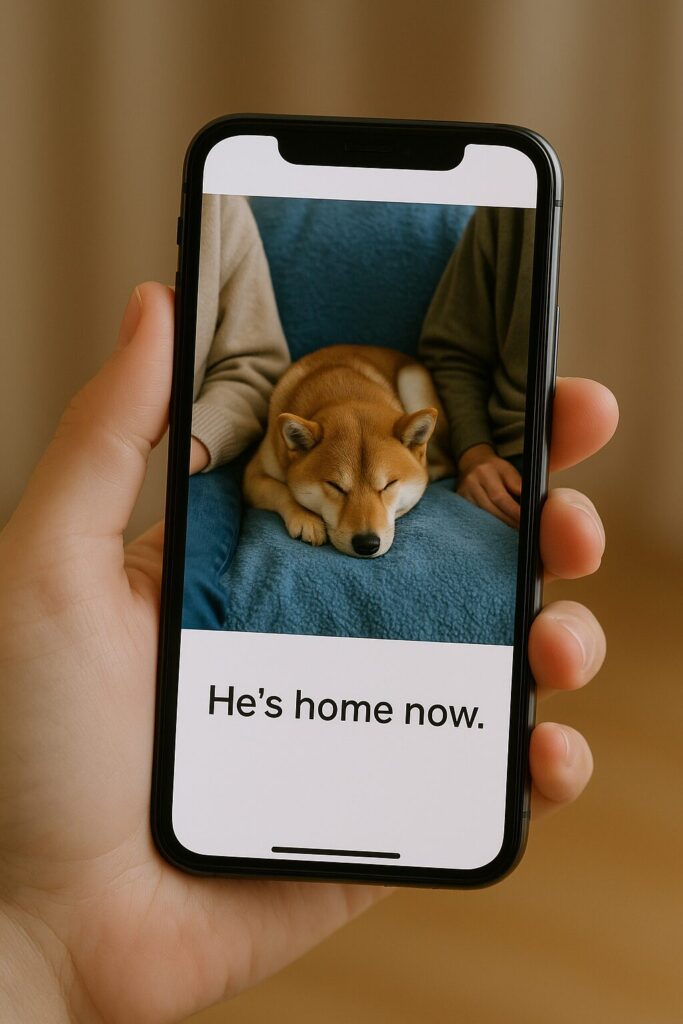
Two weeks later, Ayaka’s phone buzzed. It was a photo of Ryū-kun asleep on a blue blanket between them. Beneath it, a single line: “He’s home now.”
Ryū-kun’s story belongs to the countless rescues that happen quietly across Japan every day, but it also mirrors something deeply human which is the longing to be seen, and the courage it takes to accept kindness after pain.
We all have our ponds, our invisible chains, our quiet corners where fear collects. And we all, at some point, need someone to find us and say: “You can come with me now.”
For Ryū-kun, that person was Ayaka. But behind her stood a network of compassion which was the shelter that handled his care, the volunteers who donated food, and the family who chose to love him. Each action, small by itself, became part of a greater bridge from loneliness to belonging.
That, perhaps, is the heart of rescue: not just saving a life, but reopening the door to love.
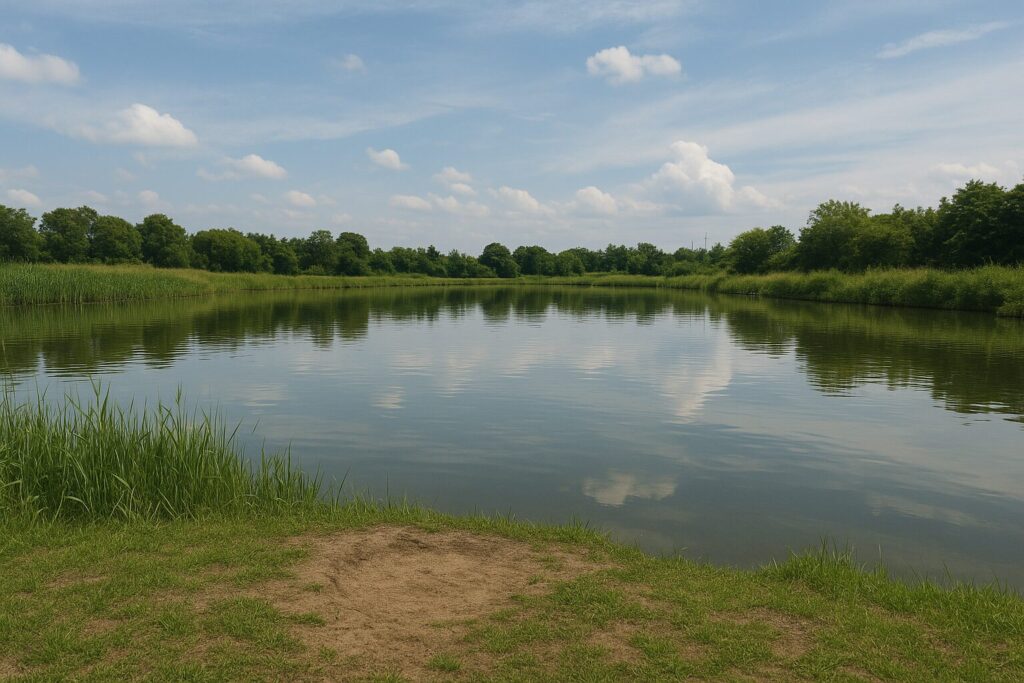
Months later, Ayaka returned to the pond. The chain was gone, but the grass still bent unevenly where Ryū-kun once sat. She stood there for a while, letting the wind move through the reeds, watching the sunlight scatter across the water.
She took a photo now not out of sorrow, but gratitude.
“This was where he waited,” she wrote.
When we speak of abandoned animals, it’s easy to dwell on cruelty. But what lingers from Ryū-kun’s journey is change. The slow, deliberate turning of fear into trust.
Kindness, too, grows in layers. A single gesture might seem trivial, but together they form a lifeline. The volunteer who kneels before a frightened dog is affirming a world where empathy still matters.
Japan’s shelters have seen a steady decline in euthanasia over the past decade, thanks to networks of volunteers and foster homes. Yet many still wait behind concrete walls or along forgotten roads. Ryū-kun’s story speaks softly for all of them, reminding us that compassion begins the moment we choose not to look away.
Ayaka still keeps a piece of the rusted chain she cut that day. It sits curled beside a framed photo of Ryū-kun grinning between his new owners.
“People ask why I keep it,” she says. “But to me, it’s proof that something once meant for restraint can become a symbol of hope. When I see it, I remember there’s always another life waiting to be freed.”
If you come across a stray or stumble upon a story like this online, pause. Even if you can’t adopt or foster, sharing their story helps. Each small act is a link in the chain of rescue.
In a world that often feels hurried and self-centered, that quiet thread of compassion, from one heart to another, is what keeps us human.
Now, Ryū-kun lives a peaceful, ordinary life. Morning walks by the river. Afternoon naps on his favorite blanket. On clear days, he chases falling leaves with the same energy he once spent guarding that tiny patch of dirt by the pond.
Whenever Kenji calls his name, he turns, tail wagging as if to say, “I made it.”
Perhaps that is what rescue truly means: not a dramatic ending, but a simple, steady beginning: the soft assurance that a once-forgotten soul now wakes each day knowing they are home.