
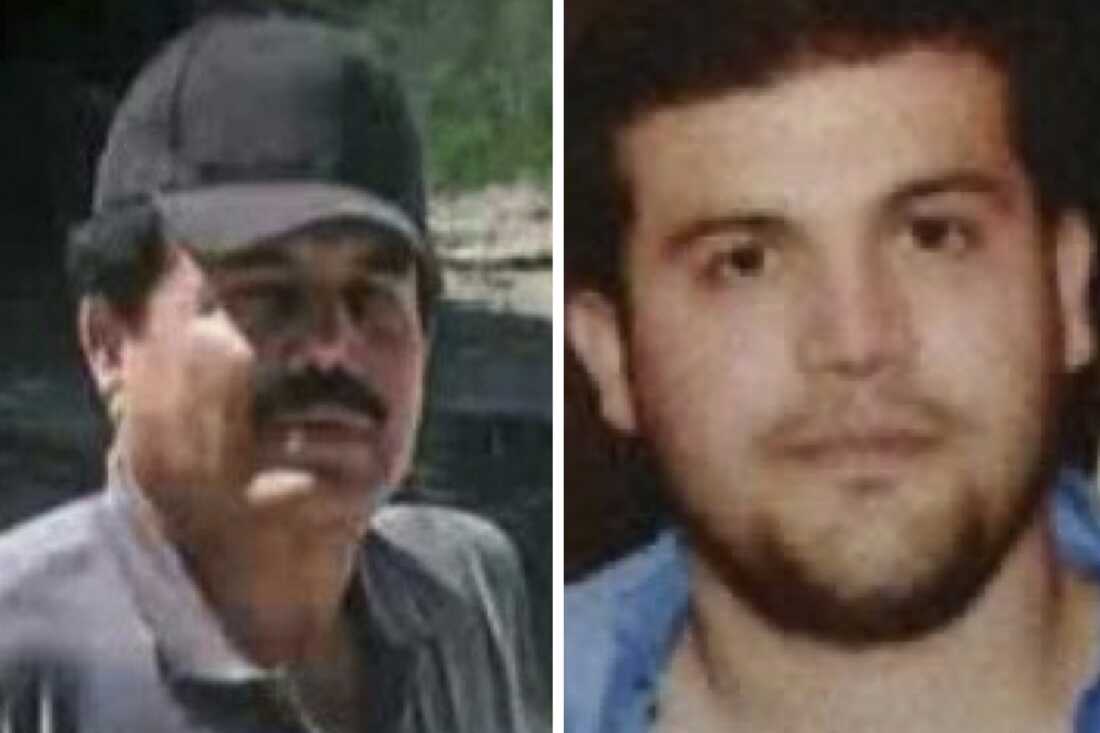
The guilty plea entered in a Chicago courtroom this week by Joaquín Guzmán López, one of the sons of Joaquín “El Chapo” Guzmán, carried a sense of inevitability but also of quiet consequence. It was a moment that felt both familiar and oddly revealing. For years, the United States has pursued high-level cartel figures with the confidence of a country that believes long-form justice is a matter of patience rather than chance. Yet the decision by Guzmán López to reverse his earlier stance and admit to a sprawling drug-trafficking conspiracy underscored something deeper: a recognition that the era of mythologized cartel leadership is reaching its limits in the face of methodical, transnational prosecution.
Guzmán López pleaded guilty to running portions of the Sinaloa Cartel’s drug-production and trafficking apparatus, a machine capable of pushing cocaine, heroin, methamphetamine, marijuana and fentanyl across borders and into American cities with industrial precision. Prosecutors described an enterprise that relied on virtually every imaginable method of transport, including subterranean tunnels, vehicles, rail shipments, aircraft, maritime routes, and even submersibles. It was, they argued, the kind of system that could only be overseen by someone who had inherited both the organizational logic and the ruthlessness of his father.
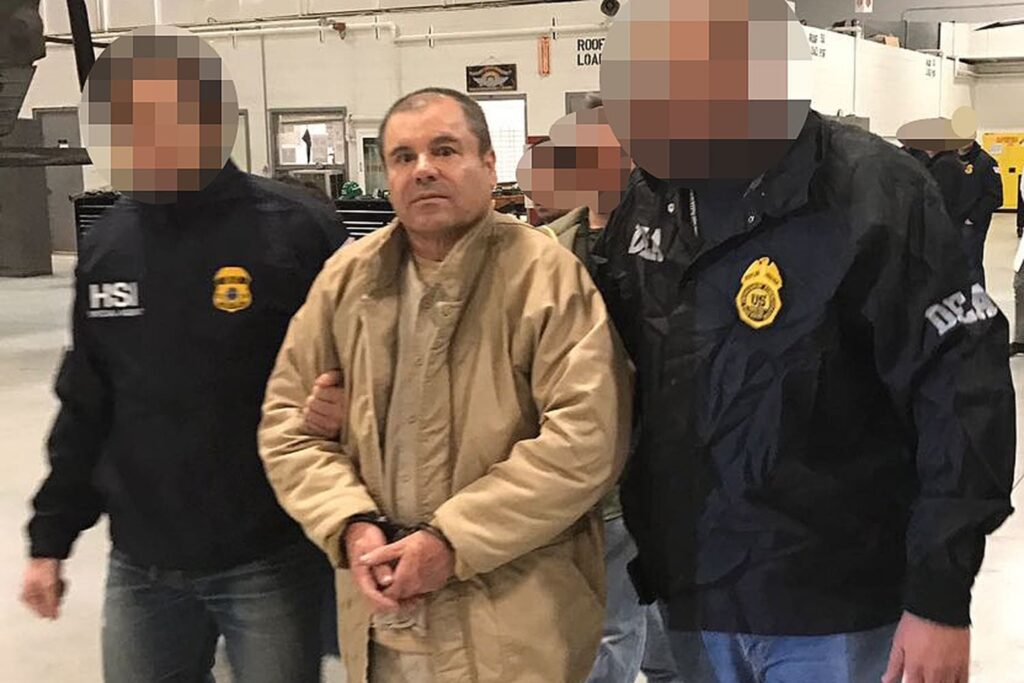
The admission settled any lingering attempts to frame the younger Guzmán as a peripheral player. Court documents made clear that he occupied a leadership position. He coordinated production networks, negotiated smuggling routes, managed distribution pipelines, and ensured the money flowed cleanly through laundering channels. And he did so at a moment when the opioid crisis in the U.S. had reached a lethal crescendo, with fentanyl at the center of a nationwide public-health disaster. For prosecutors, connecting a Sinaloa leader to that crisis was not merely symbolic; it was an act of cause and effect.
The plea deal also contained a detail that drew quiet attention in Mexico and the U.S. Guzmán López admitted to orchestrating the kidnapping of a high-ranking cartel figure, an operation that reportedly involved breaking into a meeting through a window, forcibly sedating the captive, binding him, and arranging for a private-plane transfer.
The intended narrative was that the victim had willingly cooperated with U.S. authorities. It was a maneuver that blended cartel brutality with an almost cinematic attempt at political manipulation, a reminder that internal trust within these organizations often erodes long before law enforcement arrives.
The Justice Department responded by labeling the Sinaloa Cartel and its offshoots as “foreign terrorist organizations,” a signal of how the U.S. government increasingly views cartel operations.
They are seen not simply as criminal enterprises but as destabilizing forces comparable to armed militant groups. Whether this framing will become a durable part of future anti-narcotics policy remains an open question. What is clear is that prosecutors saw in Guzmán López an opportunity to strengthen that narrative. In his plea agreement, the government also made a point of insisting that he would not receive cooperation credit for the kidnapping, a boundary meant to signal that desperation disguised as assistance does not alter the underlying violence.
A minimum sentence of ten years now awaits him, though the statutory maximum is life. That range reflects the weight of the charges but also the history of earlier cartel prosecutions, many of which have ended with decades-long terms inside U.S. super-maximum-security prisons. Guzmán López’s future, in that sense, echoes the fates of other men who once commanded vast drug empires from remote hideouts, only to find themselves years later confined to the near-total isolation of ADX Florence.
This case sits within a longer lineage of cartel prosecutions that have shaped the modern landscape of transnational crime enforcement. When Joaquín “El Chapo” Guzmán himself was convicted in 2019 after a high-profile trial in Brooklyn, the verdict was seen as a watershed. One of the most powerful drug traffickers in the world was brought down through a mix of extradition, intelligence sharing, and persistence. Observers wondered whether such a dramatic outcome might destabilize cartel leadership or simply accelerate succession. The answer, as always, proved complicated. While the Sinaloa Cartel adapted, the arrests of men like Guzmán López and his brother Ovidio in the years since suggest a slow erosion of the cartel’s upper ranks, a gradual thinning of the myth that its leadership was untouchable.
Other prosecutions offer similar lessons. When Alfredo Beltrán Leyva, once a co-leader of one of Mexico’s most feared cartels, was extradited and sentenced to life in the U.S., the case underscored how law enforcement could target organizations beyond Sinaloa and fracture entire networks in the process. The financial forfeiture attached to his conviction, totaling more than half a billion dollars, illustrated a shift toward weakening cartels not only through arrests but through economic constriction.
Meanwhile, operations such as Project Coronado showed the opposite side of this strategy. Rather than focusing on the heads of organizations, the U.S. swept up hundreds of La Familia Michoacana operatives across the country, dismantling supply lines and distribution networks. It demonstrated that the cartel wars were not exclusively fought in border cities or remote Mexican valleys. They touched communities in North Carolina, Texas, California, Georgia, and the Midwest, drawing a map of criminal influence far wider than the public often realized.
More recently, the case of Rubén Oseguera González, better known as “El Menchito,” signaled the U.S.’s commitment to pursuing leaders of emerging cartels as aggressively as the legacy organizations. His conviction for trafficking and weapons charges, followed by a life-plus-30-year sentence, reaffirmed the idea that the cycle of arrests is not a relic of the past but an ongoing and accelerating phenomenon. These prosecutions, taken together, are not isolated strikes. They form a pattern of strategic pressure on organizations that have long operated across legal and geographic gaps.
What distinguishes the plea entered by Guzmán López is not its legal structure, which resembles many earlier cases, but its timing. This is happening during a phase when cartels have shifted heavily toward synthetic drugs, particularly fentanyl, which demands far less agricultural infrastructure and far more chemical precision. The economics of trafficking have become leaner, faster, and increasingly dependent on supply chains that cross Asia, Latin America, and the U.S. in ways that test the limits of conventional policing. By securing admissions of guilt from high-ranking figures tied directly to this new model, the U.S. is attempting to establish clearer lines of attribution: who planned what, who oversaw it, and how the responsibility flows upward within the organization.
There is also the matter of public perception. For years, the sons of “El Chapo,” often referred to as “Los Chapitos,” were cast in a mix of fear, fascination, and skepticism. Their reputations oscillated between tales of cold-blooded violence and stories of internal conflict with figures like “El Mayo” Zambada. The Gonzalo López plea reinforces one persistent reality: internal cohesion within cartels is fragile. Disease, betrayal, factional rivalry, and generational shifts all erode their stability long before federal indictments are unsealed. The kidnapping admission, in particular, suggests a moment when internal mistrust reached a point too visible to disguise.
Yet focusing solely on the drama of cartel families risks missing the quieter truth at the heart of the plea. The United States has spent more than three decades refining the legal frameworks required to dismantle large-scale criminal enterprises. Conspiracy statutes, continuing criminal enterprise charges, asset forfeiture, and extradition treaties allow prosecutors to reach deep into organizations that once operated with near-total impunity. The Guzmán López case, in that sense, is not a dramatic climax but a continuation of a long pattern of attrition. Each arrest shapes the structure that follows.

The guilty plea by Joaquín Guzmán López hits each region differently: in the U.S., it’s framed as a steady victory in the fight against fentanyl and a sign that cartel prosecutions are drifting toward a national-security posture; in Japan, it renews concern over precursor-chemical controls and deepens the argument for tighter intelligence sharing with Washington as synthetic-drug markets globalize; and across Latin America and Europe, it reinforces the uneasy reality that the most powerful traffickers often face justice abroad, exposing gaps in local institutions while highlighting the durability of transnational drug networks. The case may center on one man, but the ripple effects stretch through policy, public health, and geopolitics in ways no country can navigate alone.
Still, it is worth considering what these prosecutions ultimately achieve. Removing high-level actors can disrupt operations, weaken leadership, and sow uncertainty. But history also shows that cartels possess a remarkable ability to regenerate, often faster than the institutions that pursue them. The supply chain adjusts. Leadership reorganizes. Markets evolve. And the public-health consequences, particularly around fentanyl, continue to unfold with staggering human costs. The legal victory, while real, cannot by itself resolve the cycles of demand and supply that sustain these organizations.
The plea the younger Guzmán offered does not answer these larger questions. But it does mark a moment where the U.S. judicial system has narrowed its focus onto the generation that inherited an empire now strained by fragmentation, external pressure, and internal conflict. It is a reminder that the fight against transnational narcotics networks is not a series of dramatic takedowns but a long accumulation of quieter, procedural wins.
These come plea by plea and sentence by sentence. And sometimes the most significant shifts happen not with the spectacle of a televised capture but with the steady voice of a defendant saying the words “I plead guilty,” knowing that the world he once moved through has suddenly grown very small.