
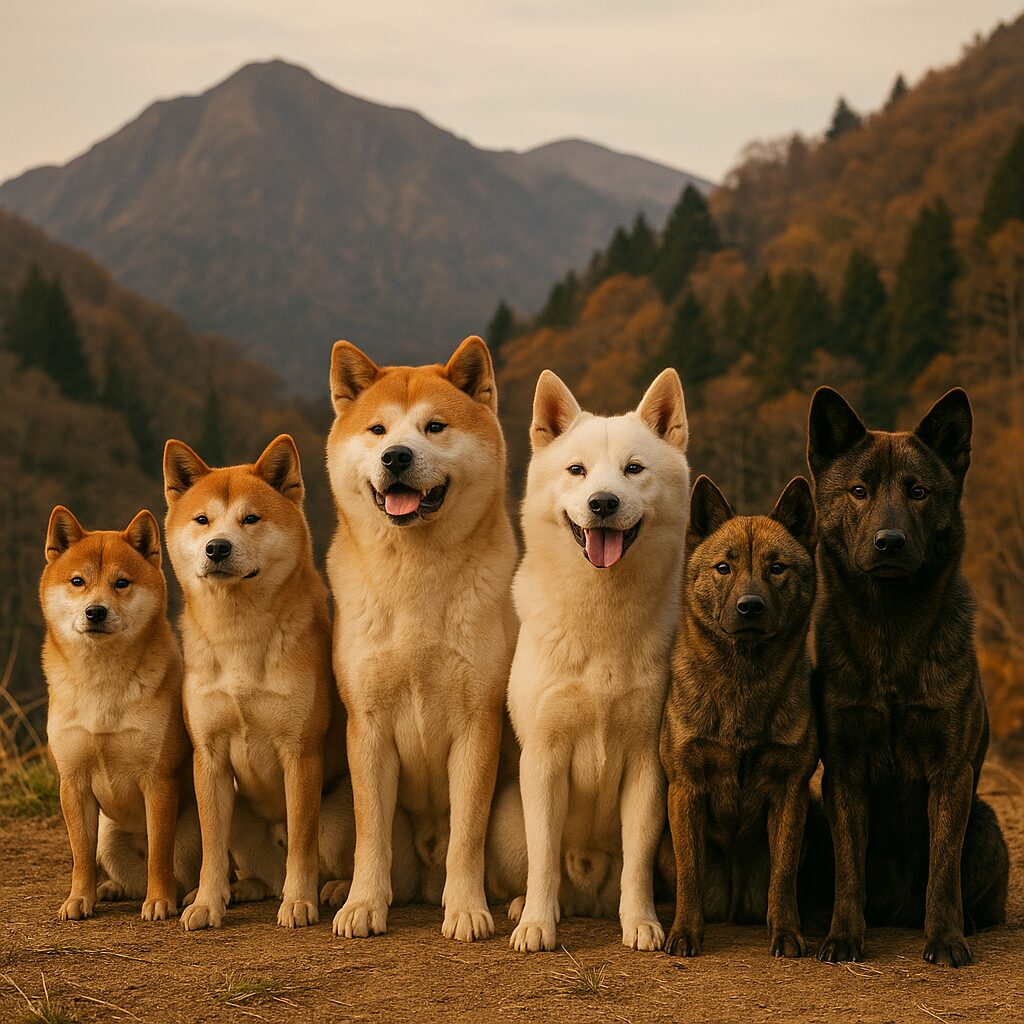
Across Japan, six ancient dog breeds stand as living symbols of loyalty, courage, and the deep bond between humans and nature. 🗻🐾
From the fiery independence of the Shiba Inu to the noble calm of the Akita, from the quiet strength of the Kishu to the mountain-born endurance of the Hokkaido, these dogs are not just pets — they are living heritage. Each carries centuries of history, folklore, and survival instincts shaped by Japan’s diverse landscapes.
But today, their legacy faces a growing threat. Many of these native breeds — collectively known as the Nihon Ken (日本犬) — are disappearing. Their numbers are shrinking, their genetic lines narrowing. As modernization, crossbreeding, and urban lifestyles reshape Japan, the six proud native breeds that once walked alongside hunters, farmers, and samurai are now struggling to hold their place in the modern world.
This is the story of Japan’s dogs — and of the people fighting to keep their spirit alive.
The Six Ancient Breeds of Japan
Japan officially recognizes six native dog breeds as national treasures under the Nihon Ken Hozonkai (日本犬保存会, the Association for the Preservation of Japanese Dogs). Each one emerged from specific regions, adapting to their natural environments and local human needs.
1. Shiba Inu (柴犬) — The People’s Dog
Compact, alert, and full of character, the Shiba Inu is Japan’s most famous breed — and for good reason. Originally bred to hunt small game in Japan’s mountainous regions, the Shiba is known for its agility, intelligence, and fiery spirit, often described as “spirited boldness” (kan’i) and “good nature” (ryōsei).
Today, Shibas are adored around the world, their expressive faces and mischievous personalities flooding social media. Yet despite their global fame, the true “Japanese” Shiba — with its careful bloodline and authentic features — remains rare. The breed nearly vanished during World War II due to food shortages and disease. Only through postwar breeding programs were they revived, particularly from three bloodlines: San’in, Mino, and Shinshu.
They are Japan’s little warriors — small in size, mighty in spirit.
2. Akita Inu (秋田犬) — The Loyal Guardian
If the Shiba represents spirit, the Akita represents honor. Originating in Akita Prefecture in northern Japan, this majestic, large-boned breed was once used for hunting bears and guarding samurai estates. With their thick double coat and dignified posture, Akitas exude quiet strength and deep devotion.
The Akita gained worldwide fame through the legendary story of Hachikō, the dog who waited at Shibuya Station every day for his owner — even years after the man’s death. His bronze statue in Tokyo stands as a symbol of unconditional loyalty.
There are actually two distinct Akita breeds today: the Japanese Akita Inu, which retains its traditional red, white, or brindle coat and foxlike face, and the American Akita, larger and more robust due to crossbreeding post-WWII. Japan continues to work hard to preserve the purity of its native Akita bloodline, led by dedicated kennels in Odate City, Akita Prefecture — Hachikō’s hometown.
To gaze into an Akita’s eyes is to feel centuries of loyalty and courage looking back at you.
3. Kishu Ken (紀州犬) — The Silent Hunter
The Kishu, hailing from the rugged mountains of Wakayama and Mie Prefectures, is perhaps Japan’s most stoic dog. Traditionally used for hunting wild boar and deer, Kishus are strong, disciplined, and astonishingly loyal to their owners. Unlike many dogs, they are known to hunt in silence, stalking prey with eerie focus — a trait that made them invaluable to ancient hunters.
Their short, pure-colored coats — typically white, though once found in red or sesame — blend with Japan’s forest terrain. The Kishu’s steady gaze and calm presence give them a samurai-like aura: quiet but unshakable.
Sadly, their numbers have fallen drastically. Urbanization and a decline in traditional hunting mean few people can care for such a breed’s physical and mental needs. Breeding programs in Wakayama now work tirelessly to preserve the Kishu’s genetic diversity, but the breed remains endangered even within Japan.
They are the silent protectors — loyal to one, faithful for life.
4. Shikoku Ken (四国犬) — The Mountain Survivor
Sometimes called the “wolf dog of Japan,” the Shikoku Ken hails from the island of Shikoku, particularly from Kochi Prefecture. Agile, muscular, and built for endurance, Shikokus were bred to navigate steep terrain while hunting wild boar. Their slightly curled tails, upright ears, and wild-looking eyes hint at their ancient roots.
Shikokus nearly disappeared during World War II, but a small group of breeders in Kochi kept the bloodline alive. Today, they remain one of Japan’s rarest breeds — fewer than a few thousand are registered nationwide each year.
Devoted and intelligent, the Shikoku thrives on adventure and challenge. In the right home, they are affectionate companions — proud but gentle, independent but loving.
To meet a Shikoku is to meet a living relic of Japan’s untamed wilderness.
5. Hokkaido Inu (北海道犬) — The Snow Warrior
Born in the harsh northern lands of Hokkaido, this breed was developed by the indigenous Ainu people to help with hunting bears and pulling sleds across frozen terrain. The Hokkaido Inu is compact but powerful, with a thick double coat that can withstand temperatures well below freezing.
Their loyalty and bravery are legendary. The Japanese government once awarded medals to Hokkaido dogs for their service in rescue missions and their ability to survive extreme conditions.
Despite their heroism, Hokkaidos are now a rare sight even in their homeland. The Hokkaido Dog Preservation Society (北海道犬保存会) continues to protect the breed, organizing exhibitions and maintaining strict standards for purity.
They are not just dogs of the snow — they are dogs of courage.
6. Kai Ken (甲斐犬) — The Tiger Dog
Known for their striking brindle coat, the Kai Ken from Yamanashi Prefecture is often called the “Tora Inu,” or “Tiger Dog.” Agile, brave, and intensely loyal, they were once prized by hunters for tracking game through Japan’s dense mountain forests.
The Kai Ken’s intelligence and athleticism make them versatile companions — capable climbers, swimmers, and trackers. Unlike more common breeds, Kai Kens form deep, singular bonds with their families and are naturally protective.
Their population remains small but stable thanks to preservation groups in Yamanashi who monitor breeding closely. The Kai Ken is officially designated as a national natural monument — a title that underscores both its rarity and its importance to Japan’s cultural identity.
Like the tiger they’re named after, the Kai Ken walks with quiet strength and unbreakable pride.
The Crisis of Preservation
Despite their revered status, Japan’s native breeds face serious challenges.
Modern urban life — with its small apartments, long work hours, and limited space — has made large, high-energy dogs like the Kishu, Shikoku, and Hokkaido difficult to raise. Many younger Japanese families now prefer smaller, more social breeds like toy poodles or dachshunds.
Furthermore, genetic diversity has become a major concern. Centuries of isolation, followed by population crashes during wartime and disease outbreaks, have left these breeds with limited gene pools. Breeders are working against time to prevent inbreeding and maintain healthy populations.
The Nihon Ken Hozonkai, established in 1928, leads these preservation efforts, maintaining strict breeding registries, hosting exhibitions, and promoting education about Japan’s native dogs. Local governments and schools also hold awareness campaigns, teaching children about the cultural and historical importance of these breeds.
Still, the struggle continues. The Akita and Shiba remain relatively stable, but the Kishu, Shikoku, Hokkaido, and Kai Ken all hover in vulnerable or endangered status.
Guardians of Heritage
What’s remarkable about these preservation efforts is their heart. Many are not run by corporations or large animal organizations but by small groups of breeders, volunteers, and families who simply refuse to let these ancient bloodlines fade.
In rural Yamanashi, an elderly couple has spent over 40 years raising Kai Ken pups, keeping meticulous handwritten records of lineage. In Hokkaido, hunters still pass down the traditions of working with their Inus to younger generations. In Kochi, breeders of the Shikoku Ken hold local festivals where villagers gather to celebrate the dogs that once helped their ancestors survive.
Even in urban Japan, where modern life can feel detached from nature, the sight of a Shiba Inu trotting confidently beside its owner still stirs something deep — a reminder that the heart of Japan’s spirit beats quietly in every wagging tail.
Why It Matters
These dogs are not just pets. They are the living memory of Japan’s relationship with the land — its mountains, forests, and snowscapes. They remind us of a time when survival required partnership, when loyalty was earned through trust and work, not just affection.
Every bark, every wag, every soft gaze — they are echoes of Japan’s soul.
To preserve them is to preserve something deeper than genetics: it’s to preserve connection, humility, and the essence of companionship born from centuries of coexistence.
As Japan looks toward the future, with its aging population and changing lifestyles, the question remains — will these noble breeds still walk beside us?
If they do, it will be because of those who saw not just dogs, but guardians of heritage.
Because when you look into the eyes of a Shiba, a Kishu, or a Hokkaido, you’re not just seeing an animal. You’re seeing the history of a nation reflected back — loyal, resilient, and beautifully alive. 🇯🇵💛🐕